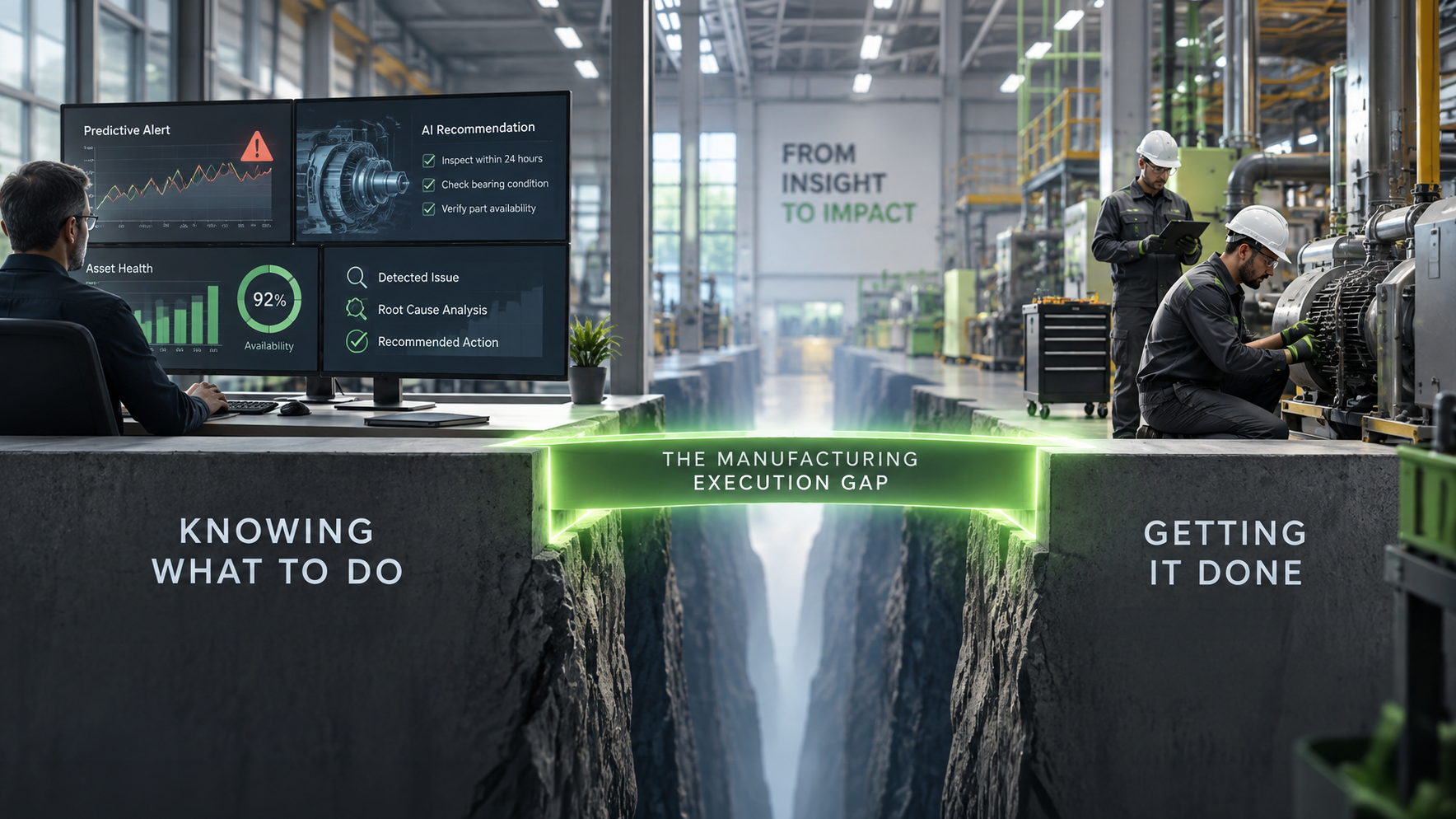
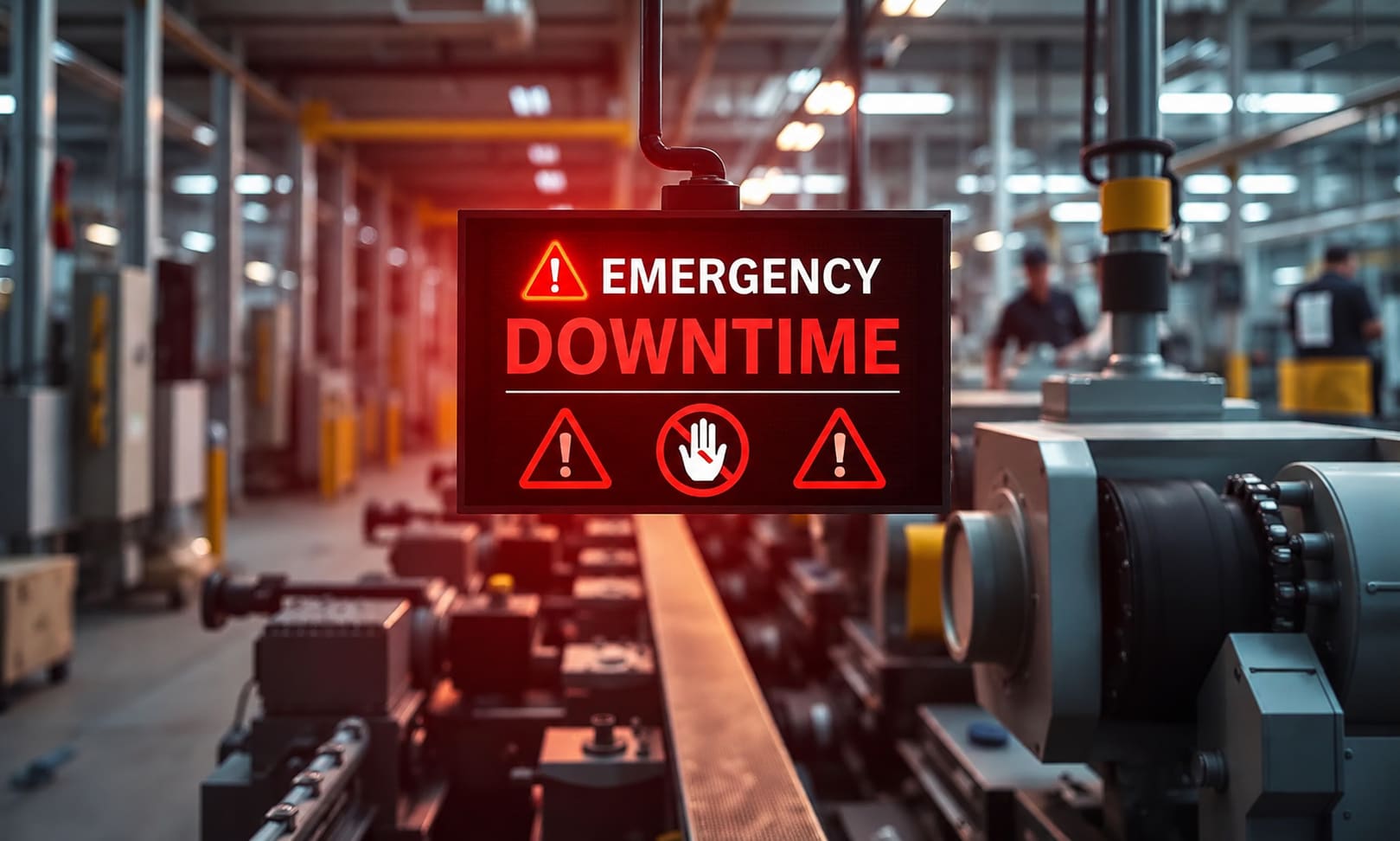
An unexpected machine failure can derail an entire shift, turning a well-planned day into chaos. You’re left scrambling to diagnose the problem, find the right parts, and get production back online. This constant fire-fighting is exhausting and expensive. But what if this cycle wasn’t an inevitable part of manufacturing? Moving from a reactive state to one of control is possible. This guide provides a clear framework for effective Equipment Downtime Reduction. We’ll walk through the strategies and tools you need to anticipate issues, prevent failures, and keep your factory floor running smoothly and predictably, shift after shift.
Key Takeaways
- Focus on prevention, not just reaction: Instead of constantly fighting fires, use root cause analysis and proactive maintenance schedules to solve the underlying issues that cause equipment to fail in the first place.
- Measure what matters to prove value: Track key metrics like OEE, MTTR, and MTBF to get a clear picture of your performance, and calculate the true financial cost of downtime to justify investments in new solutions.
- Connect your team with your technology: Use a unified platform to bring real-time machine data and frontline team communication together, ensuring the right people can solve problems faster with the right information.
What Is Equipment Downtime (and Why Should You Care)?
At its core, equipment downtime is any period when a machine is not in production. It’s the gap between when a machine should be running and when it actually is. While that sounds simple, downtime is one of the biggest sources of lost productivity and revenue in manufacturing. Understanding its different forms, its real financial impact, and how to measure it is the first step toward taking control of your factory floor. It’s about moving from a state of constant fire-fighting to one of proactive, predictable operations.
Planned vs. Unplanned Downtime
Not all downtime is created equal. Planned downtime is scheduled and necessary, including activities like routine maintenance, inspections, or equipment changeovers. While it does stop production, it’s a controlled event you can prepare for. The real troublemaker is unplanned downtime. This is any unexpected stop caused by equipment failure, a broken part, or a system malfunction. Relying on a reactive maintenance strategy, where you only fix things after they break, is a direct path to more unplanned downtime. This approach not only causes sudden production halts but can also lead to more expensive repairs and a shorter lifespan for your critical assets.
The True Cost of Downtime in Manufacturing
When a machine goes down unexpectedly, the costs add up fast, and they go far beyond simple repair bills. The most obvious cost is lost production. If your line produces 100 units per hour and each unit generates $10 in profit, just two hours of downtime costs you $2,000 in lost revenue. For some industries, the numbers are staggering, with losses reaching millions of dollars per hour. But there are also hidden costs: idle labor, wasted raw materials, potential late-delivery penalties, and damage to your brand’s reputation. Understanding the true cost of downtime is critical because it frames the problem in terms of financial impact, making the case for investing in solutions much clearer.
The KPIs You Need to Track: OEE, MTTR, & MTBF
You can’t improve what you don’t measure. To get a handle on downtime, you need to track a few key performance indicators (KPIs). Overall Equipment Effectiveness (OEE) is the gold standard, giving you a score that combines equipment availability, performance, and quality. Two other crucial metrics are Mean Time To Repair (MTTR) and Mean Time Between Failures (MTBF). MTTR measures how quickly your team can fix a machine after it fails; a lower number is better. MTBF measures how long a machine runs before it fails again; a higher number is better. Tracking these KPIs with a manufacturing control tower gives you a clear picture of your operational health and helps you pinpoint exactly where to focus your improvement efforts.
What Causes Equipment Downtime?
To effectively reduce downtime, you first need to understand what’s causing it. While every plant is unique, the root causes of unplanned stops often fall into a few common categories. It’s rarely just one thing; more often, it’s a combination of aging machinery, outdated processes, and a lack of real-time information that grinds production to a halt. By pinpointing these core issues, you can move from constantly fighting fires to proactively keeping your lines running smoothly.
Mechanical Failure and Aging Equipment
It’s a simple fact of life on the factory floor: machines break. Mechanical failure is one of the most direct causes of downtime, and the risk increases as equipment gets older. While you can’t stop parts from wearing out, you can anticipate and manage the process. Ignoring the natural lifecycle of your assets leads to sudden, catastrophic failures that stop production in its tracks. The financial hit can be staggering, with costs running into the millions per hour for some industries. When a critical piece of machinery goes down unexpectedly, it’s not just a maintenance problem; it’s a major business disruption that could have been foreseen.
Reactive Maintenance Practices
Many plants operate on a reactive maintenance model, essentially waiting for something to break before they fix it. This “if it ain’t broke, don’t fix it” approach may seem efficient, but it’s a recipe for unplanned downtime. Constantly reacting to emergencies puts your team in a state of perpetual crisis, scrambling to find parts and make repairs. This fire-fighting not only leads to longer and more frequent stops but also causes accelerated wear and tear on your equipment. It creates a vicious cycle where quick fixes lead to more breakdowns, preventing you from ever getting ahead of the problem.
Operator Error and Skill Gaps
Your frontline team has a massive impact on equipment performance, but they are often set up to fail. Operator error is a frequent cause of downtime, but it rarely comes down to a single person’s mistake. The real issues are usually systemic, stemming from inadequate training, unclear work instructions, or overly complex machine controls. When your team doesn’t have the knowledge or tools to run, monitor, and perform basic upkeep on their equipment, minor issues can quickly spiral into major breakdowns. Closing these skill gaps is about empowering your operators, not placing blame.
Disconnected Systems and a Lack of Real-Time Data
How do you solve a problem you can’t see? Many factories still rely on a patchwork of spreadsheets, whiteboards, and siloed software to manage operations. When information is scattered and delayed, your team is flying blind. A machine might show signs of trouble for hours, but if that data isn’t visible to the right people in real time, a preventable breakdown becomes inevitable. This lack of a single, shared source of truth leads to slow response times, miscommunication between shifts, and an inability to perform effective root cause analysis. Without connected systems, you’re left guessing instead of making data-driven decisions.
Key Strategies to Reduce Equipment Downtime
Reducing equipment downtime isn’t about finding a single magic bullet. It’s about building a resilient operational culture supported by smart, strategic habits. By focusing on a few key areas, you can move your plant from a state of constant fire-fighting to one of control and predictability. These strategies work together to not only fix problems but prevent them from happening in the first place. It all starts with changing your mindset about maintenance and empowering your team with the right tools and training. Let’s walk through five practical strategies you can start implementing to keep your lines running smoothly and protect your bottom line from the high cost of unexpected stops.
Shift from Reactive to Proactive Maintenance
Waiting for a machine to break down before you fix it is one of the most expensive ways to manage a factory. It’s time to shift from that reactive model to a proactive one. Instead of reacting to failures, you anticipate them. This involves a few different approaches, each building on the last. You can start with preventive maintenance, which involves servicing equipment on a fixed schedule. A more advanced step is condition-based maintenance, where you act based on real-time alerts. The ultimate goal is to use prescriptive maintenance, which not only predicts a failure but also recommends the best course of action to prevent it. This forward-thinking approach turns maintenance from a cost center into a strategic advantage.
Use Root Cause Analysis to Prevent Repeat Failures
When a machine fails, the immediate priority is to get it running again. But the work shouldn’t stop there. If you only fix the symptom, you’re guaranteeing the problem will happen again. This is where root cause analysis (RCA) comes in. It’s a simple but powerful method for digging deeper to find the real reason for the failure. Techniques like the “5 Whys” help you move past the obvious surface-level issue to uncover the underlying process or component failure. By identifying and fixing the root cause, you can prevent repeat failures, saving countless hours of future downtime and frustration. It’s about solving the problem for good, not just for now.
Standardize Your Workflows and SOPs
Consistency is your best friend when it comes to reducing human error, a common cause of downtime. Standardizing your workflows with clear Standard Operating Procedures (SOPs) ensures that every operator performs a task the same way, every time. Documenting the correct procedures for machine setup, operation, changeovers, and even cleaning removes guesswork and minimizes variability. This makes your processes more reliable and your quality more consistent. It also makes training new team members much faster and more effective. With a platform that helps you digitize and manage workflows, you can ensure your team is always aligned on priorities and following the latest procedures.
Empower Your Frontline Team with Cross-Training
Your frontline operators are your first line of defense against downtime. When you empower them with the right training, they can spot potential problems long before they lead to a full-blown shutdown. Cross-training employees to handle basic maintenance tasks, troubleshoot common issues, and recognize early warning signs creates a culture of ownership. When your team feels responsible for the health of their equipment, they take better care of it. This involvement not only reduces unexpected stops but also improves morale and makes your entire operation more resilient. An engaged team is a proactive team, and that’s a huge asset for any Digital Factory.
Resolve Issues Faster with Real-Time Escalation
You can’t fix a problem you don’t know about. Relying on someone to notice an issue and manually report it creates costly delays. The key to minimizing the impact of any problem is to shorten the time between detection and resolution. This requires collecting real-time machine data and establishing an automatic escalation process. When a sensor detects an anomaly or a machine goes down, the system should instantly notify the right person, whether it’s an operator, a maintenance technician, or a shift supervisor. This ensures that no time is wasted and that the issue gets the immediate attention it needs from a manufacturing control tower that provides a single source of truth.
How Technology Helps Reduce Equipment Downtime
Shifting from a reactive maintenance culture to a proactive one doesn’t happen by simply willing it to be. It requires the right tools. Technology acts as the central nervous system for your factory floor, connecting your machines, data, and people so you can anticipate problems and act faster. Instead of fighting fires, your team can prevent them from starting in the first place. Modern manufacturing platforms give you the visibility and control needed to make downtime a manageable, and shrinking, part of your operations.
Monitor Equipment in Real Time with IoT
The first step to preventing equipment failure is knowing the health of your machines at all times. This is where the Internet of Things (IoT) comes in. You can use smart sensors to constantly check for unusual signs, like vibrations, temperature spikes, or changes in energy use, that could signal a developing problem. A Smart IoT Gateway collects this streaming data from all your equipment, both old and new. This gives your team a live view of the factory floor, allowing them to catch minor issues before they turn into major, line-stopping breakdowns.
Go Beyond Predictive with Prescriptive Maintenance
Predictive maintenance was a huge leap forward, using data to forecast when a machine might fail. But what if your system could do more? The next evolution is prescriptive maintenance, which not only predicts a potential failure but also tells you what specific actions to take to prevent it. Instead of just getting an alert that a motor is overheating, your team gets a notification with a recommended course of action, like “lubricate bearing C-7 within the next 48 hours.” This eliminates guesswork and helps your maintenance team perform the right fix at the right time.
Put AI-Powered Smart Assistants to Work
Your machines generate a massive amount of data. Analyzing it all to find meaningful patterns is a task perfectly suited for artificial intelligence. AI predictive maintenance uses smart technology to guess when equipment might break down before it happens. These AI-powered Smart Assistants work tirelessly in the background, learning the unique operating signature of each asset. They can spot subtle deviations that a human might miss, providing more accurate and timely failure warnings. This allows you to schedule maintenance with surgical precision, minimizing disruption to your production schedule.
Unify Your Operations on a Single Platform
Having powerful tools for monitoring and prediction is great, but their effectiveness is limited if they operate in silos. Using one system that combines different tools, like equipment monitoring and maintenance management, works much better than using many separate tools. When your real-time data, maintenance alerts, issue tracking, and team communication all live on a single operational excellence application, you create a single source of truth. This ensures that when an issue is detected, the right people are notified instantly and have all the information they need to resolve it, turning data into decisive action.
How to Calculate the True Cost of Downtime
Understanding the financial impact of downtime is crucial for making a strong business case for new tools and processes. It’s not just about the production you lose in the moment. The true cost is a combination of lost revenue, wasted resources, and long-term damage that can ripple across your entire operation. Calculating this figure helps you see the full picture and highlights the value of investing in downtime reduction. By putting a dollar amount on the problem, you can more clearly justify the solutions needed to fix it.
Figure Out Revenue Lost Per Hour
The most direct cost of downtime is lost revenue. To get a baseline number, you need to figure out how much profit your line generates when it’s running smoothly. From there, you can calculate what you lose for every hour it stands still.
Here’s a simple way to calculate it:
- Determine how many units you produce per hour.
- Calculate the profit you make on each individual unit.
- Multiply your units per hour by your profit per unit. This gives you your total profit per hour.
- Finally, multiply that hourly profit by the number of hours your equipment was down.
This calculation gives you a tangible starting point for understanding the financial drain of each downtime event.
Uncover the Hidden Costs
Lost revenue is just the tip of the iceberg. When equipment breaks down, it triggers a cascade of other expenses that are easy to overlook but add up quickly. These hidden costs can range from $36,000 per hour for consumer goods to an astonishing $2.3 million per hour in the automotive industry. Think about the full scope of the disruption: you have idle workers who are still on the clock, unexpected repair bills, and potential overtime costs to catch up. A single failure can also cause supply chain problems, leading to late shipments and unhappy customers, which can damage your company’s reputation over time. A manufacturing control tower can help you visualize these interconnected impacts.
Find the ROI of Downtime Reduction Tools
Once you know what downtime is costing you, you can calculate the potential return on investment (ROI) for solutions that prevent it. Experts estimate that using AI and IoT data can cut downtime by up to 50%, reduce breakdowns by 70%, and lower maintenance costs by 25%. By investing in technology like a prescriptive maintenance platform, you’re not just buying software; you’re investing in uptime, efficiency, and reliability. Compare the total cost of your downtime with the potential savings from these improvements. You’ll likely find that the right tools pay for themselves quickly by turning costly interruptions into productive, profitable hours.
How to Measure Your Downtime Reduction Efforts
Once you start implementing strategies to reduce downtime, how do you know if they’re actually working? You can’t improve what you don’t measure. Moving from guesswork to data-driven decisions is the only way to see real, sustainable progress. Tracking your efforts not only validates your investments in new processes and technology but also helps you pinpoint what’s working and where you need to adjust your approach. It’s about creating a clear picture of your performance so you can build on your successes and systematically eliminate recurring problems.
Track and Categorize Every Downtime Event
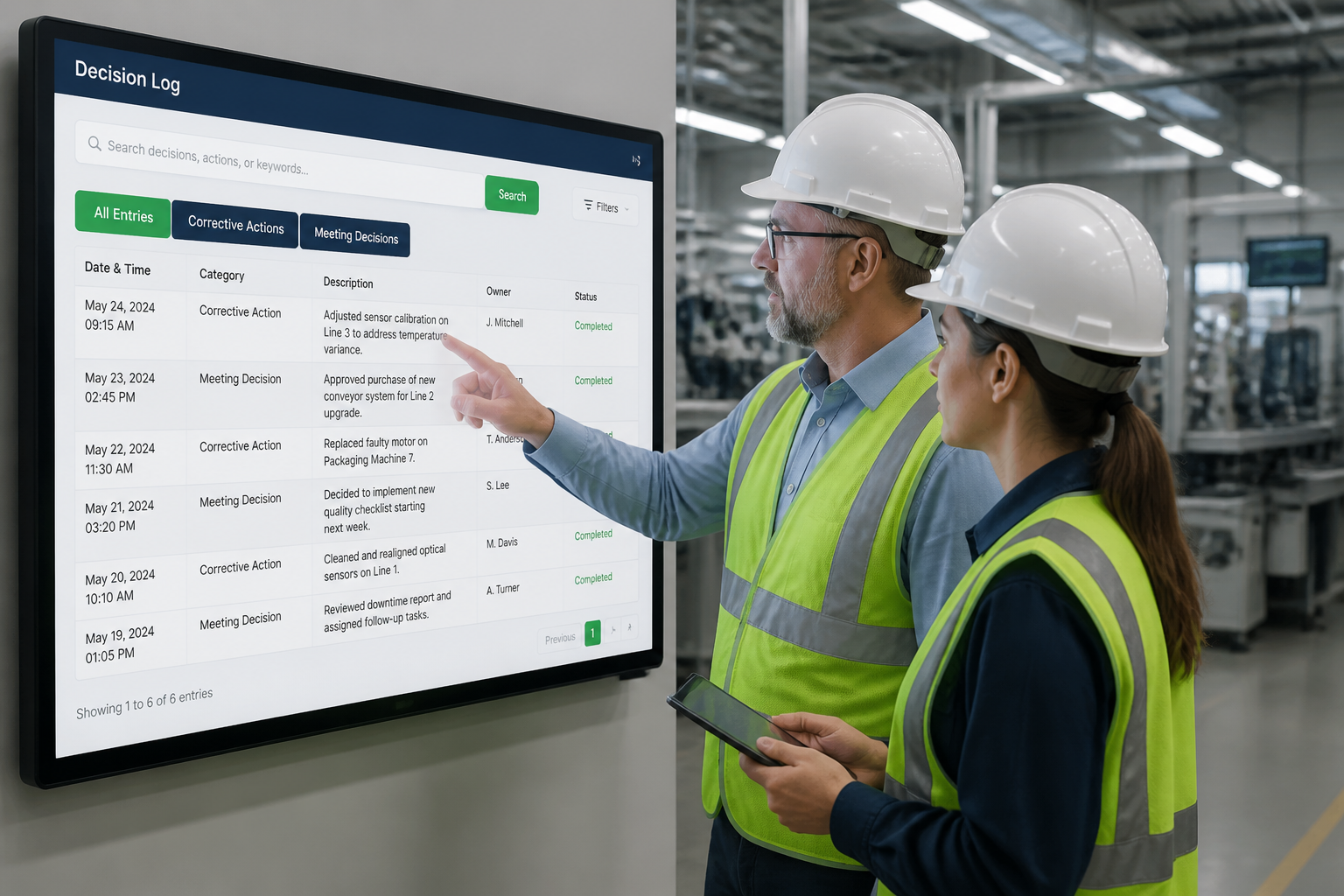
The first step to understanding your downtime is to meticulously track every single incident. Simply knowing your downtime is high isn’t actionable; you need to know why it’s happening. Keeping a detailed log helps you understand the health of your equipment and production processes. Start by categorizing each event: Was it a mechanical failure, an operator error, a material shortage, or planned maintenance? This level of detail allows you to spot patterns you would otherwise miss. For example, you might discover that a specific machine fails consistently during a certain shift or when running a particular product. This is the kind of insight that moves you from firefighting to problem-solving. You can digitize your workflows to automatically capture this data, replacing manual spreadsheets with a reliable, real-time system of record.
Measure Progress with OEE, MTTR, and MTBF
To quantify your improvements, you need to focus on the right key performance indicators (KPIs). The gold standard for measuring manufacturing productivity is Overall Equipment Effectiveness (OEE). OEE gives you a score that shows how well a machine is performing by combining three factors: Availability (run time vs. planned production time), Performance (actual vs. potential speed), and Quality (good parts vs. total parts). Alongside OEE, two other critical metrics for asset performance management are MTTR and MTBF.
- Mean Time To Repair (MTTR): This measures the average time it takes to fix a machine after it breaks down. A lower MTTR means your team is getting more efficient at repairs.
- Mean Time Between Failures (MTBF): This tracks the average time a machine runs successfully before it fails again. A higher MTBF indicates improved equipment reliability.
Create Feedback Loops with Audits and Reviews
Collecting data is only half the battle; you have to use it. The most effective way to do this is by creating consistent feedback loops. This means establishing regular meetings, like daily team huddles or weekly production reviews, where your team discusses the downtime data. These forums shouldn’t be about placing blame. Instead, they should be collaborative sessions focused on identifying the root causes of issues and brainstorming solutions. By reviewing performance against schedules and targets, you can quickly spot deviations and address them. This process turns data into a conversation, ensuring that insights from the factory floor are heard and acted upon. Using a tool to organize your team’s meetings, issues, and actions ensures that nothing falls through the cracks and every improvement idea is tracked from suggestion to resolution.
Turn Data into a Culture of Continuous Improvement
Ultimately, the goal of measurement is to foster a culture of continuous improvement where every team member feels empowered to make things better. When data is transparent and accessible, it gives your frontline workers the context they need to make smarter decisions in the moment. This is where AI and machine learning can play a transformative role. AI-powered tools learn what “normal” operation looks like for your equipment by analyzing historical data. They can then monitor real-time data streams and flag anomalies before they lead to a breakdown. This prescriptive maintenance approach shifts your team’s focus from reacting to failures to proactively preventing them. By turning data into actionable insights, you build a system where the entire team is engaged in making the factory run more smoothly, efficiently, and reliably.
Where to Start Your Downtime Reduction Journey
Tackling equipment downtime can feel like a massive undertaking, but it doesn’t have to be. You don’t need a multi-year, high-risk plan to start seeing real improvements on the factory floor. The most successful transformations begin with a clear understanding of the current situation and a focused, step-by-step approach. By breaking the journey down into manageable phases, you can build momentum, prove value quickly, and create a sustainable culture of continuous improvement. Instead of trying to fix everything at once, focus on a path that delivers immediate impact while laying the groundwork for future innovation. Here’s a practical, three-step approach to get you started.
Assess Your Plant’s Current State
Before you can map out your path forward, you need to know exactly where you stand. A thorough assessment of your current operations is the critical first step. As the experts at UpKeep note, “Keeping track of downtime helps you understand how well your equipment and production are doing.” If your current system involves manual data entry on spreadsheets or notes on a whiteboard, you likely have an incomplete picture. Start by gathering baseline data on your key performance indicators like OEE, MTTR, and MTBF. Talk to your frontline teams to understand their daily challenges and the most frequent causes of production stops. This initial discovery phase will help you pinpoint your biggest sources of loss and identify the low-hanging fruit for the quickest wins.
Choose a Modular, Non-Disruptive Path
Many manufacturers hesitate to adopt new technology because they fear a costly and disruptive “rip-and-replace” project. The good news is that modern solutions are designed to be modular and flexible. You can implement new capabilities without tearing out your existing systems. This is crucial, because as one analysis from Tractian points out, using many separate, disconnected tools often “cause[s] confusion, errors, and wasted time.” Look for a platform that can act as an intelligent overlay, connecting your existing machines, systems (including your current MES), and people. This approach allows you to digitize your factory at your own pace, adding new modules as your needs and maturity evolve, ensuring a smooth and non-disruptive transition.
Start Fast with LOOP, Then Scale Your Solution
The best way to build momentum is to start with a solution that delivers fast, visible results. For many plants, the biggest initial gains come from improving how teams communicate, align, and solve problems. A tool like LOOP helps you digitize daily production meetings, standardize issue resolution, and connect your frontline workers in a shared operating rhythm. Once you’ve established this foundation of operational control, you can scale your solution. The next step might be adding real-time equipment monitoring or moving toward advanced analytics. As BizTech Magazine highlights, AI can be used to “guess when equipment might break down before it happens,” turning your maintenance strategy from reactive to predictive and even prescriptive.
Related Articles
- Industrial Manufacturing
- 9 Advantages of Preventive Maintenance for Your Biz
- Predictive Maintenance to Cut Downtime & Costs | Decisyon
- Boost Food Processing Efficiency with an AI-Driven MES
- Top 10 Predictive Maintenance Software for Manufacturing
Frequently Asked Questions
We already have an MES. Do we need to replace it to reduce downtime? That’s a great question, and a common concern. No, you don’t need to rip and replace your existing systems. Modern platforms are designed to work as an intelligent layer on top of what you already have. They can connect to your current MES, your equipment, and your other software to pull all your data into one place. This gives you a single, unified view of your operations without the cost and disruption of starting from scratch.
My equipment is old and not ‘smart.’ Can I still get real-time data from it? Absolutely. You don’t need brand-new machinery to build a digital factory. Many plants have a mix of old and new equipment, and that’s perfectly fine. You can use devices like a Smart IoT Gateway to connect to your legacy machines. These gateways act as a bridge, collecting data from older sensors and PLCs and translating it into a format that modern software can use. This allows you to get real-time visibility into the health and performance of all your assets, regardless of their age.
How long will it take to see a reduction in our downtime? You can start seeing results much faster than you might think. The key is to begin with a focused solution that addresses your most immediate pain points, like communication and issue resolution. By digitizing your daily meetings and standardizing how your team tracks and solves problems, you can bring more control to the factory floor in a matter of weeks, not years. This approach delivers a quick impact and builds a strong foundation for adding more advanced capabilities, like predictive analytics, down the road.
What’s the real difference between predictive and prescriptive maintenance? Think of it this way: predictive maintenance is like a weather forecast that tells you it’s going to rain. It’s very useful information. Prescriptive maintenance takes it a step further; it not only tells you it’s going to rain but also advises you to take an umbrella and wear a raincoat. In the factory, a predictive system might alert you that a motor is likely to fail soon. A prescriptive system will tell you the motor is likely to fail and also recommend the specific action to take, like which part to replace and when to schedule the work to minimize production loss.
My team is already overwhelmed. Will this just add more work for them? This is a critical point, because new technology should make work easier, not harder. The goal of these tools is to eliminate the frustrating, low-value work that currently consumes your team’s time. Instead of manually tracking data in spreadsheets, chasing down information, or constantly reacting to emergencies, the system handles that for them. It automates data collection and provides clear, prioritized actions, so your team can stop firefighting and focus on proactive problem-solving and making meaningful improvements.