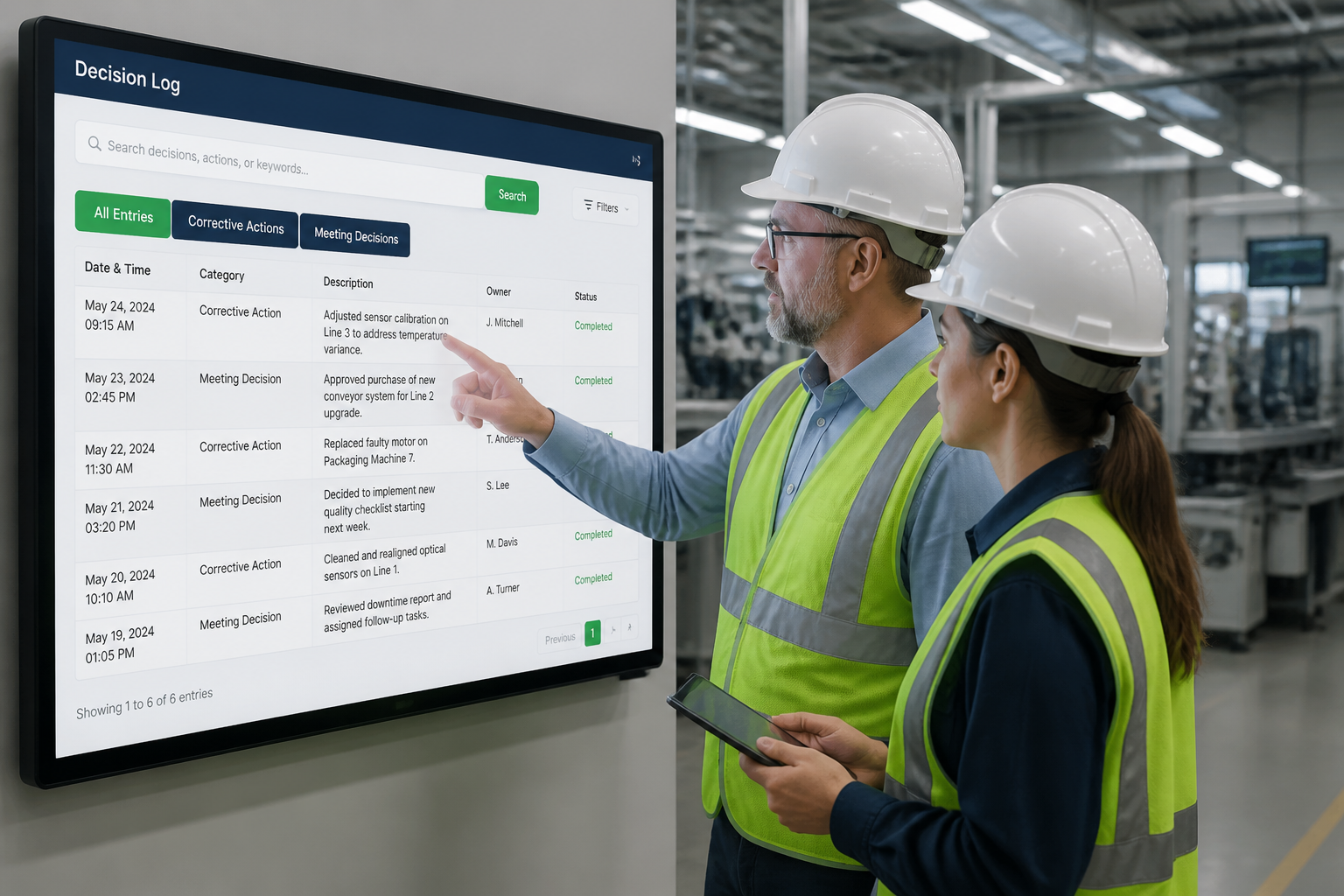
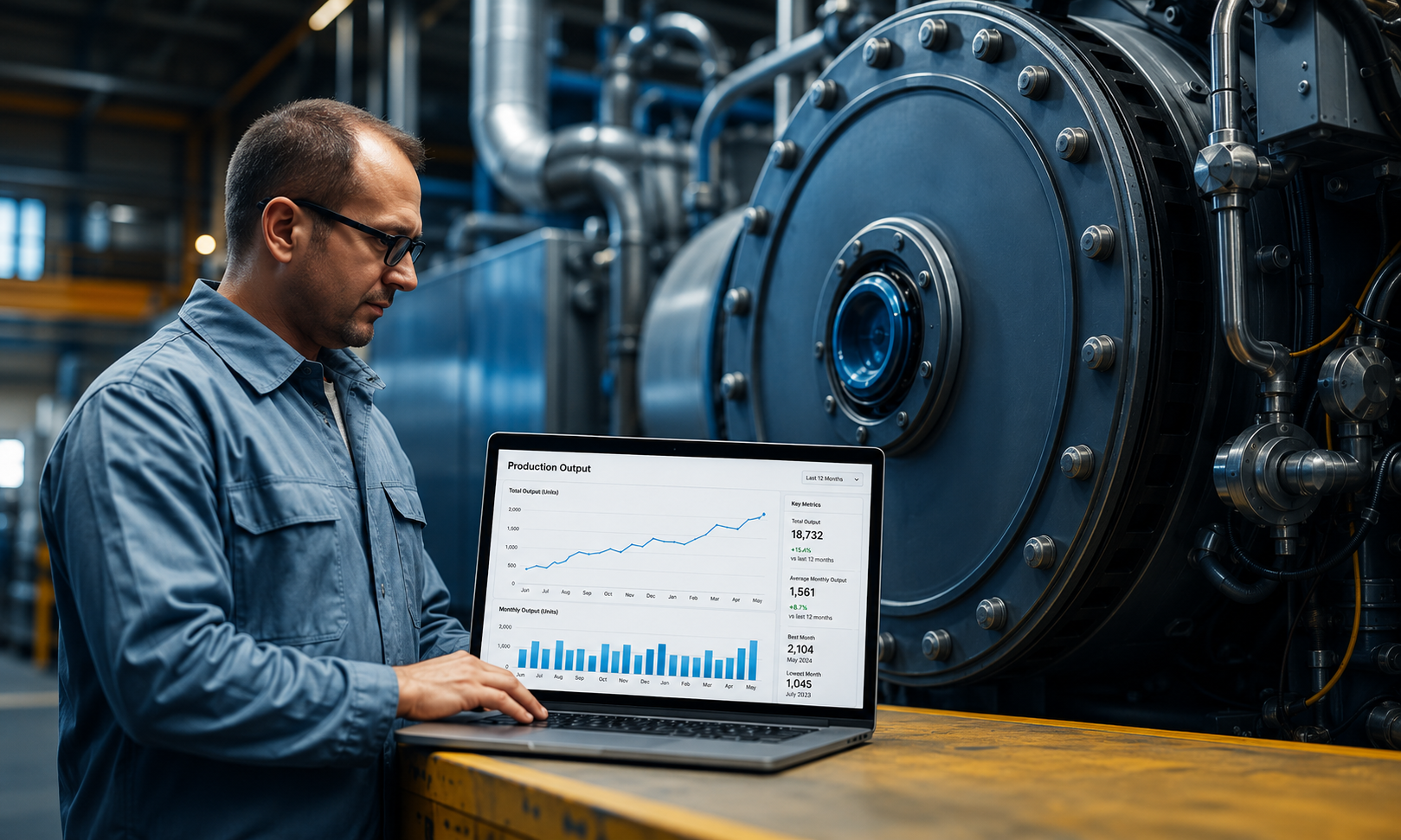
Predictive maintenance software for manufacturing in 2026 pulls signal straight from PLCs and IoT sensors, uses AI to separate noise from real risk, tells the technician what to do next instead of firing another alert, and opens the work order in the CMMS or EAM by itself. That is the whole test: does the software close the gap between the signal and the scheduled repair, or does it hand the maintenance team one more screen to watch? The comparison table below is the shape to take into a vendor call. See what predictive maintenance would lift on your own line →
Predictive maintenance software for manufacturing: how the options actually compare
Vendor demos blur together. On the floor, the difference between the best predictive maintenance software and a glorified dashboard is whether the alert triggers action or sits in an inbox. Use this shape when you're evaluating.
| Capability | Basic monitoring tool | Analytics dashboard | Predictive maintenance platform |
|---|---|---|---|
| Real-time signal from PLC + IoT | Partial | Yes | Yes |
| AI anomaly detection tuned per asset | No | Sometimes | Yes |
| Prescriptive next-action recommendation | No | No | Yes |
| Auto work order into CMMS / EAM | No | No | Yes |
| Spare-parts trigger on prediction | No | No | Yes |
| Deploys in days, not months | Sometimes | No | Yes |
Most plants we walk into own column 1 or column 2. The lift from column 3 is usually a 20–30% cut in unplanned downtime inside a quarter, mostly from failures that used to happen at 2 a.m.
Predictive maintenance software has become one of the highest-return investments a manufacturer can make when the goal is to reduce downtime, extend asset life, and stop wasting technician hours on service that wasn't needed. Instead of waiting for equipment to fail or relying on rigid calendar-based service intervals, these platforms use real-time data, analytics, and machine learning to help teams act before a breakdown happens.
For manufacturers operating in high-pressure environments, the right predictive maintenance platform does more than send alerts. It connects plant-floor data to maintenance workflows, helps teams prioritize critical assets, and supports smarter decisions about labor, inventory, and production scheduling. It turns maintenance from a reactive cost center into a lever on OEE.
What Predictive Maintenance Software Does
Predictive maintenance software collects machine and sensor data from industrial assets and looks for early signs of failure. It may monitor vibration, temperature, pressure, current, run time, or other equipment signals, then compare those readings against historical patterns to detect anomalies.
When the software identifies a risk, it can alert maintenance teams, generate recommendations, and in some cases create a work order automatically. That makes it easier for manufacturers to fix problems before they interrupt production, damage assets, or create safety issues.
Unlike preventive maintenance, which is based on a fixed schedule, predictive maintenance is driven by actual equipment condition. That shift is important because it helps manufacturers avoid unnecessary service while also reducing the risk of unexpected failure.
Why Manufacturers Need It
Manufacturing environments are especially vulnerable to downtime because one failure can affect an entire production line. A single broken motor, worn bearing, clogged pump, or overheating component can trigger missed deadlines, scrap, overtime, and emergency repair costs.
Predictive maintenance software helps manufacturers respond to those risks with more precision. Instead of servicing every asset on the same calendar cycle, teams can focus on the equipment that actually needs attention. That often leads to better uptime, lower maintenance spending, and more efficient use of labor.
It also supports better planning across the organization. When maintenance teams know what is likely to fail and when, they can coordinate with production, procurement, and operations more effectively. That can reduce surprise shutdowns and improve overall throughput.
Core Features To Look For
If you are evaluating predictive maintenance software for a manufacturing environment, certain features matter more than others. The best platforms combine data collection, analytics, workflows, and reporting in a way that is easy for maintenance teams to use.
Real-time condition monitoring
Real-time condition monitoring is one of the most important features in predictive maintenance software. It allows the system to continuously track asset health and detect changes as they happen rather than waiting for a technician to inspect the equipment manually.
This is especially valuable in manufacturing because machine behavior can shift quickly. Temperature spikes, vibration changes, and pressure fluctuations may appear long before a failure occurs. A strong monitoring feature gives teams the visibility needed to react early.
IoT sensor integration
Predictive maintenance depends on reliable data, so sensor integration is essential. The software should connect with industrial IoT devices and collect signals from multiple asset types across the plant.
The more types of equipment the platform can read, the more useful it becomes. Look for support for common condition-monitoring inputs such as vibration, thermal readings, electrical current, oil quality, acoustic data, and pressure. Broad integration helps the software identify patterns across different machines and production lines.
AI and machine learning analytics
Modern predictive maintenance platforms increasingly rely on AI and machine learning to improve prediction quality. These tools help the software learn from historical failures, current sensor data, and asset behavior over time.
For manufacturers, this matters because not every machine fails in the same way. AI-based systems are better at distinguishing normal variation from actual risk, which can improve alert accuracy and reduce false alarms. That means maintenance teams spend less time chasing noise and more time fixing real problems.
Anomaly detection and alerts
Anomaly detection is the engine behind early warning. The software should identify unusual behavior, compare it against expected performance, and notify the right people when conditions change.
Good alerting features do more than send a generic message. They should include asset details, severity levels, trend information, and ideally context about why the system is concerned. That helps maintenance teams respond faster and make better decisions.
Work order management
Prediction only matters if it leads to action. That is why work order management is one of the most important capabilities in predictive maintenance software.
The best systems connect directly to maintenance workflows so teams can create, assign, and track work without leaving the platform. Some tools integrate with CMMS or EAM systems to streamline execution. That connection reduces manual handoffs and helps ensure that alerts become scheduled repairs instead of forgotten warnings.
Asset prioritization
Not every asset deserves the same level of attention. A good platform should help manufacturers prioritize based on criticality, failure impact, and production importance.
This is particularly useful in plants with large equipment inventories. If the software can rank assets by business risk, maintenance teams can spend time where it will matter most. That improves operational focus and makes the maintenance program more strategic.
Dashboards and reporting
Manufacturers need more than raw data. They need clear dashboards that show asset health, active alerts, maintenance trends, and performance metrics in a format that plant managers and technicians can understand quickly.
Strong reporting helps teams spot recurring problems, measure downtime reduction, and evaluate whether predictive maintenance is delivering value. It also supports leadership reporting by turning technical data into business results.
Integration with existing systems
Predictive maintenance software works best when it fits into the systems manufacturers already use. Integration with CMMS, ERP, MES, SCADA, and other plant systems can make the difference between a smooth rollout and a frustrating one.
If the software can share data across departments, maintenance becomes more connected to production planning and supply chain operations. That creates a more coordinated approach to uptime and reliability.
Advanced Features That Add Value
Once the core capabilities are in place, advanced features can help manufacturers get more value from their investment. These features are especially helpful for complex plants, multi-site operations, or organizations trying to mature their maintenance strategy.
Prescriptive recommendations
Some predictive maintenance platforms go beyond detection and offer recommended next steps. Instead of just saying that a bearing may fail, the software may suggest inspection, lubrication, replacement, or escalation based on risk level.
This is useful because it reduces decision fatigue. Maintenance teams can move from diagnosis to action faster, especially when the system includes guidance based on historical outcomes and asset type.
Spare parts planning
When predictive maintenance software integrates with inventory or procurement systems, it can help teams prepare replacement parts before a failure happens. That reduces the risk of waiting on urgent orders after a problem is already disrupting production.
For manufacturers with long lead times or hard-to-source parts, this capability can be especially valuable. It turns maintenance into a more planned and cost-effective process.
Model customization
No two plants operate exactly the same way. Advanced software should allow customization so models can be adjusted for specific equipment, environments, and operating conditions.
That flexibility matters because a generic model may not reflect your real-world process variables. The more tailored the system is to your assets, the more useful its predictions tend to be.
Continuous learning
The best platforms improve over time. As they collect more data, they can refine prediction logic, reduce false positives, and adapt to changing conditions.
That means the software becomes more accurate as it is used, which is important in manufacturing environments where equipment ages, production demands shift, and operating conditions evolve.
How To Evaluate Vendors
Choosing the right predictive maintenance platform is not just about feature lists. It is about fit, usability, and measurable operational impact.
Start by asking how the platform handles your specific equipment types and whether it supports the data sources already available in your plant. Then evaluate how quickly it can be deployed and how much work is required from your internal team to configure it.
You should also assess ease of use. If technicians and supervisors find the interface confusing, adoption will suffer even if the technology is strong. The best tools are the ones that fit into daily maintenance routines without adding friction.
Finally, consider reporting, scalability, and support. A solution may work well for one line or one facility but fall short when expanded across a larger operation. Your software should be able to grow with your maintenance strategy.
Benefits For Manufacturers
The right predictive maintenance software can create measurable improvements across the plant. The most obvious benefit is reduced unplanned downtime, but the impact usually extends much further.
Manufacturers also benefit from lower emergency repair costs, better asset performance, improved technician productivity, and more stable production schedules. Over time, predictive maintenance can also support safety goals by helping teams address risky conditions before they become dangerous.
There is also a financial planning advantage. Predictive maintenance makes maintenance spending more predictable, which can help operations leaders budget more accurately and make stronger capital decisions — and quantify what another quarter of reactive maintenance actually costs the plant in the CFO's language.
Example In Practice
Imagine a production motor that begins showing increased vibration and rising temperature over several days. A predictive maintenance platform detects the pattern, compares it to historical performance, and flags the asset as high risk.
Instead of waiting for failure, the maintenance team receives an alert, reviews the trend, and schedules an inspection during a planned shutdown. The result is less disruption, lower repair cost, and no sudden stop in production.
That is the real power of predictive maintenance: it gives manufacturers time to act before a minor issue becomes a major problem.
Choosing The Right Solution
The best predictive maintenance software for manufacturers is the one that combines accurate analytics, reliable integrations, and easy-to-use workflows. It should help your team see problems early, prioritize the right assets, and take action without unnecessary complexity.
If your current maintenance approach is mostly reactive or heavily calendar-based, predictive maintenance is one of the fastest paths to a step-change in uptime. The key is choosing a platform that fits your plant, your equipment, and your team's day-to-day realities.
Predictive maintenance is one part of a wider reliability program; asset performance management is the layer that decides which asset gets the attention first. Decisyon's Predictive Maintenance and Prescriptive APM hit every criteria in the table above out of the box, and the Smart Gateway connects to the PLCs in a day. If you want to see the expected lift on your own line before any sales call, the ROI Advisor takes about two minutes.