One missing lot record can turn a contained quality issue into a plant-wide recall. Food and beverage MES software gives manufacturers live production control before safety and output losses compound.
Food and beverage MES software connects recipes, materials, equipment, people, and quality checks in real time across production. It records each batch and lot as work happens, helping teams verify allergen controls, trace ingredients, manage holds, investigate deviations, and respond faster to a recall. With dependable shop-floor data, manufacturers can standardize execution, reduce manual record gaps, measure yield and efficiency, and build a practical basis for continuous improvement.
Plant leaders need to know which capabilities protect consumers, support compliance, and improve daily performance without adding process friction or blind spots. The guide begins by clarifying what food and beverage MES software means at the plant level.
What is food and beverage MES software?
Food and beverage MES software is a plant-level system that directs, records, and shows how products are made during each production run. It connects planned work to actions on the line, including ingredient use, batch progress, checks, holds, and release status.
This scope is wider than compliance alone. Compliance records matter, but a complete operations view also covers output, quality, traceability, material flow, and plant decisions. For a related industry view, see Decisyon’s food and beverage manufacturing solutions.
The production record
An MES creates an execution record for what happened on the floor. Work orders show what was made and when. Lot records link ingredients, packaging, finished batches, and process steps. Quality checks record results, exceptions, holds, and actions taken during production.
This detail matters when teams must trace product movement in both directions. Research on food outbreak work describes tools used for trace-back and trace-forward investigations. In daily operations, the same lot detail helps quality teams find affected batches without searching separate logs.
MES and ERP roles
ERP and MES serve different levels of the business. ERP plans orders, materials, inventory, purchasing, and financial records. MES executes the production plan by capturing line activity, operator checks, ingredient lots, downtime, yield, and batch disposition as work happens.
The connection matters. A production order can pass from ERP to MES for execution. Confirmed quantities, consumed lots, rejected material, and released product can then return to business systems. This gives planning teams usable records, while plant teams keep the detail needed to run the shift.
Visibility for plant decisions
A compliance-only view asks whether required records exist. A full MES view also asks whether a batch is on schedule and where loss occurs. It shows which lots are affected and whether a hold needs action. Managers can see production, quality, and traceability information in one operating context.
For food and beverage teams, that context can include allergen checks, process limits, material status, and release decisions. Each record is useful on its own. Together, those records show whether production is moving as planned or needs review.
That view supports faster decisions during normal production and during exceptions. It also sets a clearer basis for assessing a flexible MES to boost performance, since the question is not only recordkeeping. The question is how execution data helps a plant control quality, flow, and response.
How does MES support food safety and traceability?
Food and beverage MES software can connect production events to food safety records. It can record material lots, process checks, hold decisions, deviations, and product movement in one working history. This supports execution and retrieval, but software alone does not create compliance. The plant still owns its hazard analysis, controls, validation, training, and review.
Records tied to production
A food safety plan is easier to run when checks follow the job, recipe, line, and lot. An MES can prompt operators for required checks. It can retain entries with the time, user, result, and action taken. For FSMA preventive-control record workflows, this helps teams review production events without rebuilding a timeline later.
HACCP execution depends on consistent checks at control points and a clear response to exceptions. Research on digital traceability and HACCP shows connected monitoring can support critical control point tracking. A study of HACCP-based traceability and monitoring provides context.
Useful food safety records within an MES workflow may include:
- Incoming ingredient lot, supplier lot, and receiving status.
- Critical check results, limits, operator sign-off, and timestamps.
- Deviation details, affected lots, disposition, and corrective action.
- Release, hold, rework, or disposal decisions for each batch.
Lot genealogy and response control
Lot genealogy links ingredients and packaging to work orders, process steps, and finished goods. When a quality concern appears, teams need both directions of the chain. Trace-back finds the source inputs. Trace-forward shows which products, pallets, or orders may be affected.
This linkage matters during an investigation because traceability tools must support both trace-back and trace-forward work. That need is described in a food-borne outbreak investigation study. An MES can apply a hold against connected lots before a release decision is made.
For food manufacturers, practical traceability extends beyond a search screen. It should show each lot’s status and reason codes. It should let quality teams review related checks and deviations. Decisyon’s food and beverage manufacturing solutions place traceability in this wider operations context.
During a suspected issue, a connected record helps teams:
- Locate affected inputs, production runs, and finished lots.
- Place or confirm holds while quality reviews the evidence.
- Record the deviation, investigation, decision, and follow-up action.
- Retrieve a clear history for internal or external review.
Audit retrieval and accountability
Fast retrieval is useful, but it is not the same as meeting a requirement. A system can organize preventive-control records, HACCP checks, lot history, and approvals for review. It cannot decide whether the hazard analysis is sound or whether plant practices match the documented plan.
A strong MES approach makes accountability clear. Configure required data at the point of work, control edits, and link exceptions to disposition. Then test whether staff can find a full ingredient-to-finished-product history under time pressure. That is how digital records support safer, more controlled operations.
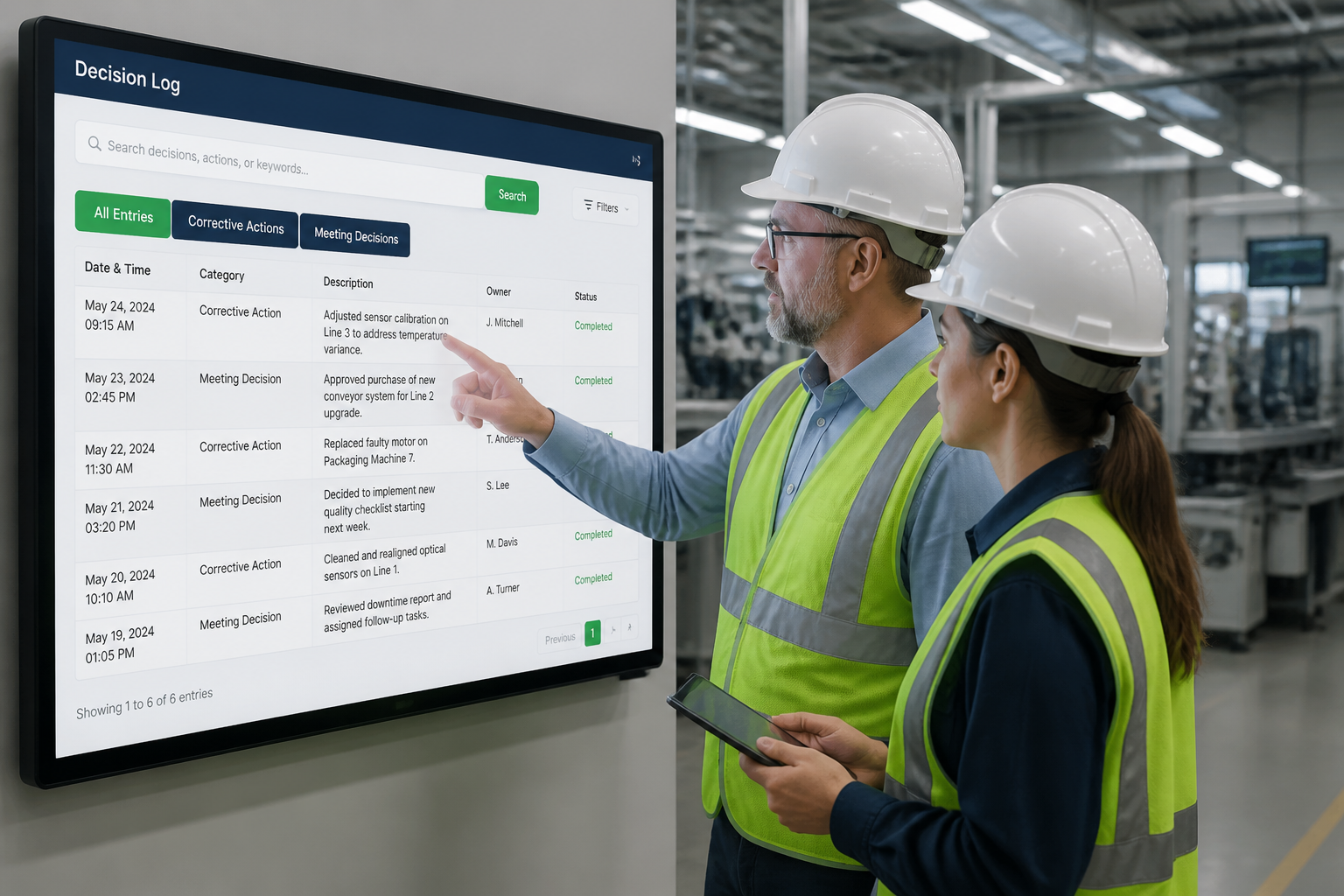
 Connected lot records give quality teams a clearer path from ingredients to finished product.
Recipe, batch, and allergen controls on the line
Controlled recipes at every run
In food production, a recipe is more than an ingredient list. It sets the approved formula, process steps, limits, and label inputs for each item. Food and beverage MES software should release only the current recipe version to the line. This control helps operators avoid old instructions or unapproved substitutions.
A digital batch record ties that recipe version to the work order, line, shift, and material lots used. As ingredients are staged, the system can require barcode scans or other material checks before addition. If the item, lot, or quantity does not match, the operator receives a prompt before the batch moves forward.
- Recipe version: release the approved formula and process settings for the scheduled product.
- Material verification: match ingredients and packaging to the batch before use.
- Batch record: capture who completed each check, when it happened, and what was consumed.
Allergen and label checks at changeover
Allergen controls depend on clear action at the point of change. When a line shifts from one product to another, a digital workflow can prompt cleaning steps and inspection sign-offs. It can also hold startup until required checks are complete. These records support traceability in complex food supply chains. Research on food supply chain transparency explains why reliable processing information matters.
Label checks belong in the same sequence. The operator can confirm the correct film, carton, or label before production resumes. A scan against the active item helps catch a packaging mismatch early. Quality teams can set added review points for a product with a changed allergen profile or revised label artwork.
Exceptions that quality teams can act on
Not every check passes. A failed scan, missed cleaning confirmation, incorrect label, or out-of-limit reading should create a non-conformance record. The record should link to the batch, affected materials, product status, reason, and review owner. A defined hold step keeps questionable output from moving forward during review.
Good records shorten the path from issue to action. Quality staff can view the batch history, find linked lots, and review checks without sorting through paper forms. Effective food safety work needs both trace-back and trace-forward tools during investigations, according to published outbreak investigation research.
Plant leaders can assess food and beverage manufacturing solutions by asking if line checks create usable evidence. When recipe, allergen, label, and exception records connect, teams can review events with context and decide the next safe step.
Abafoods proof point and MES comparison questions
Abafoods quality result
Decisyon’s published Abafoods case study reports a 25% reduction in non-conformities after its MES project. That outcome gives buyers a clear quality reference point for a food and beverage setting. Review the Abafoods flexible MES case study for the stated result and project context.
This proof point matters because non-conformities can affect yield, release choices, and quality team workloads. It does not promise the same result at every plant. It does show a measured case result. Buyers can test its fit against their own lines, recipes, and controls.
Questions behind the result
A food and beverage MES software review should begin with the data behind a result. Ask how non-conformities were logged before the project. Ask which work steps changed and how the reduction was measured. Quality records should also connect to batches, materials, lines, and action logs.
Traceability is part of this test. Food supply chain research points to a need for clear records of where food is grown and processed. It also describes the need for safe, authentic ingredients. Research on food supply chain transparency and trust supports asking for records, not broad claims.
Neutral demo comparison questions
Aptean, AVEVA, Plex, and Decisyon may all appear on an MES shortlist. A fair review does not assume one vendor lacks a needed function. Give each vendor the same plant scenario and request proof in the demo. Decisyon’s Abafoods result offers one case measure for that review.
| Demo criterion | Questions for Aptean, AVEVA, and Plex | Decisyon proof to verify |
|---|---|---|
| Quality outcome | Show a measured drop in quality events. | Abafoods reports 25% fewer non-conformities. |
| Batch history | Trace one lot through materials and steps. | Map case workflows to your lot structure. |
| Corrective action | Show how an exception starts an assigned action. | Ask which process supported fewer events. |
| Change handling | Show recipe, rule, or form changes. | Review fit for varied food processes. |
| Reference validation | Provide a comparable food plant reference. | Use Abafoods as the published baseline. |
Buyers should bring one quality deviation, one batch trace, and one change request to each demo. These checks make vendor answers easier to compare. For broader plant use cases, review Decisyon’s food and beverage manufacturing solutions alongside the case study.
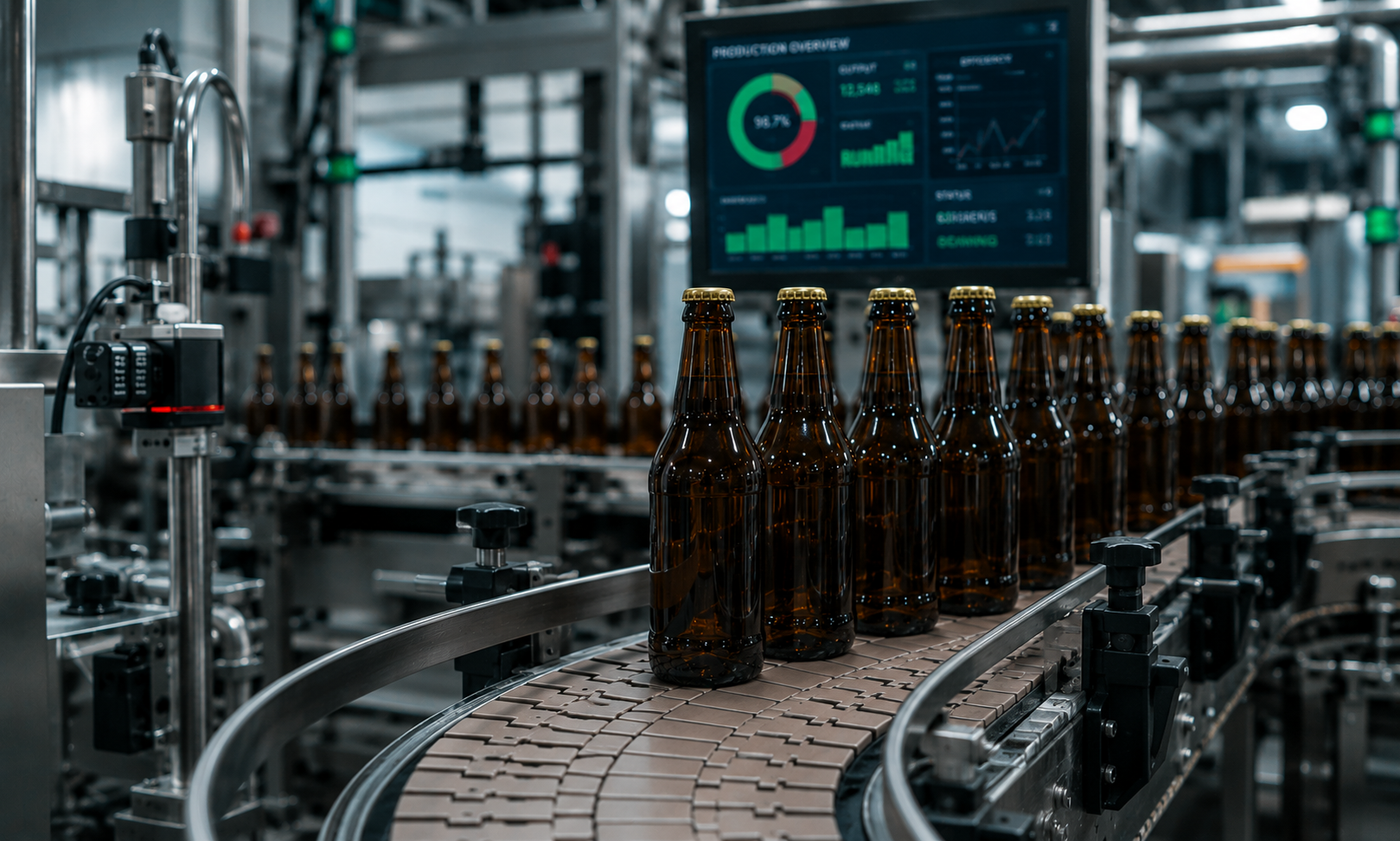
 Digital batch and quality checks support faster review of production exceptions.
Where MES improves efficiency without compromising safety
Food and beverage MES software should not trade control for speed. Efficiency is useful when each batch record stays clear, checks remain visible, and teams can respond to risk before releasing product. That balance begins with trusted shop-floor data.
Less entry, better exception review
A digital record reduces the need to copy production details from paper into separate systems. Operators can spend less time transcribing and more time checking exceptions, such as missing sign-offs or holds that need review. Quality staff gain one view for review instead of chasing disconnected entries.
The goal is not to remove operator judgment. It is to give operators current production context at the point of action. A flagged deviation, incomplete check, or unexpected material use should be visible before it becomes a later investigation.
Safety still sets the decision path. Trace data must support both trace-back and trace-forward work during an investigation, as described in research on food-borne disease outbreak investigations. Faster entry matters only if teams can find affected materials and finished batches when an issue appears.
Throughput with quality context
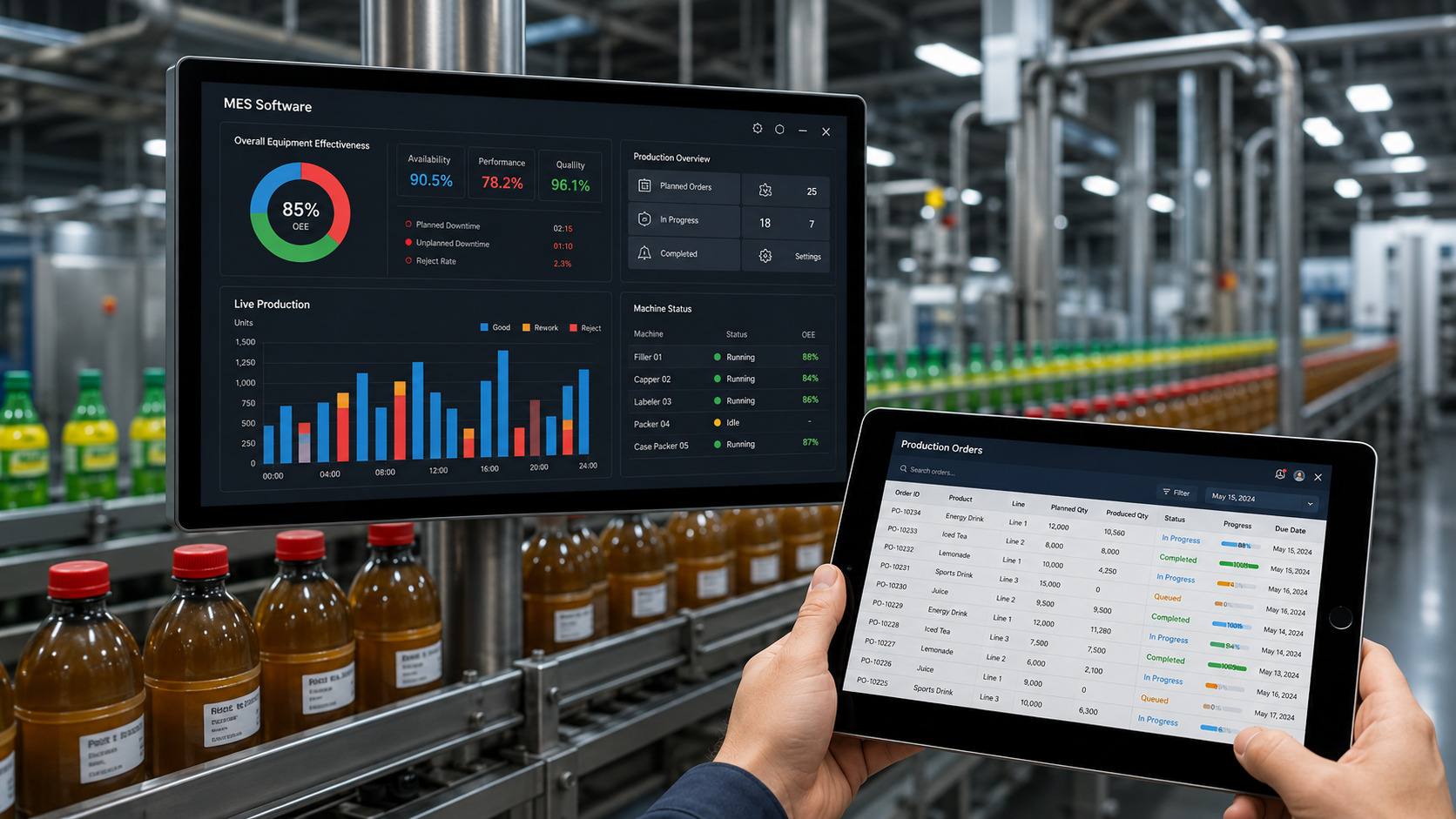
MES brings exceptions, downtime, waste, scrap, and rework into the same operating view. When output rises but rework rises too, supervisors can pause and inspect the cause before treating throughput as success. That context makes OEE a starting point for questions, not a reason to bypass quality checks.
For example, a line may meet its planned run rate while producing more scrap or held product. Looking at these signals together directs the next question: was the loss driven by equipment, process settings, material, or a safety control?
Decisyon’s food and beverage manufacturing solutions place performance visibility beside traceability and plant operations. This link between loss review and batch context helps teams choose changes that protect both flow and control.
Improvement tied to evidence
Continuous improvement works best when the reason for a stop, hold, or correction is captured where the work occurs. Teams can review repeat exceptions, compare process changes, and keep actions tied to the record that prompted them.
Corrective action also needs a clear owner and evidence of review. When the record connects the event to follow-up, managers can test whether a change worked without weakening release controls.
A lean MES approach keeps improvement focused on useful information, rather than more reporting for its own sake. Readers evaluating a flexible MES to boost performance can look for connected review paths: exception, cause, action, and verification. That sequence supports faster decisions without making safety an afterthought.
How should manufacturers choose food and beverage MES software?
Choosing food and beverage MES software starts with records, tests, systems, and users, not a feature list. Food safety teams need trace-back and trace-forward tools during an investigation, as shown in this food safety traceability study.
A sound review should prove that the system can follow materials and guide line work. It should support action when a batch is at risk. Use this sequence with quality, production, maintenance, and IT leaders at the same table.
A five-step MES evaluation
-
Map hazard and traceability records. Start with receiving, recipe use, processing, packaging, hold, and release records. List each required data point, its owner, and when it must be captured. This shows whether a demo follows plant work instead of a polished script.
-
Test lot genealogy and allergen workflows. Ask the vendor to trace one raw ingredient forward into finished lots. Then trace a shipped lot back to ingredients and checks. Include an allergen changeover, a hold, and a release step in the test.
-
Confirm integration and data capture. Identify data needed from ERP, quality tools, scanners, scales, sensors, and line equipment. Check how operators record exceptions when a device fails. Ask who owns interface monitoring and how missing records are found.
-
Review deployment and operator use. Put supervisors and line operators in the review, not only system owners. Have them complete common tasks on a realistic screen. Confirm role access, offline or outage steps, training needs, and how workflows change as products change.
-
Compare proof and the ROI path. Request proof from operations similar to your plant, products, and risks. Set baseline measures before selection, such as record completion, hold handling time, scrap review, and genealogy search time. Then agree how results will be checked.
What to request in a live demonstration
A vendor demo should use one plant scenario from your evaluation map. Request a complete batch journey, including ingredient receipt, allergen controls, operator entries, an exception, finished-lot genealogy, and release. A guided food and beverage MES demo can be assessed against that same script.
Score every option with the same test cases and the same reviewers. Record what was shown live, what requires setup, and what remains unproved. This keeps a selection focused on shop-floor needs rather than claims alone.
Operational evidence and business case
The final choice should connect safety, quality, throughput, and labor goals to measures the plant already trusts. State the baseline, the change expected, the data source, and the review date. That makes the business case testable after rollout.
Before approval, assign owners for validation, training, integration, and benefit tracking. A clear owner for each measure helps the project move from software selection to verified plant performance.
Frequently Asked Questions
How do I choose the right MES for food and beverage manufacturing?
When choosing food and beverage MES software, map required workflows first: lot genealogy, allergen controls, recipe versioning, quality checks, and exception handling. Confirm integration with ERP, scanners, equipment, and reporting tools. Test whether operators can complete checks quickly during production. Compare deployment effort, configuration flexibility, audit records, and support. Request a pilot using an actual batch and recall scenario before a wider rollout.
Does MES help with allergen management?
Yes. MES software can connect approved recipes, ingredient lots, sanitation steps, line clearances, label checks, and finished batches in one controlled record. This helps teams verify allergen-related actions before release and investigate deviations quickly. Decisyon identifies automated, real-time allergen management and batch tracking as key needs for food safety teams on its manufacturing platform site.
Can MES software help with recipe and batch management?
Yes. A food and beverage MES can distribute approved recipe versions, capture actual ingredient lots and process checks, and preserve the batch history. This reduces reliance on paper or disconnected spreadsheets when staff investigate a quality issue. Batch records should link inputs, production steps, packaging, holds, and release decisions, supporting the trace-back and trace-forward operations described in food safety research.
How does MES software improve food and beverage manufacturing efficiency?
MES software captures production events as work occurs, giving supervisors clearer visibility into downtime, waste, quality checks, and line performance. Teams can address deviations sooner and compare actual results with standards. Efficiency gains depend on processes, data quality, and adoption, so manufacturers should establish a baseline and validate expected results in a pilot.
Ready to build the case for smarter MES action?
Connected production insight can help your team spend less time chasing records and more time acting on food safety, traceability, quality, and efficiency priorities. Start with your plant’s own production goals, risk points, and improvement baseline.
Use your report to align stakeholders, evaluate the business case, and identify the food and beverage MES software capabilities that matter most for your operation.