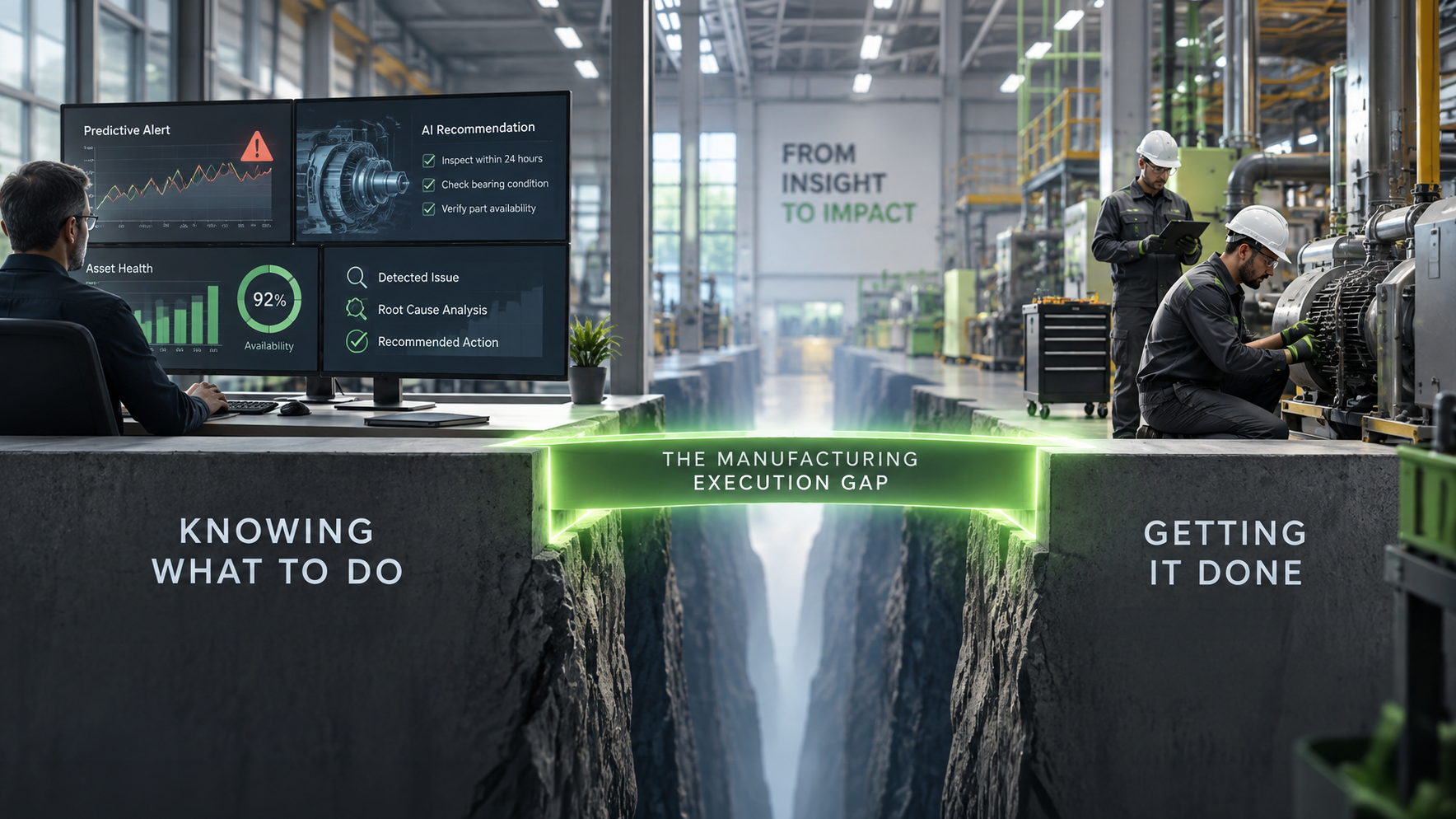
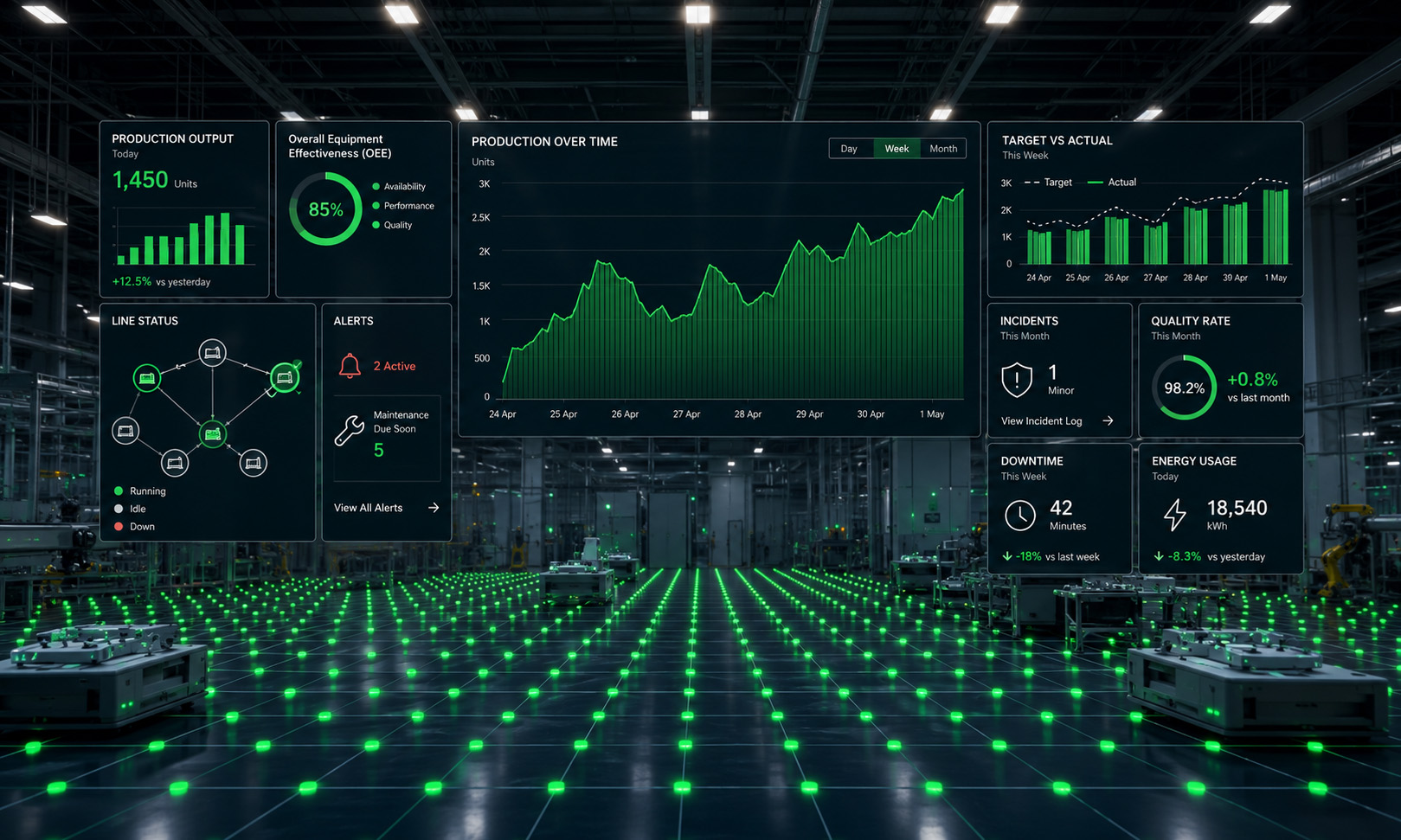
We all know that one amazing operations manager—the one who seems to know exactly what’s happening everywhere on the floor. What if you could give that person a superpower? That’s essentially what AI operations optimization does for your entire team. It acts as an intelligent assistant, constantly monitoring production lines, analyzing performance data, and flagging potential issues in real time. It doesn’t replace your team’s expertise; it enhances it. By handling the heavy lifting of data analysis, it frees your people to focus on what they do best: solving complex problems and making strategic improvements.
Key Takeaways
- Gain Proactive Control Over Operations: AI analyzes live factory data to forecast equipment failures and process bottlenecks, empowering your team to resolve potential issues before they cause costly downtime.
- Augment Your Team’s Expertise: AI acts as a powerful analytical partner for your frontline staff, handling complex data analysis to deliver clear recommendations that support faster, more informed decision-making on the factory floor.
- Prioritize Integration Over Disruption: The most effective AI solutions are flexible and designed to work with your existing systems, allowing for a phased implementation that adds value without requiring a costly overhaul of your current operations.
What is AI for Factory Optimization?
At its core, an AI operations optimization tool is a software system that uses artificial intelligence (AI) and machine learning (ML) to analyze factory data and help you run your plant more effectively. Think of it as a smart assistant for your entire production line. Instead of relying solely on historical data, spreadsheets, and gut feelings, these tools process information from your machines and systems in real time to find patterns, predict outcomes, and suggest improvements.
The goal is to move from a reactive state—fixing problems after they happen—to a proactive and even predictive one. These tools help manufacturers use their own data to streamline operations, refine processes, and make better, faster decisions right on the factory floor. By connecting data from various sources, from sensors on a single machine to your entire ERP system, an AI tool provides a unified view of what’s happening. This visibility is the first step toward building a true Digital Factory, where data drives every action and helps teams align on priorities to resolve issues before they impact production targets.
How Does AI Actually Work on the Factory Floor?
In a manufacturing environment, AI acts as a powerful analytical engine. The process starts with collecting vast amounts of data from sensors, PLCs, and other equipment across the factory floor. This is where an edge computing solution like a Smart Gateway becomes critical, gathering real-time information directly from the source.
Once the data is collected, AI and machine learning algorithms get to work. They analyze this constant stream of information—looking at things like temperature, vibration, cycle times, and error codes—to identify normal operating patterns and detect subtle deviations that could signal a future problem. By understanding these relationships, the AI can pinpoint opportunities for improvement in your existing processes and equipment layout, turning raw data into actionable intelligence for your team.
What Makes an AI Optimization System Tick?
An effective AI optimization system is built on a few core components that work together. First is performance optimization, where the AI continuously analyzes workflows to find bottlenecks and suggest ways to increase throughput or reduce production times. The second key component is predictive analytics, which is the system’s ability to forecast future events. This is essential for prescriptive maintenance, as the tool can predict when a machine is likely to fail so you can schedule repairs proactively.
Finally, the system must enable real-time decision-making. It’s not enough to get a report at the end of the week; your teams need insights as events unfold. This means the tool should provide clear, immediate recommendations that help operators and managers make informed choices on the spot, enhancing profit margins by reducing waste and downtime.
Beyond the Factory Floor: AI’s Role in Broader Operations
The benefits of AI in manufacturing don’t stop at the production line. The same intelligence that optimizes machine performance can be extended to streamline your entire business operation, from sourcing raw materials to delighting your final customer. When you connect your factory floor data with other business systems, you create a powerful, unified view that breaks down departmental silos. This holistic approach allows different teams—like supply chain, sales, and customer service—to work from the same real-time information, making the entire organization more agile and responsive. It’s about creating a truly connected enterprise where insights from one area inform decisions in another, driving efficiency across the board.
Demand Forecasting and Inventory Management
One of the biggest challenges in manufacturing is balancing supply and demand. AI helps solve this by analyzing historical sales data, current market trends, and even external factors like weather patterns to predict what customers will want to buy. This allows you to move beyond educated guesses and make data-driven decisions about your inventory levels. By accurately forecasting demand, you can ensure you have the right amount of raw materials and finished goods on hand, which helps prevent costly overstocking or frustrating stockouts. This not only optimizes cash flow but also ensures your production schedule is aligned with actual market needs, reducing waste and improving overall efficiency.
Optimizing the Entire Supply Chain
A modern supply chain is a complex network with countless moving parts, making it vulnerable to disruption. AI brings clarity and control to this complexity by processing vast amounts of data in real time. It can monitor shipments, predict potential delays, and even suggest alternative delivery routes to keep things moving smoothly. This level of visibility transforms your supply chain from a reactive system to a proactive one. By creating a central data command center, or Control Tower, you can anticipate market changes and collaborate more effectively with suppliers, making the entire process more resilient and efficient from end to end.
Enhancing Customer Service and Marketing
Operational excellence on the factory floor has a direct impact on customer satisfaction. AI helps bridge the gap between production and customer-facing teams by providing real-time insights into product quality and order status. For instance, if an issue on the production line is going to delay an order, AI can flag it immediately, allowing your customer service team to proactively communicate with the client. Furthermore, AI can analyze customer feedback, reviews, and support tickets to identify recurring issues or quality concerns. This creates a valuable feedback loop, allowing you to trace problems back to their source in the manufacturing process and make targeted improvements that strengthen customer loyalty.
The Real Impact of AI on Factory Operations
Artificial intelligence is changing how modern factories operate by turning massive amounts of data into a competitive advantage. Instead of relying on historical reports and manual analysis, AI-powered systems provide a dynamic, real-time view of your entire production environment. This allows your teams to move from reacting to problems to proactively solving them before they impact production targets. By integrating with your existing equipment and workflows, AI tools can identify patterns and opportunities that are impossible for humans to see on their own, helping you find hidden capacity and efficiency gains.
The core function of AI in a factory is to make sense of complexity. It connects data from machines, people, and processes to create a single, unified picture of what’s happening on the floor. This connected intelligence helps you understand not just what is happening, but why it’s happening and what you should do next. This shift enables a more agile and resilient operation, where decisions are driven by data, not guesswork. The Decisyon Digital Factory platform is built on this principle, helping teams see, align, and act on insights to improve performance every single shift. It transforms your factory from a collection of siloed assets into a cohesive, intelligent system.
Make Faster Decisions with Real-Time Data
One of the most significant impacts of AI is its ability to process information as it’s generated. AI technologies analyze performance and real-time data from sensors on the factory floor, identifying areas for improvement in your manufacturing processes and equipment layout. Instead of waiting for end-of-shift reports, your team gets immediate alerts about production bottlenecks, quality deviations, or drops in efficiency. This live visibility means you can address small issues before they become major disruptions. It gives operators and managers the context they need to make informed adjustments on the fly, keeping production on track and maintaining a consistent operational rhythm.
Streamline Operations with Automated Decisions
Beyond just providing insights, AI can help automate routine decisions to streamline your workflows. AI-driven process optimization helps reduce production times and ultimately enhances profit margins by suggesting or even implementing the best course of action based on real-time conditions. For example, an AI system could automatically adjust machine parameters to account for variations in raw materials or recommend reallocating labor to a different line to prevent a bottleneck. This doesn’t replace human expertise; it supports it by handling the repetitive, data-intensive decisions, freeing your team to focus on strategic improvements and complex problem-solving.
Quantifying the Gains in Productivity and Performance
So, what does this look like in terms of actual numbers? The gains from AI optimization are tangible and directly impact your bottom line. By analyzing live factory data, AI can forecast equipment failures and process bottlenecks, empowering your team to resolve potential issues before they cause costly downtime. This proactive approach is a game-changer, shifting your maintenance strategy from reactive repairs to predictive action. Furthermore, AI acts as a powerful analytical partner for your frontline staff. It handles complex data analysis to deliver clear recommendations, which supports faster, more informed decision-making right on the factory floor. This means less time spent guessing and more time spent executing, leading to measurable improvements in throughput and overall equipment effectiveness (OEE).
Predict Issues Before They Happen
AI excels at finding subtle patterns in data that signal future problems. By analyzing information from machine sensors, like vibration or temperature, AI can predict when a piece of equipment might fail before it actually happens. This capability is the foundation of prescriptive maintenance, a strategy that allows you to schedule repairs at the most convenient time instead of dealing with unexpected breakdowns. As a result, you experience less unplanned downtime, reduce maintenance costs, and extend the life of your critical assets. This proactive approach keeps production running smoothly and predictably, which is essential for meeting customer demand and protecting your bottom line.
Which Factory Problems Can AI Actually Solve?
Factories face persistent challenges that can halt production and hurt the bottom line. AI-powered tools tackle these issues head-on by analyzing operational data to predict outcomes, turning reactive firefighting into proactive problem-solving. Here’s how AI offers a direct solution to common factory headaches.
Eliminate Unplanned Downtime
Equipment failure disrupts schedules and causes costly delays. Instead of relying on time-based maintenance, AI enables prescriptive maintenance by monitoring real-time machine data like temperature and vibration. It predicts when a machine is likely to fail before it happens, allowing your team to schedule repairs during planned downtime. This proactive approach avoids major interruptions, extends asset life, and keeps your production lines running smoothly and reliably.
Minimize Waste and Improve Throughput
Small inefficiencies in your processes add up to significant losses in materials, energy, and time. AI helps you find and fix these hidden drains by analyzing factory data to pinpoint optimal machine settings. This level of process optimization ensures you get the most out of every run, improving product quality while reducing scrap and energy use. With a Agentic MES, you can create more efficient and cost-effective operations by letting AI fine-tune your processes for peak performance.
Build a More Resilient Supply Chain
Modern supply chains are complex, and a single delay can impact your entire schedule. AI provides the visibility to manage this volatility by analyzing data on supplier performance, shipping times, and inventory levels to identify potential risks. This allows you to react quickly to problems before they escalate. A manufacturing control tower gives you a complete view of your operations, helping you make smarter decisions to keep your supply chain resilient and production on track, no matter the disruption.
Achieve Consistent Product Quality
Manual quality inspections can be slow and prone to human error. AI-powered systems use computer vision to inspect products with incredible speed and accuracy, spotting tiny defects the human eye might miss. This ensures every product meets your standards. When a flaw is found, AI provides immediate feedback for root cause analysis, helping you fix the underlying issue to prevent future defects. It’s a key part of building an intelligent Digital Factory where quality is built into every step.
Why Invest in AI for Your Factory?
Integrating AI into your factory isn’t just about adopting new technology; it’s about creating a more intelligent, responsive, and efficient manufacturing environment. By using data to its full potential, AI tools can address core operational challenges and deliver tangible improvements across the board. These systems work by analyzing information from your equipment and processes to find patterns and opportunities that would be nearly impossible to spot otherwise.
The primary advantages of bringing AI into your operations fall into four main categories: improving how much you produce, lowering your operating expenses, ensuring your products meet high standards, and keeping your machinery running smoothly. Each of these benefits contributes to a stronger, more competitive business. Instead of reacting to problems as they arise, you can start anticipating them. This shift allows your teams to focus on strategic improvements rather than constant firefighting, ultimately leading to a more controlled and predictable factory floor. Let’s look at how this works in practice.
Run a More Efficient Production Line
One of the most immediate impacts of AI is its ability to streamline your production processes. AI systems analyze vast amounts of factory data to identify the most effective settings for your machinery, such as the ideal temperature, pressure, or speed for a specific production run. This helps you get more out of your existing equipment and resources. By continuously monitoring operations, AI can suggest adjustments in real time to optimize workflows and improve throughput. This data-driven approach moves you beyond guesswork and tribal knowledge, creating a standardized, highly efficient process that helps your team make better, faster decisions every day.
Lower Day-to-Day Operating Costs
Improving efficiency naturally leads to lower operational costs. AI helps you cut down on waste by fine-tuning processes to use the exact amount of raw materials and energy needed for each task. It also plays a crucial role in preventing costly errors that lead to scrap and rework. By optimizing energy consumption and improving resource allocation, you can see a significant reduction in your utility bills and material expenses. These savings go directly to your bottom line, making your entire operation more profitable. An AI-driven platform provides the visibility needed to pinpoint and eliminate these hidden costs throughout your factory.
Deliver Superior Product Quality
Maintaining consistent product quality is essential, and AI provides a powerful set of tools to achieve it. Using high-speed cameras and sensors, AI-powered vision systems can inspect products on the line and spot defects or inconsistencies that the human eye might miss. This automated quality control is not only faster but also more accurate than manual checks. When a flaw is detected, the system can provide immediate feedback, helping your team perform a root cause analysis and correct the issue before it affects a larger batch. This real-time quality assurance helps you reduce defects and ensure every product meets your standards.
Fix Equipment Before It Fails
Unexpected machine downtime is one of the biggest disruptors in any factory. AI helps you move from reactive repairs to a proactive maintenance strategy. By analyzing data from machine sensors—like vibration, temperature, and performance metrics—AI algorithms can predict when a piece of equipment is likely to fail, well before it actually breaks down. This allows you to schedule maintenance during planned downtime, avoiding costly interruptions to production. With prescriptive maintenance, you not only know when a machine needs attention but also receive recommendations on the best way to fix it, extending the life of your assets and maximizing uptime.
What Makes a Great AI Optimization Tool?
Choosing the right AI tool isn’t about finding the most complex technology; it’s about finding the right fit for your factory’s specific challenges and goals. The market is full of options, but the most effective solutions share a few key characteristics that separate them from the pack. A powerful AI optimization tool should feel less like a rigid, complicated piece of software and more like an intelligent partner for your operations team. It needs to process information quickly, offer clear insights, and connect seamlessly with the equipment you already have on the floor.
As you evaluate different platforms, focus on how they will integrate into your daily work, support your team’s decisions, and grow with your business over time. The goal is to find a tool that provides practical solutions, not just abstract data. It should empower your people with the information they need to act decisively, whether that’s adjusting a production line in real-time or planning maintenance for the next quarter. The best systems are designed for usability, ensuring that the people who run your day-to-day operations can adopt the technology without needing a degree in data science.
Look for Strong Machine Learning Capabilities
At its core, a strong AI tool uses machine learning to learn from your factory’s historical data. It analyzes past performance, equipment behavior, and production cycles to identify patterns you might not see. This capability is what powers predictive analytics, allowing the system to forecast potential issues like machine failures or drops in quality before they disrupt your operations. By anticipating maintenance needs, you can schedule repairs during planned downtime, reducing costly surprises and extending the life of your equipment. This data-driven foresight helps you move from a reactive to a proactive operational model, directly impacting your bottom line by minimizing waste and improving asset performance. Decisyon’s approach to prescriptive maintenance is built on this very principle.
Actionable Insights, Right When You Need Them
The factory floor is a dynamic environment where conditions can change in an instant. An effective AI tool must provide real-time decision support to help your team respond immediately. It should process live data from sensors and machines to offer immediate, actionable recommendations. For example, if a machine’s temperature starts to rise unexpectedly, the system can alert an operator and suggest a specific adjustment. This allows your team to make informed choices on the spot, optimizing processes and resolving issues faster. A platform that provides a manufacturing control tower gives your team the visibility and guidance needed to maintain efficiency and control throughout every shift, turning raw data into clear actions.
Support for Key Optimization Methodologies
A standalone AI tool is powerful, but its true value is realized when it works with other proven optimization methods. The best systems don’t force you to abandon your existing continuous improvement strategies; they amplify them. Think of the AI as the central intelligence hub that directs other specialized tools to get the job done more effectively. By integrating with methodologies like process mining and robotic process automation (RPA), an AI platform can help you not only find opportunities for improvement but also act on them automatically. This creates a complete cycle of analysis, insight, and action that drives meaningful change on the factory floor.
Process Mining to Find Bottlenecks
Process mining gives you a clear, data-backed picture of how your workflows actually run, rather than how you think they run. It maps out every step, variation, and delay, exposing the hidden inefficiencies that slow down production. When you combine this with AI, the system can automatically analyze these process maps to pinpoint bottlenecks and suggest specific improvements. For example, AI can work with process mining tools to spot a recurring delay in a specific production stage, alert the team, and provide data to help them perform a root cause analysis. This combination turns raw operational data into a clear roadmap for making your entire workflow faster and more predictable.
Robotic Process Automation (RPA) for Repetitive Tasks
Many factory operations involve routine, repetitive digital tasks like data entry, generating reports, or processing work orders. Robotic Process Automation (RPA) uses software “bots” to handle these jobs, reducing manual errors and freeing up your team for more critical thinking. AI takes this a step further by providing the intelligence to direct the bots. For instance, after an AI system predicts an upcoming material shortage, it could trigger an RPA bot to automatically generate a purchase order. This synergy between AI and RPA ensures that insights lead directly to action, streamlining workflows and letting your employees focus on the complex problem-solving that drives real value.
Integration and Scalability for Future Growth
Your AI tool is only as good as the data it receives. That’s why seamless integration with your existing Internet of Things (IoT) devices, sensors, and machinery is critical. The platform should be able to connect to and gather data from all your different assets, regardless of their age or manufacturer. This connectivity is the foundation for a holistic view of your operations. Furthermore, the solution must be scalable. As your factory grows—adding new lines, equipment, or even facilities—your AI platform should be able to handle the increasing volume of data and users without a drop in performance. A tool like the Decisyon Smart Gateway ensures this essential, bi-directional data flow.
Works with the Systems You Already Have
Implementing a new technology shouldn’t require you to overhaul your entire IT infrastructure. The best AI optimization tools are designed to be flexible and work with the systems you already have in place, including your MES and ERP. This “meet you where you are” approach avoids the massive disruption and cost of a “rip-and-replace” project. An ideal solution acts as an intelligent layer that connects and enhances your current technology stack, filling gaps and adding new capabilities without creating conflict. This ensures a smoother implementation and a faster return on investment. The Decisyon platform is built to integrate with existing environments, allowing you to evolve your operations at a pace that makes sense for your business.
Comparing Top AI Tools for Manufacturing
The market for AI optimization tools is growing, and different platforms offer unique strengths. Understanding the key players can help you see what’s possible and find a solution that fits your factory’s specific needs. Some tools focus on predictive maintenance, while others provide a comprehensive view of your entire operation. Let’s look at a few top solutions that are helping manufacturers transform their production floors.
Decisyon Digital Factory
The Decisyon Digital Factory is a comprehensive platform designed to bring all your operational data together in one place. It integrates information from various sources across your plant floor to give you real-time insights and analytics. The main goal is to help you and your team optimize operations by making smarter, data-driven decisions every day. Instead of relying on disconnected spreadsheets and gut feelings, this platform provides a clear, unified view of what’s happening, helping you spot inefficiencies and opportunities for improvement faster. It’s built to be the central nervous system for your factory, connecting people, processes, and machines.
IBM Watson IoT
IBM’s Watson IoT platform uses artificial intelligence to focus heavily on asset health and performance. Its key strength lies in predicting when machines are likely to fail, which is a massive step forward for production efficiency. By monitoring equipment in real-time, it helps you move from reactive to predictive maintenance, which can significantly reduce downtime and keep your lines running smoothly. This approach allows maintenance teams to schedule repairs before a breakdown occurs, improving overall operational performance and extending the life of your critical machinery. For factories where equipment reliability is a constant challenge, a tool like this can be a game-changer.
Siemens MindSphere
Siemens MindSphere is another powerful AI platform centered on the Industrial Internet of Things (IIoT). It excels at connecting machines, sensors, and entire production systems to create a rich data ecosystem. This connectivity enables advanced functions like predictive maintenance and even helps improve supply chain management. Beyond just keeping machines running, MindSphere also helps manufacturers optimize their energy consumption and find other ways to enhance operational efficiency. It’s a strong choice for businesses looking to build a deeply connected environment where data from physical assets drives smarter business processes from the plant floor to the supply chain.
C3 AI Process Optimization
C3 AI Process Optimization is a tool specifically designed to help your engineering and operations teams refine manufacturing processes. The platform focuses on improving production yield, reducing operational costs, and streamlining workflows. It gives engineers the analytical tools they need to dig into production data and identify the root causes of quality issues or inefficiencies. By providing these deep insights, it empowers your team to make targeted adjustments that can lead to significant gains in production efficiency and product quality. This makes it a valuable asset for industries where process control and yield are critical performance indicators.
Common Myths About AI in Manufacturing
Adopting new technology can feel like a big step, and it’s easy to get tangled up in misconceptions. When it comes to AI in manufacturing, a few persistent myths can hold teams back from exploring what’s possible. Let’s clear the air on some of the most common ones so you can move forward with a clear understanding of how these tools can actually support your factory operations. By separating fact from fiction, you can make more informed decisions about your own digital transformation journey.
Myth: AI Is Just for Large Corporations
One of the most common misconceptions is that AI is a luxury reserved for massive corporations with huge budgets. The reality is that AI tools have become much more accessible and affordable. Many modern platforms are designed to be modular and scalable, allowing small and medium-sized enterprises (SMEs) to start with a solution that fits their immediate needs and budget. You don’t need a giant R&D department to get started. The focus has shifted from building complex systems from scratch to adopting flexible smart manufacturing software that delivers value quickly, leveling the playing field for factories of all sizes.
Getting Started with Accessible AI Tools
The best way to begin is by focusing on a single, pressing challenge rather than trying to overhaul your entire factory at once. Maybe it’s frequent downtime on a key production line or a persistent quality issue that’s driving up scrap rates. By targeting a specific problem, you can implement a focused solution and see a tangible return on investment quickly. Modern AI platforms are designed for this kind of phased approach. They are often modular, allowing you to select the products that solve your immediate pain points and add more as your operations evolve. This strategy minimizes disruption and allows your team to build confidence with the new technology, ensuring a smoother path to broader digital transformation.
Myth: AI Is Here to Replace Your Team
The fear that AI and automation will make human workers obsolete is widespread, but it’s largely unfounded in manufacturing. The goal of AI isn’t to replace your team’s expertise; it’s to augment it. Think of AI as a powerful assistant for your frontline teams. It can handle repetitive data analysis, monitor equipment health, and flag potential issues, freeing up your operators and engineers to focus on problem-solving and making critical decisions. This collaboration between people and AI leads to a more efficient, proactive, and innovative workforce—not a smaller one.
The Shift to Human-AI Collaboration
The most successful AI implementations treat the technology as a collaborative partner, not a replacement for human skill. AI acts as a powerful analytical partner for your frontline staff, handling the complex and time-consuming task of sifting through mountains of data. It identifies patterns, flags anomalies, and delivers clear recommendations, allowing your team to move faster and with more confidence. This approach doesn’t diminish the role of your experienced operators and engineers; it elevates it. By offloading the tedious data analysis, AI frees your people to focus on higher-value activities like strategic problem-solving, process innovation, and making the critical judgment calls that machines can’t.
Why Human Judgment Remains Crucial
Even the most advanced AI lacks the contextual understanding and intuition of an experienced human. An AI can tell you that a machine’s temperature is rising, but it can’t know that a new type of raw material is being tested or that a major storm is forecast for the afternoon. This is where human judgment is irreplaceable. Your team provides the essential context that turns data into truly intelligent action. They can validate AI-driven recommendations against their own experience, consider factors outside the system’s view, and make the final, nuanced decision. The goal is to create an environment where decisions are driven by data, not guesswork, but are always guided by human expertise.
Myth: AI Is an Overnight Solution
It’s tempting to view AI as a magic wand that can instantly solve deep-rooted operational challenges. However, treating it as a quick fix is a recipe for disappointment. A successful AI implementation requires a thoughtful strategy. It starts with clearly defining the problem you want to solve, ensuring you have quality data, and planning how the tool will integrate with your existing workflows and systems. Rushing the process without this groundwork can lead to poor results. The most effective approach is a phased one, starting with a specific use case, proving its value, and then scaling across the factory.
How to Select the Best AI Tool for Your Factory
Selecting the right AI tool is a strategic decision that goes beyond comparing features. It’s about finding a solution that fits your specific operational reality and can grow with you. A successful implementation depends on a clear-eyed assessment of your factory’s current state and future goals. By focusing on a few key areas, you can identify a partner and a platform that will deliver tangible results, not just technological complexity. Consider your existing infrastructure, data maturity, team readiness, and long-term vision to make a choice that drives real value on the factory floor.
Start by Assessing Your Current Operations
Before you can choose the right tool, you need a clear picture of your starting point. Every factory is unique, with its own mix of new and legacy equipment, existing software like MES or ERP systems, and specific production challenges. The right AI tool should work with what you already have, not force a complete and disruptive overhaul. Look for a flexible platform that can integrate with your current IT and OT environments. The goal is to find a solution that overlays and enhances your existing operations, allowing you to digitize workflows and connect systems without starting from scratch.
Is Your Data Ready for AI?
AI is powered by data, and its effectiveness depends entirely on the quality of the information it receives. Many factories struggle with data that is siloed, inconsistent, or unreliable. Before investing in an AI solution, evaluate your data governance. Are you collecting meaningful data from your machines and processes? Is it accurate and accessible? A crucial first step is implementing a system that can unify data from various sources. A tool like a smart gateway can help aggregate data directly from the edge, ensuring your AI has the clean, contextual information it needs to provide valuable insights and drive intelligent actions.
Navigating Common Implementation Challenges
Even with the perfect tool, the path to AI integration has its hurdles. Being aware of common challenges ahead of time can help you create a smoother, more successful rollout. A successful implementation is less about flipping a switch and more about thoughtful planning and execution. Key areas to focus on include managing data responsibly and ensuring your system is designed for success from the very beginning. Addressing these points proactively will help you avoid common pitfalls and get the most value from your investment in new technology.
Addressing Data Privacy and Regulations
As you connect more of your factory equipment and gather operational data, you also take on the responsibility of protecting that information. Businesses need to be careful when they handle data privacy, following industry regulations and ensuring the team has the skills to manage AI tools securely. This means choosing a platform with robust security features and a partner who understands the compliance landscape. Your AI system will be handling sensitive operational data, so it’s critical to have clear governance policies in place to control who has access and how the information is used, ensuring you meet all necessary standards while protecting your intellectual property.
Avoiding Poor System Design
An AI initiative can be stopped in its tracks by correctable issues like a poor system design or messy, unreliable data. The effectiveness of any AI tool depends entirely on the quality of the information it receives, and many factories struggle with data that is siloed or inconsistent. A successful implementation requires a clear plan for how the new technology will integrate with your existing workflows and systems. This means starting with a solid foundation of clean, accessible data and designing a solution that supports your team’s decision-making process, rather than creating another layer of complexity. A well-designed strategy for AI process optimization avoids these pitfalls from the start.
Don’t Overlook Vendor Support and Training
The most advanced technology is only effective if your team can use it confidently. When evaluating AI tools, look beyond the software itself and consider the vendor’s approach to partnership. Do they offer comprehensive training and ongoing support to ensure your team is successful? A good vendor will work with you to understand your challenges and provide a clear implementation roadmap. They should function as an extension of your team, committed to helping you achieve your operational goals. This human element is often the deciding factor between a tool that gets used and one that collects dust.
Plan for Future Growth and Costs
The initial investment in an AI tool is only part of the financial picture. To understand the true return on investment, you need to consider the total cost of ownership, which includes implementation, training, and maintenance. More importantly, think about scalability. Your factory’s needs will evolve, and your AI solution should be able to adapt. Look for a modular product suite that allows you to start with the capabilities you need now and add more as you grow. This approach ensures you can prove business value quickly and build on your successes over time without being locked into a rigid, oversized system.
Getting Started with AI Operations Optimization
Getting started with AI doesn’t have to be a massive, disruptive overhaul. A thoughtful, step-by-step approach will set your factory up for long-term success. Instead of aiming for a complete transformation overnight, focus on building a solid foundation. This means understanding where you are today, defining where you want to go, and choosing the right partners and tools to help you get there. By breaking the process down into manageable steps, you can demonstrate value quickly and build momentum for your digital initiatives. The key is to start with a clear plan that addresses your most pressing operational challenges first. This practical approach ensures that your investment in AI delivers tangible results, from improving efficiency on the shop floor to making better, data-driven decisions across the entire plant.
Map Out Your AI Strategy
To effectively bring AI into your factory, you need a comprehensive digital roadmap. This plan should go beyond just the technology itself. It needs to outline a complete transformation strategy that proves business value, identifies any infrastructure gaps, and addresses the need for skilled team members. Think of it as a blueprint for your Digital Factory journey. By defining a clear path forward, you can better use AI to enhance your operational efficiency and effectiveness. A solid roadmap ensures everyone is aligned on the goals and understands the steps needed to achieve them, preventing confusion and keeping the project on track.
Ensure a Smooth Rollout
When integrating AI into your manufacturing processes, it’s important to avoid common pitfalls. One of the most frequent mistakes is deploying an AI solution without first defining the specific business problem you want to solve. Another is overlooking the quality and readiness of your data. A successful implementation requires a strategic approach that starts with a clear objective. For example, you might focus on improving overall equipment effectiveness (OEE) or reducing unplanned downtime on a critical production line. By starting with a specific, high-impact challenge, you can ensure your AI tools are used effectively and deliver measurable improvements.
Track Your Performance and ROI
To understand the impact of your AI tools, you need to focus on measurable outcomes. AI can significantly reduce waste and operational costs by predicting maintenance needs and optimizing energy consumption. By analyzing performance data from sensors on the factory floor, your organization can pinpoint areas for improvement and track progress over time. This data-driven approach allows you to effectively measure your return on investment (ROI) and build a strong business case for expanding your AI initiatives. Focusing on tangible metrics from your asset performance management helps demonstrate the real-world value of your digital transformation efforts.
Related Articles
- A(nalog) to D(igital), Part 2: From Concept to Creation – The Making of a Digital Factory
- Create a Continuous Improvement Plan: A 4-Step Guide
- Top 10 Predictive Maintenance Software for Manufacturing
Frequently Asked Questions
My factory has a mix of old and new equipment. Can I still use an AI optimization tool? Absolutely. A common misconception is that you need a brand-new, fully connected factory to benefit from AI. The best platforms are designed to work with your existing infrastructure. They use flexible tools like smart gateways to connect to and gather data from all kinds of assets, regardless of their age or manufacturer. The goal is to enhance what you already have, not force a costly and disruptive replacement of your machinery.
Do I need a team of data scientists to run this kind of software? Not at all. While the technology behind these tools is complex, the user interface is designed for the people who actually run the factory floor—operators, line supervisors, and plant managers. The system does the heavy lifting of data analysis in the background and presents clear, actionable insights. Think of it as giving your team a smart assistant that provides recommendations, not a complicated program they need a special degree to operate.
How is an AI optimization platform different from the MES I already have? This is a great question. Your Manufacturing Execution System (MES) is excellent at tracking and documenting what has happened. An AI optimization tool works with your MES to tell you what is likely to happen next and what you should do about it. It acts as an intelligence layer, analyzing the data your MES collects to find patterns, predict failures, and recommend process improvements in real time. It enhances your existing system rather than replacing it.
Where is the best place to start if this feels overwhelming? The most successful approach is to start small and focused. Instead of trying to optimize the entire factory at once, pick one specific, high-impact problem. This could be the machine that causes the most unplanned downtime or a production line that is a known bottleneck. By focusing on a single use case, you can demonstrate value quickly, learn how the tool works in your environment, and build momentum for broader implementation.
How long does it typically take to see a return on investment? The timeline for seeing a return depends on the specific challenge you’re addressing, but it’s often faster than you might think. For a well-defined project, like reducing downtime on a critical asset, many plants start seeing measurable improvements in efficiency and cost savings within a few months. The key is to focus on tangible outcomes from the start, which makes it easy to track your progress and prove the value of the investment.