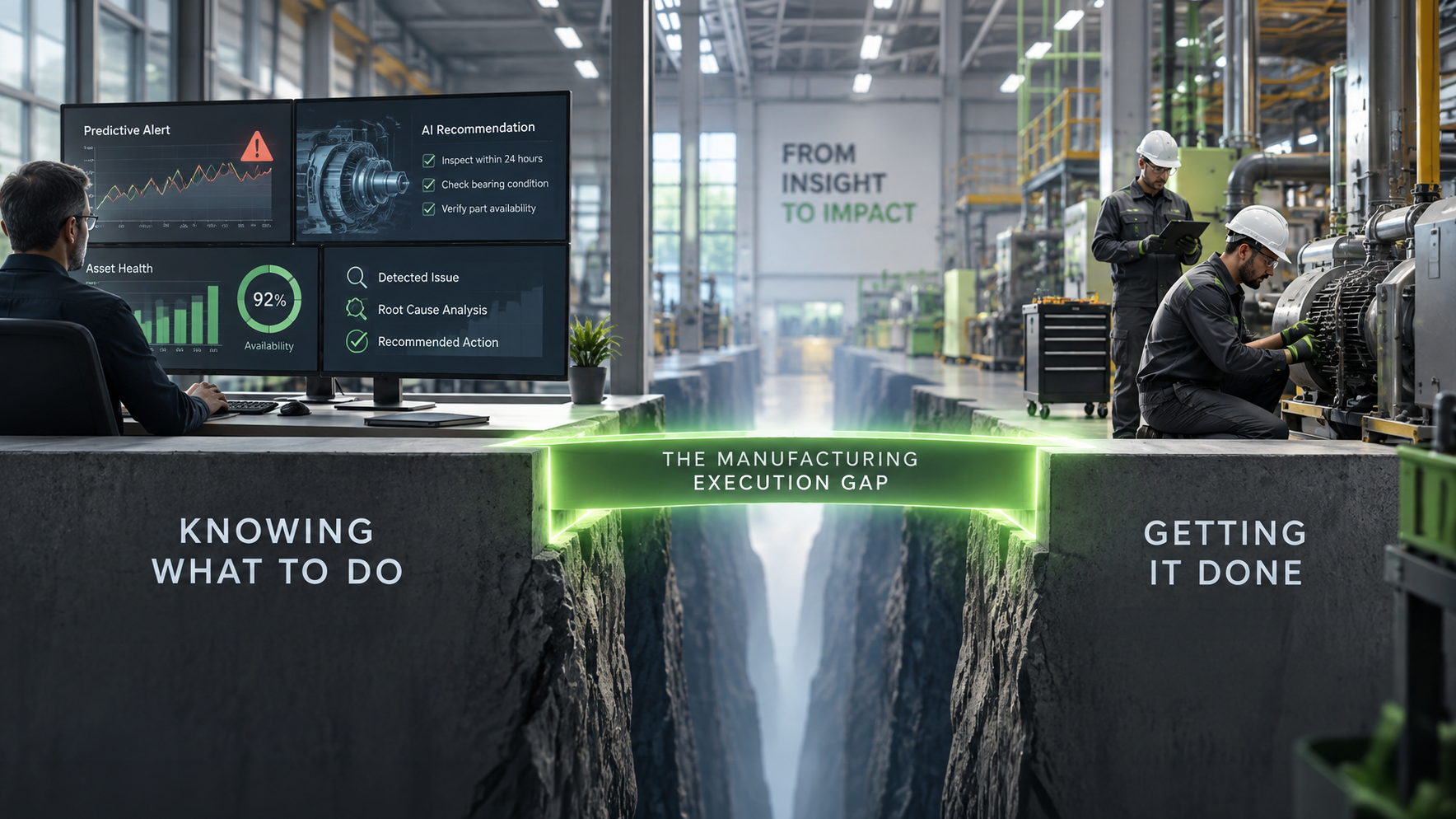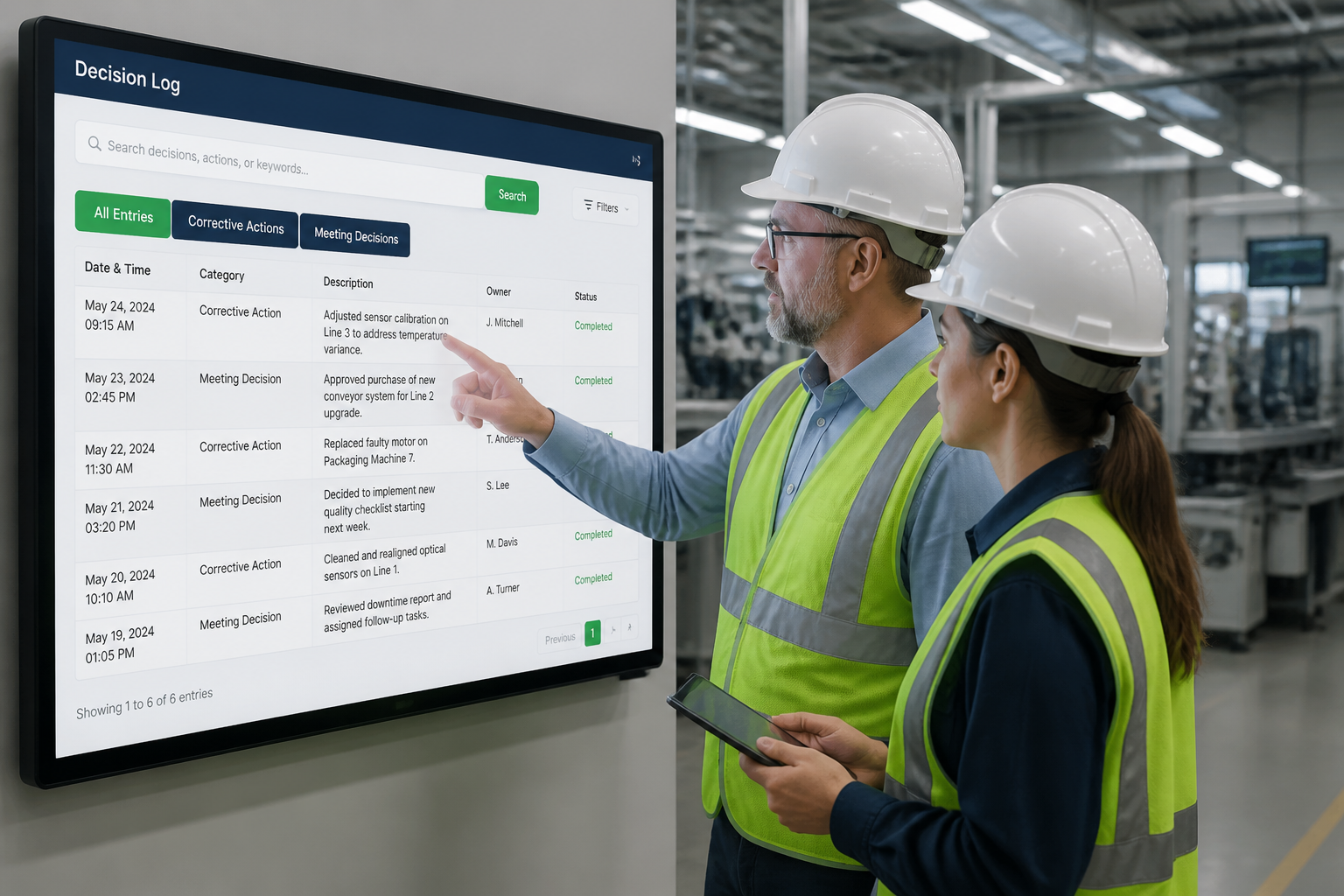
Your factory floor is swimming in data. Machine sensors, production schedules, quality checks—the information is everywhere. But it’s often stuck in separate systems, making it impossible to see the full picture. This is where an AI platform changes the game. It’s not just another dashboard showing you what’s wrong. It connects the dots, interpreting your data to find the root cause of problems, predict what’s next, and recommend the best course of action. It’s about turning data overload into clear, actionable insights your team can use to make smarter decisions, right now.
Key Takeaways
- Use AI to Solve Problems Before They Happen: An effective AI platform moves your operations from a reactive state to a proactive one. It uses predictive intelligence to anticipate equipment failures and quality issues, allowing your team to resolve potential problems before they cause costly downtime.
- Find a Platform That Adapts to Your Factory: Avoid a disruptive “rip-and-replace” project. The best solutions integrate with your existing systems as an intelligent overlay and offer low-code customization, empowering your own experts to tailor the platform to your unique processes.
- Measure Success with Concrete KPIs: A successful implementation is tied to clear business outcomes. Define your goals upfront—like improving OEE or reducing scrap—and use the platform’s analytics to track progress and demonstrate a tangible return on your investment.
What is an AI Problem-Solving Platform for Manufacturing?
An AI problem-solving platform is a system that uses artificial intelligence to help manufacturing teams identify, analyze, and resolve operational issues faster and more effectively. Think of it as a smart assistant for your entire factory. Instead of relying solely on spreadsheets, whiteboards, and gut feelings, these platforms bring together data from your machines, processes, and people. They then use advanced technology to find the root causes of problems, predict future issues, and even suggest the best course of action.
The goal is to move your operations from a state of constant reaction to one of proactive control. These platforms are designed to give your teams the real-time insights they need to make better decisions right on the factory floor. By connecting data with action, they help you improve everything from equipment uptime and product quality to overall efficiency and competitiveness. It’s about turning information into a clear, shared operating rhythm that everyone can follow.
The Expanding World of AI Platforms
AI Platforms Beyond the Factory Floor
While our focus is on the factory, the principles of AI-driven problem-solving are transforming work everywhere. An AI platform is essentially a software suite that brings multiple AI tools together in one place. The goal is to help businesses work more efficiently by handling repetitive manual tasks, which frees up teams to concentrate on more strategic thinking. Instead of being a single, narrow tool, these platforms offer a range of capabilities that can be applied to different business functions, from automating workflows to analyzing complex data sets.
Tools for Content, Code, and Customer Support
Outside of manufacturing, you can see AI platforms making a significant impact across business operations. Marketing teams use them to generate and refine content, while software developers get assistance with writing and debugging code. In customer service, AI-powered tools can manage inquiries and provide instant support, improving the customer experience. These applications show the technology’s versatility in handling diverse tasks that require both pattern recognition and a degree of creativity, ultimately allowing organizations to streamline operations and focus human talent where it matters most.
How Different Industries Use AI
AI platforms are not one-size-fits-all; they are being adapted to meet the unique challenges of various industries. By applying machine learning and predictive analytics to specific industry data, companies are finding new ways to solve long-standing problems and create value. This specialization is key to their success. An AI model trained on financial data will have a different skill set than one trained on medical images, but both are designed to find critical patterns that a human might miss, leading to smarter and faster decision-making in high-stakes environments.
Applications in Banking, Healthcare, and Retail
The practical applications are already widespread. In banking and finance, AI is crucial for detecting credit card fraud in real time and predicting which loan applicants might be at risk of default. The healthcare sector uses these platforms to help doctors diagnose diseases earlier and more accurately, as well as to provide patients with personalized health advice. Meanwhile, retailers leverage AI to offer personalized shopping recommendations that improve the customer experience and to optimize their inventory management, ensuring the right products are in the right place at the right time.
What Technology Makes These AI Platforms Work?
At the heart of these platforms are several powerful technologies working together. Key components often include generative AI agents, predictive analytics, and digital twins. A digital twin is essentially a virtual, real-time model of your physical assets or processes, allowing you to monitor and simulate performance without disrupting the actual production line. Predictive analytics uses historical and current data to forecast what’s likely to happen next, like when a machine might fail.
These tools don’t just show you data; they interpret it. The Decisyon platform uses this combination of technologies to monitor, predict, and prescribe actions that enhance performance. This means the system can spot a potential issue, calculate the best way to address it, and guide your team through the resolution. It’s this intelligent layer that transforms raw data into a powerful tool for driving revenue growth and improving operational agility.
How AI Changes Manufacturing Problem-Solving
Implementing AI fundamentally changes how your teams approach problem-solving. Traditionally, identifying the source of a production issue could be a long process of trial and error. AI-driven analytics can sift through massive volumes of sensor and production data to uncover hidden trends and pinpoint the root cause of failures in minutes, not days. This data-driven approach removes the guesswork and allows for more precise, effective solutions.
This shift allows manufacturers to find new ways to optimize operations and anticipate maintenance needs before they lead to costly downtime. Instead of just reacting to alarms, your team can address potential problems during planned maintenance windows. AI provides the actionable insights needed for better strategic planning and resource allocation, empowering your people to solve problems proactively and keep production running smoothly.
Key Benefits of Adopting an AI Platform
When you move beyond simply collecting data and start using AI to interpret it, the benefits extend across your entire operation. An AI platform acts as a central nervous system for your factory, creating a unified environment where insights lead directly to action. This integration delivers tangible advantages, from accelerating your improvement cycles and securing your sensitive data to fostering a culture of collaboration and informed decision-making. It’s about creating a more resilient, efficient, and intelligent manufacturing environment from the ground up, turning your existing data into a powerful asset for continuous improvement and operational control.
Achieve Faster Results and Reduce Business Risks
An integrated AI platform provides a complete environment where your teams can develop, manage, and deploy solutions without starting from scratch. This all-in-one approach means new ideas can be turned into working applications much faster, allowing you to respond to production challenges with greater agility. Instead of spending months on development, you can quickly implement solutions that optimize processes or predict failures. At the same time, a robust platform comes with built-in security to protect your operational data and ensure you meet strict industry compliance standards, reducing risks across the board and giving you confidence in your digital systems.
Improve Teamwork and Data-Driven Decisions
One of the most significant changes an AI platform brings is the ability for different teams to work together in a single, shared space. When operations, maintenance, and quality control are all looking at the same real-time information, collaboration becomes seamless. The platform provides the data-driven insights needed to make better choices faster, replacing guesswork with evidence. For example, AI-powered analytics can analyze sensor data to find the root cause of a quality issue in minutes, allowing your teams to align on a solution and implement it immediately. This creates a culture where everyone is empowered to contribute to continuous improvement.
How to Choose the Right AI Manufacturing Platform
With a growing number of AI solutions on the market, it can be tough to figure out which platform is the right fit for your factory. Not all platforms are created equal; some are designed for specific niche problems, while others offer a comprehensive, end-to-end solution for your entire operation. The key is to understand your most pressing challenges and match them with a platform that has the right capabilities. A solution that works for a massive automotive plant might be overkill for a specialized food and beverage facility, and vice versa.
To make a smart decision, you need to look beyond the marketing buzzwords and evaluate what each platform actually does. Does it simply visualize data, or does it provide actionable recommendations? Can it connect with your existing equipment, or does it require a complete overhaul of your systems? Thinking through these questions will help you compare your options and find a partner that can grow with you. Let’s break down how to approach this comparison, starting with a comprehensive suite and then looking at specialized tools and essential features.
What an End-to-End Solution Looks Like
Some platforms are built as all-in-one solutions designed to manage the entire manufacturing lifecycle. The Decisyon Digital Factory (DDF) suite is a prime example. It’s a next-generation application suite designed for Industry 5.0, focusing on transforming operations to drive revenue growth and enhance operational agility. Instead of patching together multiple point solutions, a comprehensive suite provides a unified environment where data from different parts of the factory floor can be analyzed together. This integrated approach helps break down information silos between departments, leading to more cohesive and intelligent decision-making across the board. It’s about creating a single source of truth for your entire operation.
Do You Need a Specialized AI Platform?
While a full suite is powerful, sometimes you need to solve a very specific problem first. This is where specialized platforms or modules come in. For instance, if your primary challenge is a lack of visibility into production progress, a Lean Manufacturing Execution System (MES) could be your starting point. A solution like Decisyon’s Agentic MES offers a focused set of tools, like a plant overview with real-time KPIs and a production dashboard for tracking orders. These specialized tools give you granular control over a specific area. The best platforms offer these capabilities as modules, allowing you to start with one solution and add more as your needs evolve.
What Are the Essential Features of an AI Platform?
Regardless of whether you choose a full suite or a specialized tool, there are a few non-negotiable features every modern AI platform should have. First, it must go beyond simple prediction. A truly intelligent platform integrates AI and machine learning not just to forecast potential failures but to prescribe specific actions that will improve your KPIs. Second, it needs to provide end-to-end capabilities, from equipment connectivity and real-time data orchestration to creating a digital twin of your operations. This is what enables your organization to shift from being reactive to proactive, addressing issues before they cause downtime and turning operational efficiency into a driver for revenue.
Access to a Diverse Model Garden
A strong AI platform serves as a complete, all-in-one place where teams can create, change, and manage AI solutions. A key part of this is having access to a “model garden”—a library of pre-built AI models that can be adapted for specific manufacturing challenges. Instead of starting from scratch, your team can select models for common use cases like predictive maintenance, quality assurance, or demand forecasting. This approach significantly shortens development time and allows you to deploy solutions faster. The platform should provide the flexibility to fine-tune these models with your own data, ensuring they are perfectly aligned with the unique conditions of your factory floor.
Comprehensive Developer Tools
The best platforms empower your team to build and customize solutions. A good AI platform should have ways to connect and use lots of different data, tools for developers that support many programming languages, and features to make AI agents work together. This is especially important in manufacturing, where you need to integrate with a wide variety of machines and existing software. Look for platforms that offer low-code or no-code environments, like the Decisyon App Composer™. These tools enable your own subject matter experts—the people who know your processes best—to build and modify applications without needing to be expert programmers, ensuring the solutions perfectly fit your operational needs.
A Framework for Evaluating Any AI Platform
Once you have a shortlist of platforms that seem to meet your feature requirements, it’s time to put them to the test. A structured evaluation process will help you see past the sales pitches and understand how each solution will perform in your actual environment. This isn’t just about watching a demo; it’s about digging into the platform’s capabilities, assessing its usability for your team, and verifying the vendor’s claims. By following a consistent framework, you can compare your options objectively and make a confident decision that aligns with both your immediate needs and your long-term strategic goals.
Test Platforms with Real-World Tasks
Don’t settle for a canned demo. To truly understand a platform’s power, ask vendors to tackle one of your real, ongoing problems. Provide them with a sample dataset related to a recent equipment failure or quality issue and ask them to show you exactly how their platform would solve it. After all, effective AI-driven analytics can sift through massive volumes of sensor and production data to uncover hidden trends and pinpoint the root cause of failures in minutes, not days. This real-world test will quickly reveal whether a platform can deliver actionable insights or just another pretty dashboard.
Match the Platform to Your Team’s Skills
A powerful platform is useless if your team can’t use it effectively. As you evaluate options, consider the people who will be interacting with the system every day. Some tools are for people who aren’t technical, while others need engineers. Pick one that fits your team’s skills. The ideal solution should be intuitive for frontline operators while still offering advanced capabilities for engineers and data analysts. A platform that empowers your existing team to solve problems will see much higher adoption and deliver a far greater return on investment than one that requires you to hire a team of specialists just to run it.
Verify Security, Compliance, and Support
In a manufacturing environment, security is not optional. Your operational data is a critical asset, and any AI platform you adopt must have robust measures to protect it. Strong security helps keep data safe and follow privacy rules. Ask detailed questions about data encryption, access controls, and how the platform helps you meet industry-specific compliance standards, whether for food safety or pharmaceutical production. Equally important is the level of support the vendor provides. You need a partner who will be there to help you resolve issues quickly and keep your operations running smoothly.
Look for Industry Recognition
While it shouldn’t be your only criteria, third-party validation from industry analysts can be a helpful data point. Top research firms like IDC and Forrester have recognized Google as a leader in AI foundation models and platforms, and similar reports exist for the manufacturing sector. This recognition can indicate that a platform is not only technologically sound but also trusted by other companies in your industry. Look for case studies and testimonials from manufacturers with challenges similar to yours. This can give you confidence that the platform has a proven track record of delivering real-world results.
Enterprise Solutions vs. Free AI Tools
The explosion of publicly available AI models has put powerful technology at everyone’s fingertips. It’s tempting to think these free tools can be a substitute for a dedicated, enterprise-grade manufacturing platform. While they can be useful for general tasks like drafting an email or brainstorming ideas, they come with significant risks and limitations that make them unsuitable for a mission-critical factory environment. An enterprise solution is designed specifically for the complexities of industrial operations, offering the security, reliability, and integration capabilities that free tools simply can’t provide.
The core difference comes down to purpose. Free AI tools are built for mass consumer use, where data privacy and uptime are not guaranteed. An enterprise platform, on the other hand, is built for business. It functions as a secure, closed-loop system where your proprietary data is protected. It’s designed to connect directly to your machines and operational systems, providing reliable, real-time analysis that you can trust to make critical production decisions. Before you try to solve a factory-floor problem with a free chatbot, it’s essential to understand the trade-offs.
The Power of Widely Available Free Tools
It’s important to acknowledge that many powerful AI tools are available for free, either through open-source projects or free versions of paid tools. These models can be incredibly effective for non-sensitive, ad-hoc tasks. For example, a plant manager could use one to quickly summarize production notes for a daily report or to brainstorm different ways to structure a team meeting. For tasks that don’t involve proprietary data or require 100% accuracy and uptime, these tools can be a great way to improve personal productivity and explore the potential of AI without any financial investment.
Understanding the Risks and Limitations of Free Tools
While free tools are impressive, their “cost” often comes in the form of data privacy, reliability, and performance limitations. For a manufacturing business, where intellectual property is a key competitive advantage and operational uptime is directly tied to revenue, these risks can be substantial. Relying on a free, public tool for anything related to your core operations introduces a level of unpredictability that most factories simply cannot afford. It’s crucial to understand these limitations before allowing their use for any business-related tasks.
Privacy Concerns and Data Usage
The biggest risk with free AI tools is data privacy. Most free AI tools use your conversations to train their models. Avoid pasting sensitive personal or company information into them. When you input details about a production bottleneck, a machine failure, or a proprietary formula, you could be feeding your intellectual property directly into a public model. Generally, your data is not private and may be used for training unless you specifically opt out. An enterprise platform, by contrast, is a secure environment where your data remains your own, protected and used exclusively for your benefit.
Usage Caps and Commercial Restrictions
Free tools also come with practical performance limits. They often have restrictions on how much you can use them, such as message caps or slower speeds during busy times. These limitations make them completely unsuitable for the continuous, 24/7 demands of a manufacturing operation. Imagine your production line stopping while you wait for a free AI tool to come back online. An enterprise solution provides guaranteed performance through service-level agreements (SLAs), ensuring the system is always available when you need it to make critical, time-sensitive decisions on the factory floor.
How AI Platforms Solve Key Manufacturing Challenges
AI platforms are more than just advanced software; they are practical tools designed to solve the persistent, complex problems that manufacturers face every day. From unexpected equipment failures to supply chain bottlenecks, these challenges can disrupt production, inflate costs, and impact quality. An AI-powered platform addresses these issues head-on by turning massive amounts of operational data into clear, actionable insights. Instead of relying on guesswork or lagging indicators, your teams can make proactive decisions based on what’s happening right now—and what’s likely to happen next. This shift allows you to move from a reactive state of constant fire-fighting to a controlled, optimized, and predictable operational rhythm.
Reduce Downtime with Predictive Maintenance
Unplanned downtime is one of the most significant drains on profitability in manufacturing. When a critical piece of machinery fails unexpectedly, the entire production line can grind to a halt, leading to lost output and missed deadlines. AI platforms transform maintenance from a reactive or scheduled task into a predictive strategy. By analyzing real-time data from sensors on your equipment, these systems can identify subtle patterns that signal an impending failure. Decisyon’s platform, for example, integrates AI and machine learning models to predict failures, recommend actions, and optimize production schedules. This allows you to perform prescriptive maintenance precisely when needed, minimizing disruption and extending the life of your assets.
Improve Quality Control with Real-Time Detection
Maintaining consistent product quality is essential for customer satisfaction and brand reputation. Traditional quality control often relies on manual inspections or sample testing, which can miss defects and fail to identify the root cause of problems. AI introduces a new level of precision by continuously monitoring production lines. AI can analyze historical production data to find the most impactful production parameters and identify trends among a large volume of sensors to understand the root cause of failures. This means an AI platform can not only detect an anomaly in real-time but also trace it back to a specific machine setting or material variation, helping you fix the core issue and prevent future defects.
Optimize Your Supply Chain and Decisions
Modern supply chains are incredibly complex and vulnerable to disruption. An AI platform provides the end-to-end visibility needed to build a more resilient and efficient operation. By analyzing data from across your entire value chain—from raw material orders to final delivery—the system can identify potential bottlenecks, forecast demand with greater accuracy, and optimize inventory levels. AI-driven analytics help optimize supply chains, reduce production costs, and improve product quality. This data-backed insight empowers your teams to make smarter, faster decisions that keep your operations running smoothly, even when faced with unexpected challenges.
Create a Single Source of Truth for Your Team
In many factories, critical operational knowledge resides with a few experienced veterans. When they’re unavailable, teams can struggle to resolve issues effectively. An AI platform acts as a central nervous system, capturing and distributing expert knowledge across the entire organization. Decisyon’s solutions use generative AI agents, predictive analytics, and digital twins to monitor, predict, and prescribe actions that enhance performance, quality, and efficiency. This creates a Digital Factory where every operator has access to AI-powered guidance, turning your collective data into a shared source of intelligence that helps everyone perform at their best.
What to Look For in an AI Manufacturing Platform
Choosing the right AI platform isn’t just about adopting new technology; it’s about finding a partner for your operational goals. The market is full of options, but the best platforms share a few core characteristics that separate them from the rest. As you evaluate your choices, focus on solutions that don’t just collect data but turn it into clear, decisive action on the factory floor. The goal is to find a system that fits into your existing environment, adapts to your unique processes, and can grow with you as your needs evolve. Look for a platform that empowers your team, integrates smoothly with the tools you already use, and provides a clear path to a more predictable and efficient future.
Prioritize Real-Time Analytics and Predictions
A truly effective AI platform does more than just display real-time data on a dashboard. It interprets that information to tell you what’s likely to happen next and what you should do about it. Look for a system that uses AI and machine learning to move beyond reactive problem-solving. Instead of just alerting you that a machine has failed, it should predict potential failures before they happen. This is the difference between monitoring and intelligence. The right platform provides prescriptive maintenance recommendations and helps optimize production schedules on the fly, turning your operational data into a strategic advantage that directly impacts your KPIs.
Will It Integrate with Your Current Systems?
Your factory already runs on a complex web of systems, from your ERP to your MES and other legacy software. The last thing you need is an AI platform that forces you to start from scratch. A critical feature to look for is the ability to integrate seamlessly with your existing IT and OT environments. The platform should act as an intelligent overlay, unifying data from different sources without requiring a disruptive “rip-and-replace” approach. This ensures a single, synchronized source of truth across your operations, breaking down data silos and giving your team a complete picture of what’s happening from the top floor to the shop floor.
Can You Customize It Without a Developer?
No two manufacturing plants are exactly alike, so a one-size-fits-all solution will always fall short. The best AI platforms offer flexibility through low-code customization. This empowers your own operational experts—the people who know your processes best—to build and modify applications, workflows, and dashboards without needing deep programming knowledge. A platform with a low-code app composer allows you to tailor the solution to your specific challenges and continuously adapt it as your needs change. This agility is key to creating a system that truly works for your team and drives continuous improvement.
Can the Platform Grow with Your Business?
Your digital transformation is a journey, not a single leap. The right AI platform should be able to grow with you. Look for a solution that is not only built to handle increasing volumes of data and users but also offers a modular design. This allows you to start with the capabilities that address your most pressing needs today—like improving daily management meetings or digitizing workflows—and add more advanced features later. A scalable, modular digital factory suite ensures that your initial investment continues to deliver value over the long term, providing a clear and manageable path to greater operational maturity.
Understanding AI Platform Technicals
While business outcomes are what truly matter, a few technical details can help you make a smarter choice. You don’t need to be an IT expert, but understanding how a platform is deployed, managed, and priced ensures it aligns with your infrastructure, budget, and strategy. Think of it as checking under the hood before you buy the car. Knowing the basics helps you ask the right questions and find a partner that supports your factory’s specific needs, rather than just selling you a piece of software.
Deployment Models: Cloud, On-Premises, and Hybrid
One of the first technical questions is where the software will live. There are three main ways to deploy an AI platform: cloud, on-premises, and hybrid. A cloud solution is hosted by the provider, reducing your IT overhead. An on-premises deployment uses your own servers, giving you maximum control over data security—a key factor for regulated industries. A hybrid model offers a mix of both, keeping sensitive data on-site while using the cloud for other applications. The right choice depends on your operational reality, IT resources, and security requirements.
Support for the Full AI Lifecycle
An effective AI model isn’t a “set it and forget it” tool. It needs to be managed throughout its entire lifecycle, from data gathering and training to deployment and continuous monitoring. A comprehensive platform provides the tools to manage every step of this process in one place. This is critical because it ensures your AI solution remains accurate and relevant as your production environment evolves. It prevents your insights from becoming stale and guarantees the platform can support your continuous improvement efforts for the long haul.
Common Pricing Models
Finally, understanding how you’ll pay for the platform is just as important as what it does. Most models are either usage-based, where cost is tied to data processed, or subscription-based, offering a predictable fee. It’s essential to find a provider with a transparent pricing structure that aligns with your budget and how you plan to scale. Always ask about potential costs for implementation, training, or ongoing support to get a complete picture of your total investment. This clarity helps you avoid surprises and ensures the platform delivers a clear return.
How to Integrate an AI Platform with Your Current Setup
Bringing a new technology platform into your factory can feel like a monumental task, but it doesn’t have to be. The right AI solution is designed to work with your existing infrastructure, not against it. A successful integration focuses on augmenting your current operations and empowering your teams, rather than starting from scratch. The key is to find a partner and a platform that can adapt to your unique environment and grow with you as your needs evolve.
Should You Overlay or Rip-and-Replace?
One of the biggest fears in any digital transformation project is the dreaded “rip-and-replace” scenario, where you have to tear out legacy systems that, for the most part, still work. A modern approach avoids this disruption. Instead of replacing your entire tech stack, an AI platform can act as an intelligent overlay. This model blends your trusted legacy systems with new AI infrastructure, allowing you to gain advanced capabilities without halting production or retraining your entire workforce on a new foundational system. This approach minimizes risk and accelerates your time-to-value.
How to Connect and Aggregate Your Data Sources
The true power of an AI platform comes from its ability to see the whole picture. This requires connecting to and pulling data from all your disparate sources—from ERPs and MES to the PLCs on your machines. A platform with a powerful Smart Gateway can seamlessly integrate with these external systems for a synchronized data flow. Once connected, the platform aggregates this information, using tools like predictive analytics and digital twins to monitor operations, predict issues, and prescribe actions that improve performance, quality, and overall efficiency across the plant floor.
Start with a Solution That Fits Your Needs Today
Your factory is unique, and your path to digitalization should be too. Look for a solution that offers a modular approach, allowing you to start with the area that will deliver the most immediate impact. Whether that’s digitizing daily management meetings or implementing predictive maintenance on a critical asset, the right platform should meet you where you are. This strategy allows you to secure quick wins, demonstrate value, and then scale your implementation across other lines or plants as your confidence and needs grow, ensuring a sustainable and successful transformation.
How to Overcome Common Implementation Hurdles
Adopting any new technology comes with its own set of hurdles, and an AI platform is no different. While the benefits are significant, a successful rollout depends on anticipating and planning for potential challenges. Thinking through these issues ahead of time ensures a smoother transition and helps your team get the most value from your investment, faster. The key is to approach implementation with a clear strategy for managing change, securing your data, and planning your resources. This isn’t just about technical checklists; it’s about building a resilient foundation for a major operational shift.
Many organizations get caught up in the excitement of the technology itself and overlook the practical realities of integrating it into their daily workflows. A successful implementation addresses the human element, the security infrastructure, and the financial and time commitments required. By addressing these areas proactively, you can turn potential roadblocks into manageable steps on your path to a smarter factory. This preparation is just as crucial as selecting the right software; it’s what turns a powerful tool into a true operational asset for your entire organization, driving adoption and delivering a clear return on investment without derailing your production goals.
How to Prepare Your Team for a New AI Platform
The most advanced AI platform is only effective if your team knows how to use it. A common mistake is focusing solely on recruiting new AI experts while overlooking the incredible potential of your current workforce. Instead of starting from scratch, you can upskill your current employees to build internal expertise and drive adoption from the ground up. Create straightforward training programs that explain the benefits of the new system and how it makes day-to-day tasks easier. When your shop floor operators, line supervisors, and maintenance crews understand the “why” behind the change and feel confident using the new tools, they become your biggest advocates for success.
How to Ensure Your Data Stays Secure
Connecting your operations to an AI platform introduces new data streams, which naturally brings up questions about security. Deploying AI without the right cybersecurity measures can expose your operations to risk. Before you go live, it’s essential to conduct a thorough cybersecurity risk assessment to identify and patch any vulnerabilities. Modern platforms also use privacy-preserving AI technologies that allow models to be trained without exposing sensitive operational data. By prioritizing security from day one and investing in threat detection, you can protect your proprietary information, ensure operational integrity, and build a secure foundation for your digital transformation.
A Realistic Approach to Budget and Timeline Planning
A realistic plan is critical for a successful AI implementation. Your budget should account for more than just the software license; it needs to include costs for training, integration with existing systems, and potential hardware upgrades. Timelines can also be affected by factors like the availability of skilled personnel. While a low-code platform like the Decisyon App Composer™ empowers your existing team to build and modify solutions, you still need to plan for the time it takes to learn and adapt. Factoring these variables into your project plan from the start helps you set achievable milestones, manage expectations, and avoid unexpected delays or budget overruns, ensuring your project stays on track.
How to Measure Success with an AI Platform
Implementing an AI platform is a major step, and you need a clear way to know if it’s actually working. Success isn’t just a feeling; it’s something you can and should measure with hard data. Before you even go live, you should define what a “win” looks like for your facility. Are you trying to reduce unplanned downtime? Decrease scrap rates? Improve on-time delivery? Setting these goals upfront gives you a benchmark to measure against.
The right AI platform won’t just solve problems—it will provide the data to prove its own value. This means moving beyond anecdotal evidence and focusing on concrete metrics that tie directly to your operational and financial goals. By establishing clear Key Performance Indicators (KPIs), you can track progress over time and calculate a tangible return on your investment. The true measure of success is seeing quantifiable improvements in efficiency, cost savings, product quality, and the confidence of your team to make better, faster decisions on the plant floor.
Which KPIs Should You Track for ROI?
To justify the investment in an AI platform, you need to connect its performance to the metrics that matter most to your business. Start by identifying the core manufacturing KPIs you want to improve, such as Overall Equipment Effectiveness (OEE), cycle time, throughput, and first-pass yield. A successful AI implementation will cause a noticeable, positive shift in these numbers.
From there, you can build a clear case for ROI. For example, a 5% reduction in unplanned downtime translates directly into more production hours and revenue. Outcome-based reporting helps you measure the impact of the platform on everything from production output to support costs. By tracking these specific outcomes, you can clearly demonstrate how the technology is contributing to the bottom line.
How to Track Improvements in Efficiency and Cost
One of the most immediate ways an AI platform proves its worth is by creating new efficiencies and cutting costs. AI can analyze historical production data to pinpoint the most impactful parameters and identify trends across thousands of sensor readings to find the root cause of failures. This moves your team from fighting fires to preventing them from starting in the first place.
This data-driven approach allows you to streamline operations, minimize waste, and make your entire process more resilient. For instance, AI-powered analytics can help optimize supply chains, reduce production costs, and improve material usage. These aren’t small tweaks; they are fundamental improvements that lead to significant, sustainable cost savings and a stronger competitive position.
How to Measure Better Quality and Smarter Decisions
Beyond efficiency, a key measure of success is the improvement in product quality and the quality of your team’s decisions. An effective AI platform provides your operators and managers with actionable insights, not just more data. Decisyon’s solutions, for example, use generative AI and predictive analytics to monitor conditions, predict potential issues, and prescribe the best course of action.
This capability empowers your frontline teams to make smarter, more informed decisions in real time, leading to fewer defects and more consistent output. It also supports better strategic planning and resource allocation at a higher level. When your teams are equipped with clear, AI-driven guidance, you’ll see improvements in everything from product quality to overall operational effectiveness.
Future Trends in AI Platform Technology
The world of artificial intelligence is moving incredibly fast, and the platforms used in manufacturing are evolving right along with it. The goal is no longer just to connect machines and analyze data; it’s about creating truly intelligent, collaborative, and responsible factory environments. The next wave of AI technology is focused on making these systems more intuitive, faster, and more transparent. This means AI that can understand the world more like a human does, make decisions instantly right on the factory floor, and explain its reasoning in a way that builds trust with your team.
As you consider an AI platform, it’s helpful to understand where the technology is headed. Trends like multimodal AI, edge computing, and explainable AI are shaping the future of smart manufacturing. These advancements promise to make operations even more efficient and resilient by enabling more complex problem-solving and faster response times. A forward-thinking platform is built with the flexibility to incorporate these new capabilities, ensuring that your investment today will continue to deliver value as the technology landscape changes tomorrow. It’s about preparing your factory not just for current challenges, but for future opportunities.
The Rise of Multimodal AI and Agent Teamwork
The future of AI in manufacturing is moving beyond just numbers and sensor readings. The next step is multimodal AI, which involves systems that can process and understand different types of data at the same time—like text, images, and sound. Imagine an AI that can watch a video feed to spot a physical defect on a product, listen for an unusual sound from a machine, and correlate both with sensor data to diagnose a complex problem. This holistic understanding leads to more accurate insights. Paired with this is the concept of agent teamwork, where multiple specialized AI agents collaborate to solve problems, much like a human team. One agent might monitor quality while another optimizes maintenance schedules, working together to keep the entire operation running smoothly.
Edge AI for Faster, More Private Processing
Sending every piece of data from your factory floor to the cloud for analysis can be slow and create security concerns. That’s why Edge AI is becoming a critical trend. This approach involves processing data directly on or near the devices where it’s collected, rather than at a distant data center. The benefits are immediate: decisions can be made in real-time without the lag of cloud communication, which is essential for controlling fast-moving production lines. It also enhances security by keeping sensitive operational data within your facility. A platform with a powerful Smart Gateway already uses this principle, filtering and acting on data at the source to ensure faster, more private, and more reliable operations.
The Importance of Explainable AI (XAI) and Sustainable AI
As AI takes on more responsibility in the factory, your team needs to trust its recommendations. This is where Explainable AI (XAI) becomes essential. XAI is designed to open up the “black box” of artificial intelligence, providing clear reasons for its predictions and suggestions. If an AI platform recommends a change to a machine’s settings, XAI can show the specific data points and logic that led to that conclusion, helping your engineers validate the decision and build confidence in the system. Alongside this, Sustainable AI is gaining traction, focusing on creating energy-efficient algorithms that minimize the environmental footprint of your digital operations. This ensures that as you become more technologically advanced, you also become more environmentally responsible.
Related Articles
- What does “AI-Driven Smart Manufacturing” mean?
- Manufacturing Solutions
- Manufacturing Solutions
- Industrial Manufacturing
- How Generative AI is Revolutionizing Smart Manufacturing
Frequently Asked Questions
Do I need to replace my existing MES or ERP to use an AI platform? Not at all. A modern AI platform should work with the systems you already have in place. Think of it as an intelligent layer that sits on top of your existing infrastructure, pulling data from your MES, ERP, and other sources to give you a complete operational picture. This “overlay” approach avoids the massive disruption and cost of a full rip-and-replace project, allowing you to gain new capabilities while leveraging your current technology investments.
My team members aren’t data scientists. Can they actually use this? Absolutely. The best platforms are designed for the people who actually run the factory, not just data analysts. They use low-code interfaces that allow your own operational experts to build and adjust workflows and applications without needing to write complex code. The goal is to empower your existing team with intuitive tools that provide clear, actionable guidance, turning them into the champions of your digital transformation.
What’s the difference between this and a standard analytics dashboard? While a dashboard shows you what’s happening, an AI problem-solving platform tells you why it’s happening and what to do next. It moves beyond simple monitoring to provide predictive and prescriptive insights. Instead of just displaying an alert that a machine is running hot, it can predict a potential failure, identify the root cause, and recommend a specific maintenance action to prevent downtime. It’s about turning data into decisive action.
Where’s the best place to start? Do we have to digitize the entire factory at once? You don’t have to boil the ocean. A successful implementation often starts by targeting a single, high-impact area. Maybe it’s reducing downtime on your most critical production line or digitizing your daily shift-change meetings. Look for a platform that offers a modular approach, allowing you to secure a quick win, prove the value, and then scale the solution to other areas of the plant as your needs and confidence grow.
How quickly can I expect to see a return on investment? The time to value can be surprisingly fast, especially when you start with a focused project. By targeting a specific, measurable challenge like reducing unplanned downtime or improving first-pass yield, you can see a tangible impact on your KPIs within a few months. The key is to define your success metrics upfront so you can clearly track progress and connect the platform’s performance directly to bottom-line results like cost savings and increased throughput.