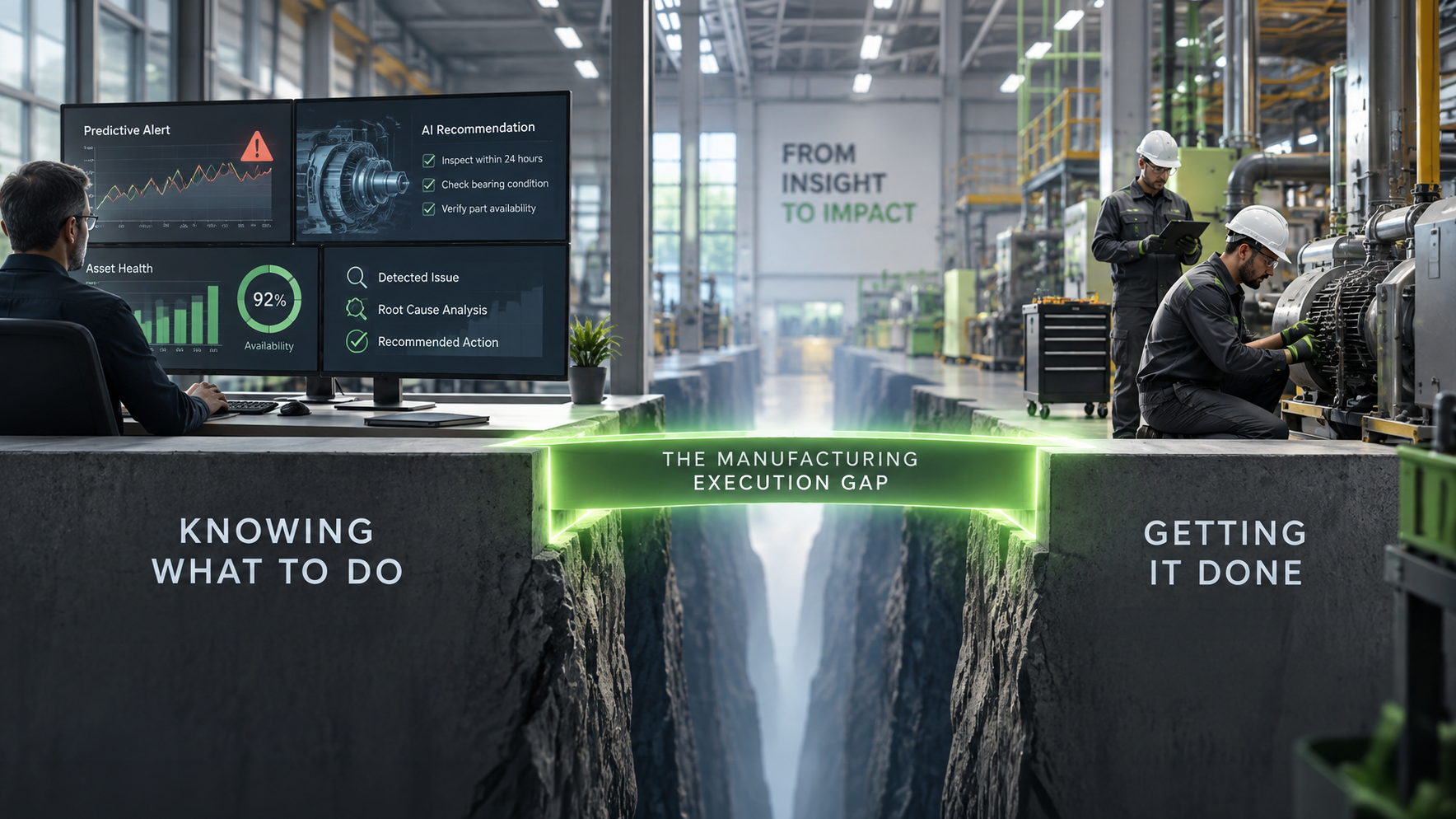
In manufacturing, a delay of even a few seconds can be costly. When your factory’s data has to travel to a distant cloud server for analysis, the decisions you get back are already outdated. This lag is the difference between catching a defect and producing a thousand faulty parts. What if the intelligence was right on the factory floor, making decisions in the moment? This is the core idea behind Edge AI for Manufacturing. By processing data locally, right where it’s created, you can eliminate delays, resolve issues instantly, and move from daily chaos to daily control.
Key Takeaways
- Process Data Locally for Instant Action: Edge AI brings intelligence directly to your factory floor, analyzing information right at the source. This eliminates cloud latency, enabling real-time decisions for quality control, predictive maintenance, and operational adjustments.
- Measure Success with Your Existing KPIs: You don’t need new metrics to prove Edge AI’s worth. Its value is shown by direct improvements to core indicators like Overall Equipment Effectiveness (OEE), reduced unplanned downtime, and lower defect rates, making it easy to track your return on investment.
- Start with Digitization, Then Scale to Prediction: A successful Edge AI strategy begins with a solid digital foundation. First, gain real-time visibility into your operations by connecting your equipment and processes. Once you have clean data, you can effectively apply predictive intelligence to solve specific challenges and scale your smart factory initiatives.
What is Edge AI for Manufacturing?
Edge AI brings artificial intelligence and computing power directly to your factory floor. Instead of sending massive amounts of data to a distant cloud server for analysis, Edge AI processes information locally, right where it is created. This approach uses smart devices, sensors, and gateways to make decisions in real time, helping your factory operations run more smoothly and efficiently. By putting the intelligence at the “edge” of the network, you can automate processes, catch issues faster, and gain immediate control over production without the delays of cloud communication.
Edge AI vs. Cloud AI: What’s the Difference?
The main difference between Edge AI and Cloud AI is location. With Cloud AI, data from your factory’s machines and sensors travels to a centralized cloud system for processing, and the results are sent back. This can introduce latency, which is a problem when you need instant decisions. Edge AI, on the other hand, puts the AI models directly onto devices on your factory floor. This local processing allows for faster analysis and immediate action. It also enhances data privacy and security, since sensitive operational information doesn’t have to leave your facility. This makes Edge AI ideal for time-sensitive tasks like quality control and predictive maintenance.
How Edge AI Works on the Factory Floor
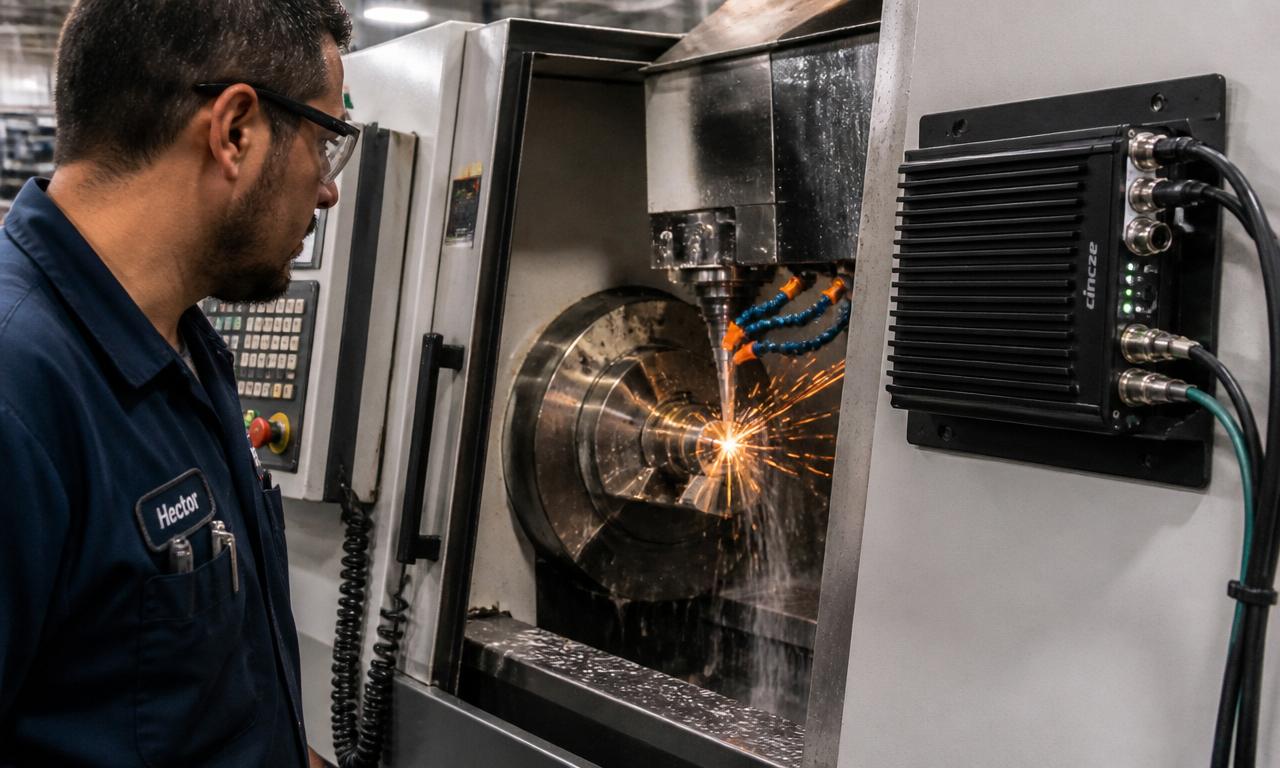
On the factory floor, Edge AI works by embedding intelligence directly into the operational technology. Think of it as giving your machines and production lines the ability to think for themselves. Smart sensors and cameras collect data, and instead of just passing it along, on-device AI models analyze it instantly. This allows for super-fast decisions without the lag of sending data to the cloud and waiting for a response. For example, an AI-powered camera can detect a product defect on the assembly line and immediately trigger an alert or stop the line. This real-time capability is a core component of building a responsive digital factory.
The Role of IoT and Smart Gateways
The Industrial Internet of Things (IoT) is the network of connected machines, sensors, and systems that generate data in your factory. Edge AI makes this network truly powerful. For these devices to communicate and act intelligently, they need a local hub for data processing. This is the role of a Smart IoT Gateway. A gateway sits at the edge of your network, securely collecting data from all connected devices. It then filters the information, applies rules, and runs AI models to perform analysis and trigger actions locally. It acts as the crucial link between your physical equipment and your digital systems, enabling real-time control.
Why Use Edge AI in Your Factory?
Adopting Edge AI isn’t just about embracing new technology; it’s about fundamentally changing how your factory operates for the better. By moving artificial intelligence from a distant cloud server directly to the machines and devices on your shop floor, you can unlock immediate, tangible benefits. This shift enables faster, smarter operations that directly impact your bottom line, from reducing costly downtime to improving product quality. Instead of waiting for data to travel to the cloud and back, your teams and systems can react in the moment, turning your entire operation into a more responsive, resilient, and efficient ecosystem.
Get Your ROI Report
Make Decisions in Real Time
In manufacturing, latency is the enemy. Waiting for data to be sent to the cloud for analysis can mean the difference between catching a flaw and producing a thousand defective parts. Edge AI eliminates this delay by putting intelligence directly onto devices like sensors and cameras within the factory. This means decisions happen instantly, right where the work is done. For example, an AI-powered camera can spot a misaligned part on a conveyor belt and halt the line in milliseconds, something a cloud-based system could never do as quickly. This real-time capability is enabled by technologies like a Smart Gateway, which processes data locally to provide immediate feedback and control.
Predict Maintenance and Cut Downtime
Unplanned downtime is one of the biggest drains on profitability. Edge AI offers a powerful solution by shifting your maintenance strategy from reactive to predictive. By placing AI-enabled sensors on critical equipment, you can continuously monitor for subtle changes in vibration, temperature, or sound that indicate a potential failure. The system learns the normal operating patterns of your machinery and flags anomalies long before they become catastrophic breakdowns. This allows your team to schedule prescriptive maintenance during planned downtime, replacing parts just before they fail. This proactive approach keeps your production lines running smoothly and significantly reduces costly interruptions.
Improve Quality Control and Defect Detection
Achieving perfect quality is the goal, and Edge AI brings you closer than ever. Traditional quality control often catches defects after a product is already made, leading to waste and rework. With Edge AI, high-resolution cameras and sensors analyze products on the assembly line in real time. The AI can detect microscopic cracks, incorrect colors, or missing components with a level of accuracy and speed that surpasses human inspection. When a defect is found, the system can instantly alert operators or even automatically remove the faulty item from the line. This immediate feedback loop helps you identify the root cause of quality issues faster, reducing scrap and ensuring only perfect products reach your customers.
Enhance Worker Safety and Compliance
Your team’s safety is paramount. Edge AI acts as a vigilant partner on the factory floor, helping to create a safer work environment. By analyzing live video feeds, the system can automatically detect potential hazards in real time. This could include identifying if a worker enters a restricted area, is not wearing the proper personal protective equipment (PPE), or if a forklift is moving into a pedestrian walkway. When a safety risk is identified, an immediate alert can be sent to the individual and their supervisor through a collaborative application like LOOP. This proactive monitoring helps prevent accidents before they happen and reinforces a strong culture of safety and compliance throughout your facility.
Secure Data and Reduce Costs
In an increasingly connected world, data security is a major concern. Edge AI enhances security by processing sensitive operational data locally, right on the factory floor. Instead of transmitting vast amounts of raw data to the cloud, only essential insights or alerts are sent, significantly reducing the risk of interception or cyberattacks. This local processing also leads to substantial cost savings. You avoid the high expenses associated with cloud storage and bandwidth for massive data streams from thousands of sensors. By keeping data processing within your Digital Factory ecosystem, you maintain greater control, protect your intellectual property, and run a more cost-effective operation.
How Edge AI Improves Operational Efficiency
Moving intelligence to the edge isn’t just a technical upgrade; it’s a fundamental shift in how factories operate. Instead of sending massive amounts of data to a distant cloud and waiting for instructions, Edge AI processes information right where it’s generated. This local processing power allows your teams to make faster, smarter decisions that directly impact productivity and your bottom line. By analyzing data in real time, Edge AI transforms your factory from a reactive environment into a proactive one. It provides the foundation for a truly Digital Factory where efficiency is built into every process.
Detect Equipment Failures Before They Happen
Unplanned downtime is a major drain on profitability. Edge AI helps you move from a reactive to a predictive maintenance schedule. By placing sensors on critical machinery, Edge AI models watch equipment in real time, analyzing data like vibration and temperature to spot subtle anomalies that signal an impending failure. When a potential problem is detected, the system can automatically alert maintenance teams with specific details, allowing them to schedule repairs before a breakdown occurs. This approach to prescriptive maintenance minimizes disruptions, extends asset life, and keeps your production lines running smoothly.
Optimize Production with Real-Time Anomaly Detection
Quality control is more effective when you prevent defects rather than just find them. Edge AI brings this capability to your production line. As products move through manufacturing, edge devices analyze sensor and camera data to ensure every process stays within optimal parameters. Instead of finding mistakes after a batch is complete, this system helps find problems as they happen. If a machine setting drifts or a material flaw is detected, the system flags the issue instantly, allowing operators to make immediate corrections. This significantly reduces scrap, rework, and wasted materials, ensuring consistent quality.
Connect Robotics, Automation, and Your Supply Chain
A modern factory relies on the seamless coordination of many moving parts. Edge AI acts as the local brain connecting your automated systems, from robotic arms to autonomous guided vehicles (AGVs). It processes data locally to orchestrate these systems with low latency, ensuring they work together efficiently. Furthermore, Edge AI provides a clean, aggregated stream of production data to your higher-level business systems, like an ERP or MES. This real-time visibility helps you manage inventory, predict demand, and make your supply chain more responsive, creating a truly connected and agile operation.
Top Applications for Edge AI in Manufacturing
Once you understand the “why” behind Edge AI, it’s helpful to see what it looks like in action. The real power of edge computing isn’t just in one specific task; it’s in how it transforms multiple areas of your factory floor simultaneously. From the machines themselves to the people who run them, Edge AI creates a more connected, responsive, and efficient environment. Here are some of the most impactful applications we see today.
Production Monitoring and Process Control
Edge AI brings intelligence directly to your production line, helping your factory make things better and faster. Instead of sending massive amounts of data to a distant cloud for analysis, smart devices and sensors process information right on the floor. This allows for immediate adjustments to machine settings, speeds, and other operational parameters. By using Edge AI to create a true Digital Factory, you can automate process controls to ensure every product is made consistently and efficiently, helping your entire operation run more smoothly with less manual oversight.
Quality Inspection and Waste Reduction
Imagine catching a tiny defect the moment it occurs, rather than discovering it after an entire batch is complete. That’s the power of Edge AI in quality control. AI-powered cameras and sensors can inspect products for flaws with superhuman speed and accuracy, right on the assembly line. By identifying problems as they happen, you can correct the root cause immediately. This proactive approach drastically reduces scrap, rework, and customer complaints, saving significant material costs and protecting your brand’s reputation for quality.
Inventory and Supply Chain Visibility
Edge AI helps you move from reactive to proactive supply chain management. By analyzing real-time production data at the edge, you can accurately track material consumption, monitor work-in-progress (WIP), and manage finished goods inventory. This allows you to predict what your customers will want and ensure your deliveries are on time. This level of insight helps prevent costly stockouts or expensive overstocking, making your entire supply chain more resilient and cost-effective. A manufacturing control tower powered by edge data gives you the holistic view needed to make smarter logistics decisions.
Frontline Team Collaboration
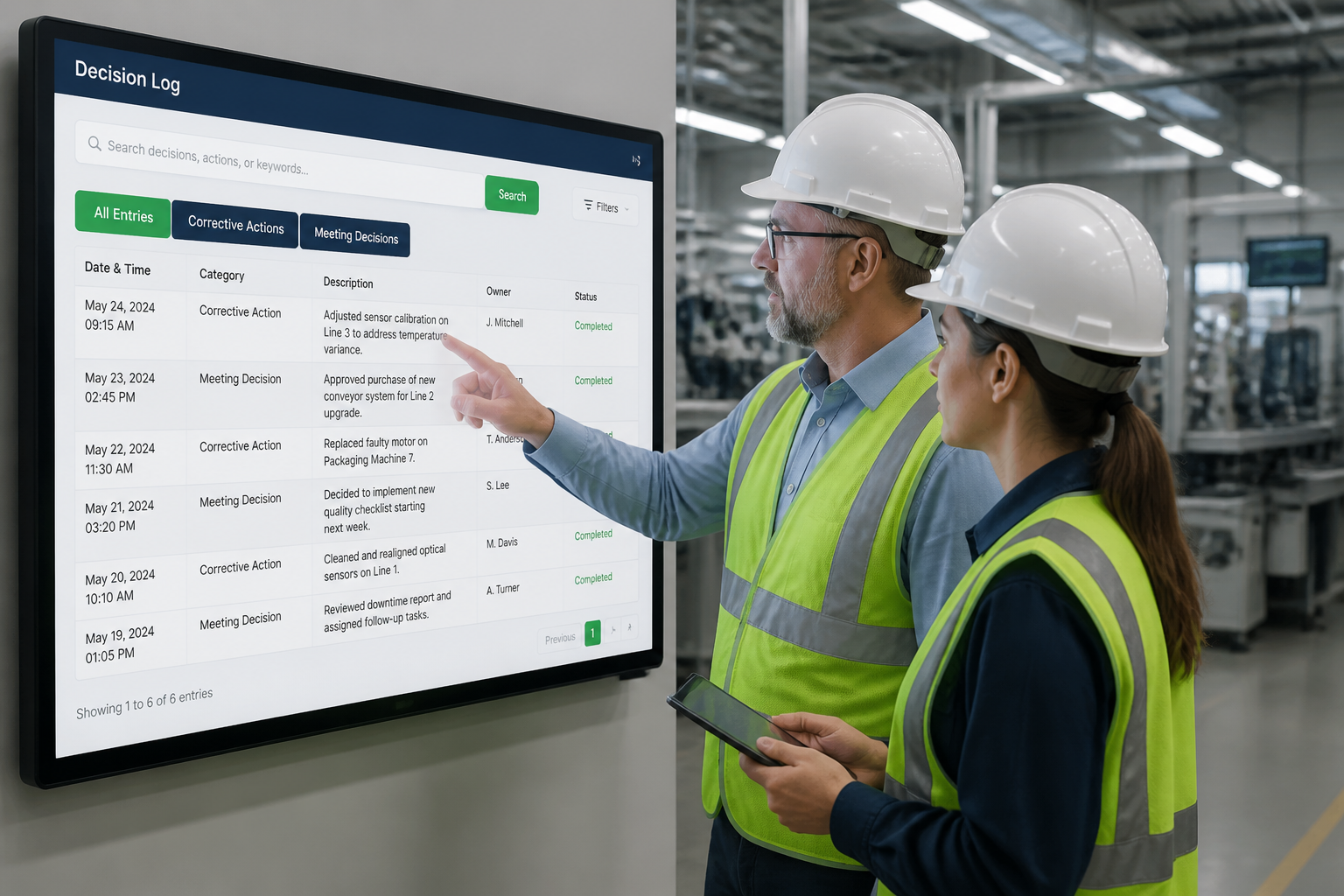
Edge AI isn’t just about machines; it’s about empowering your people. When an edge device detects an anomaly or a potential equipment failure, it can do more than just sound an alarm. It can instantly trigger a workflow, assign a task to the right technician, and provide them with the data they need to solve the problem. This connects your technology directly to your team’s daily operating rhythm. With tools designed to organize frontline work, like LOOP, you can close the gap between issue detection and resolution, ensuring your team is always aligned and focused on the highest-priority actions.
Common Challenges When Adopting Edge AI
Adopting new technology comes with questions, and Edge AI is no different. While the benefits are significant, it’s smart to understand the potential hurdles. Thinking through these challenges helps you choose the right partner and strategy for a smooth implementation. The most common concerns involve integrating with existing factory systems, managing new skill requirements and security, and creating a plan that scales beyond a single production line.
Integrating with Legacy and MES Systems
A common worry is that new technology will require a disruptive overhaul. Your operation likely runs on a mix of equipment, some new and some decades old, often tied to an existing MES. The good news is that a “rip and replace” approach isn’t necessary. When evaluating Edge AI solutions, prioritize platforms designed to work with your current systems. The right technology acts as an intelligent overlay, using smart gateways to connect to legacy machines and software. This allows you to pull valuable data and gain new capabilities without stopping production or discarding previous investments.
Addressing Skill Gaps and Cybersecurity Risks
The manufacturing skills gap is a known challenge, and some fear AI will widen it. In reality, Edge AI makes your current team more effective. It automates routine analysis and presents clear insights, allowing your experts to focus on making critical decisions. On the security front, processing data at the edge reduces risk. Instead of sending raw data to the cloud, you analyze it locally, minimizing exposure. Edge devices can also monitor for cyber threats or unauthorized activity, adding a layer of protection to your digital factory and safeguarding operational data right where it’s generated.
Scaling Across Multiple Factory Sites
An Edge AI pilot on one line is a great start, but how do you replicate that success across your enterprise? Scaling a solution from one site to many is a unique challenge. Without a unified strategy, each factory can become a data island, preventing you from seeing the bigger picture. The key is a platform that supports both local execution and centralized oversight. This ensures each plant benefits from real-time processing while you standardize workflows and compare performance across locations. A manufacturing control tower approach provides this holistic view, turning site-specific data into enterprise-wide intelligence.
How to Measure Your Edge AI Success
Adopting any new technology, including Edge AI, is an investment. To know if that investment is paying off, you need to measure its impact on the metrics that matter most to your operation. The good news is that you don’t need to invent new key performance indicators (KPIs). Edge AI is designed to improve the very same metrics you already track, from production efficiency to product quality. By focusing on these core areas, you can clearly see the return on your investment and build a strong case for expanding your smart factory initiatives. The key is to establish a baseline before implementation so you can quantify the improvements and celebrate the wins with your team.
Overall Equipment Effectiveness (OEE)
Overall Equipment Effectiveness (OEE) is the gold standard for measuring manufacturing productivity. It combines availability (Is the machine running?), performance (How fast is it running?), and quality (Is it making good parts?). Edge AI directly impacts all three. Smart computer programs and devices on the factory floor help operations run more smoothly and automatically. By analyzing data right at the source, Edge AI can identify bottlenecks that hurt performance, predict issues that cause downtime (improving availability), and flag process deviations that affect quality. This creates a powerful feedback loop that continuously refines your operations, pushing your manufacturing control tower and OEE scores higher.
Defect Rates and Product Quality
Catching a flawed product before it leaves the factory is always better than dealing with a customer return. Edge AI supercharges your quality control efforts. AI-powered cameras and sensors can inspect products for flaws instantly, with a level of speed and consistency that human inspection can’t match. For example, automakers like BMW use AI cameras to check for imperfections on the assembly line. This isn’t just a minor improvement; some factories using AI-driven quality control have seen a staggering 90% drop in defects. Integrating this technology into your Agentic MES helps you produce higher-quality goods, reduce waste, and protect your brand’s reputation for excellence.
Unplanned Downtime and Maintenance Costs
Nothing disrupts a production schedule and budget like an unexpected equipment failure. Edge AI is your best defense against unplanned downtime. It watches equipment in real-time, analyzing data from sensors to spot problems before they lead to a breakdown. This is the foundation of prescriptive maintenance, a strategy that moves you from a reactive “fix it when it breaks” model to a proactive “fix it before it fails” approach. By identifying potential failures early, you can schedule maintenance at a convenient time, extend the life of your equipment, reduce production stoppages, and create a safer environment for your frontline teams, all while saving significant costs.
Safety Incidents and Compliance Rates
Keeping your team safe is priority number one. Edge AI acts as a vigilant set of eyes on the factory floor, helping to enforce safety protocols and prevent accidents. It can monitor video feeds to instantly spot safety hazards, such as a worker not wearing the proper PPE, an unauthorized person entering a restricted area, or a dangerous spill. When a potential issue is detected, the system can send an immediate alert to a supervisor. This helps prevent accidents before they happen and ensures compliance with safety regulations. By connecting your frontline teams through an application like LOOP, you can ensure these alerts are seen and acted upon immediately, creating a closed-loop system for safety and issue resolution.
Is Edge AI the Right Move for Your Operation?
Jumping straight to Edge AI might seem like the fastest way to modernize, but the most successful transformations are built on a solid foundation. Before you can leverage predictive intelligence on the factory floor, you need clear, real-time visibility into what’s happening right now. The journey to advanced AI is a logical progression, not a single leap. It starts with digitizing your core operations to create a single source of truth. Only then can you effectively apply AI to predict outcomes and automate decisions where the work happens.
Start with Real-Time Visibility and Digitization
Edge AI works by placing intelligent programs directly onto factory devices, like sensors and cameras, to enable faster, localized decision-making. But for this to work, those devices must be connected and the data they produce must be reliable. The first, most critical step is to digitize your factory floor. This means moving beyond paper logs and disconnected spreadsheets to a system that captures real-time data from your equipment and processes. Creating this digital foundation gives you the operational visibility needed to understand performance, identify bottlenecks, and establish a clean data stream that AI models require to generate accurate insights.
Scale from Digitization to Prediction with Decisyon
Once you have real-time visibility, you can begin to scale toward prediction. With a digitized operation in place, you can apply Edge AI to analyze equipment data and spot problems before they lead to costly breakdowns. This is the core of prescriptive maintenance. Instead of just reacting to failures, you can proactively address issues, extend asset life, and reduce unplanned downtime. Decisyon’s platform is designed to meet you where you are, helping you first establish a digital baseline and then layering on predictive capabilities. This modular approach ensures you can evolve at your own pace, turning your real-time data into a powerful tool for optimizing quality, performance, and efficiency.
Related Articles
- What does “AI-Driven Smart Manufacturing” mean? – Decisyon
- The Guide to AI Operations Optimization Tools for Factories
- 5 Key Benefits of AI in Manufacturing Execution Systems
- Revolutionizing Smart Manufacturing with Generative AI – Decisyon
- AI Problem Solving Platform for Manufacturing: A Guide
Frequently Asked Questions
Do I need a fully modern factory to start using Edge AI? Not at all. This is a common misconception that holds many companies back. The right approach doesn’t require you to replace your existing equipment. Instead, you can use smart gateways and software overlays to connect to the legacy machines and systems you already have. The goal is to pull valuable data from your current setup and add a layer of intelligence on top of it, allowing you to gain new capabilities without a disruptive and expensive overhaul.
How does Edge AI affect my frontline team? Will it replace jobs? Edge AI is designed to empower your team, not replace it. Think of it as a powerful assistant that handles the tedious work of constantly monitoring data streams. This frees up your skilled operators and technicians to focus on what they do best: solving complex problems and making critical decisions. When an AI model detects a potential issue, it can automatically alert the right person with the context they need, making their job easier and turning insights into immediate, focused action.
Why can’t I just use Cloud AI for everything? When is Edge AI the right choice? While Cloud AI is great for big-picture analysis that isn’t time-sensitive, it has a critical delay. Data has to travel from your factory to a distant server and back again. Edge AI is the right choice when you need a decision in milliseconds, not seconds or minutes. It’s essential for real-time tasks like spotting a defect on a fast-moving assembly line or immediately stopping a machine to prevent a safety incident. The two often work together: the edge handles instant actions, while the cloud analyzes long-term trends.
What kind of results can I realistically expect from an Edge AI project? The results directly tie to core manufacturing metrics. You can expect to see a significant reduction in unplanned downtime as you shift from reactive to predictive maintenance. By catching quality issues the moment they happen on the line, you will also see lower defect rates and less material waste. These improvements in availability, performance, and quality all contribute to a higher Overall Equipment Effectiveness (OEE) score and a more efficient, profitable operation.
Doesn’t adding more connected devices create more security risks? It seems counterintuitive, but Edge AI can actually strengthen your security posture. Instead of sending a constant, massive stream of raw operational data to the cloud, you process it locally within your factory walls. Only the most important insights or alerts are transmitted, which dramatically reduces your data’s exposure to external threats. By keeping sensitive information on-site, you maintain greater control and create a more secure digital environment for your operations.