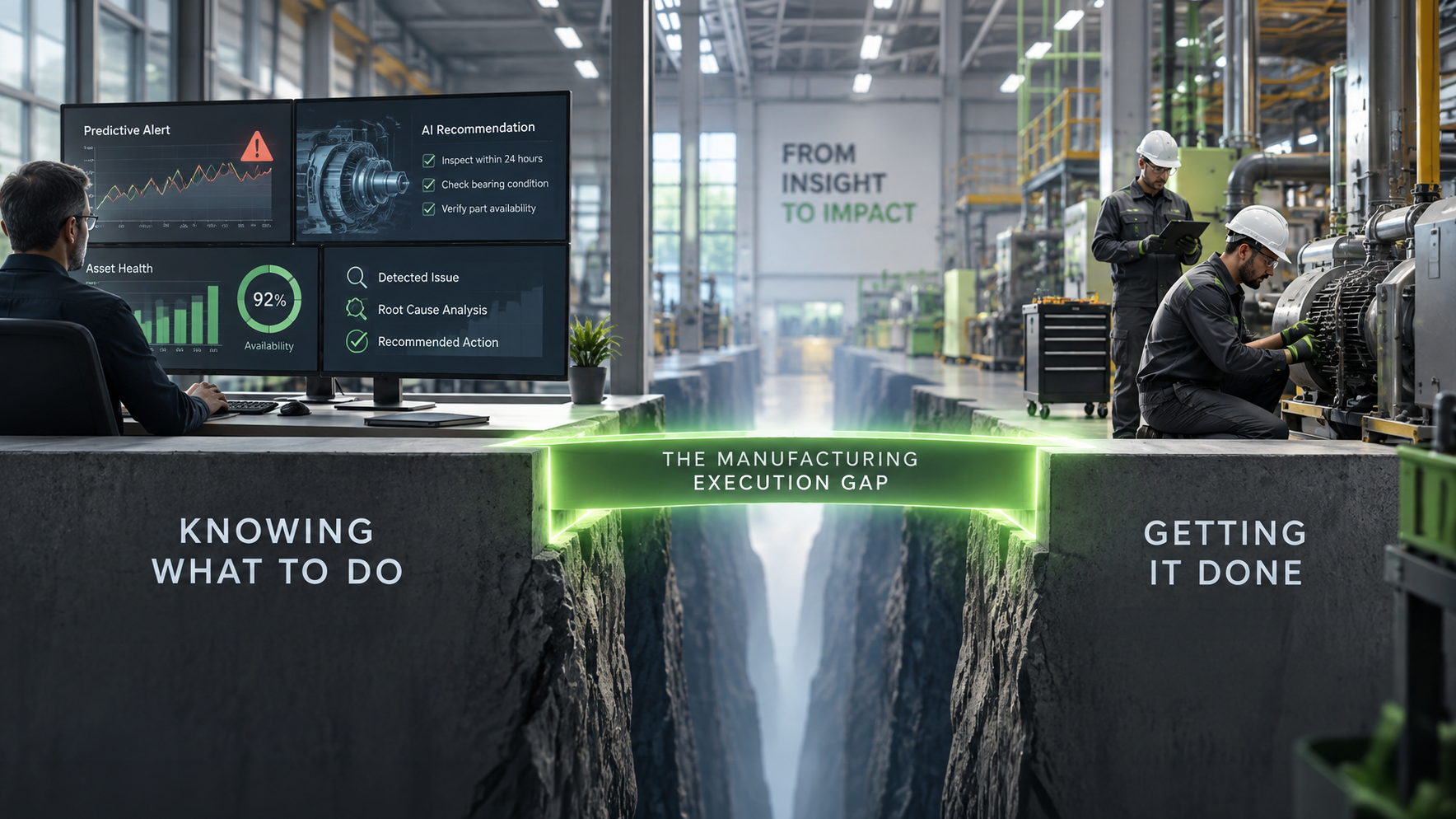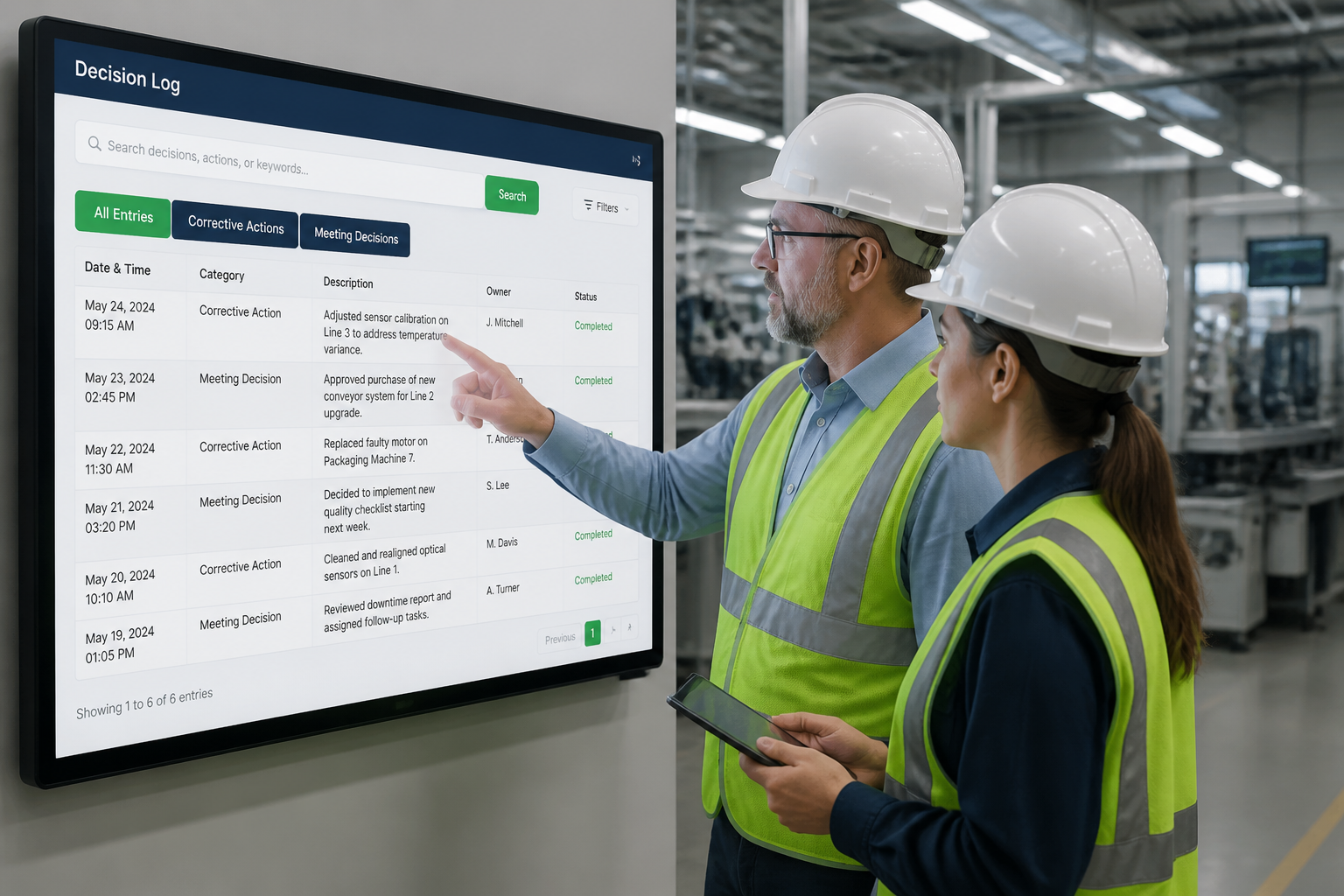

Your factory floor generates a staggering amount of data. While a standard Manufacturing Execution System (MES) captures this information, it often leaves your team drowning in noise. How do you spot the critical signals that point to emerging problems? This is where a manufacturing execution system ai provides a clear advantage. It analyzes vast data streams in real time, delivering the predictive insights needed for proactive maintenance and quality control. This is how AI drives significant decision-making improvements in next-generation MES, turning raw data into the intelligence your team needs to act faster and smarter.
Key Takeaways
- Gain Predictive Insight, Not Just Historical Data: An AI-powered MES transforms your factory data from a rearview mirror into a forward-looking guide, helping you anticipate equipment failures and quality issues before they stop production.
- Drive Efficiency to Reduce Costs: AI directly impacts your bottom line by optimizing resource allocation, enabling predictive maintenance to cut downtime, and minimizing material waste from defects.
- Start Smart with a Phased Approach: You don’t need to overhaul your entire operation at once. The best path forward is to choose a flexible solution that enhances your existing systems, allowing you to solve specific problems first and build your digital factory foundation over time.
What is a Manufacturing Execution System (MES)?
Think of a Manufacturing Execution System (MES) as the digital command center for your factory floor. It’s a specialized software system designed to manage and monitor every step of the production process in real time. An MES tracks raw materials as they move through the production line and are transformed into finished goods, giving you a live, detailed view of your operations.
This system acts as a critical bridge. On one side, you have your high-level business planning tools like Enterprise Resource Planning (ERP) systems, which handle orders, inventory, and finances. On the other side, you have the machinery and control systems doing the physical work on the plant floor. The MES connects these two worlds, translating business goals into actionable tasks for the production line and feeding real-time performance data back up to the business systems. It’s the key to turning plans into actual products efficiently and effectively.
How an MES Manages the Factory Floor
On the factory floor, an MES is the central nervous system that keeps everything running smoothly. It’s a cornerstone of the modern Digital Factory, integrating people, machines, and data into one cohesive operation. By connecting directly to equipment, it captures real-time information on production counts, machine status, and quality checks. This constant flow of data eliminates guesswork and replaces manual tracking with digital accuracy.
This system ensures that operators have the right instructions at the right time, that materials are available when needed, and that every production step is documented. It creates a complete, traceable record of the entire manufacturing process, which is essential for quality control, compliance, and continuous improvement efforts.
Core Functions of a Manufacturing Execution System
An MES handles several core tasks to orchestrate production. First, it manages the entire lifecycle of a production order, from the moment it’s released to the floor until the final product is complete. It breaks down orders into specific tasks and schedules them for different workstations or production lines.
Second, it connects your factory equipment with your business software. This integration allows for a seamless flow of information, ensuring that production schedules are aligned with inventory levels and customer demand. Finally, a key function of an MES is to provide real-time visibility through dashboards and reports. These tools show how well the factory is performing against key metrics, helping managers spot bottlenecks and make data-driven decisions on the fly. Decisyon’s Agentic MES is built to handle these essential functions.
MES vs. SCADA: What’s the Difference?
It’s common to mix up MES and SCADA, but they play very different roles on the factory floor. Think of SCADA (Supervisory Control and Data Acquisition) as the system that’s hyper-focused on the machines themselves. Its primary job is to watch equipment, collect data, and control industrial processes in real time. An MES, on the other hand, takes a much wider view by managing the entire production process from start to finish. While SCADA is asking, “Is this valve open right now?” the MES is asking, “Are we on track to complete this production order on time?” The two systems are designed to work together; SCADA provides the granular, real-time machine data that an MES needs to orchestrate the bigger picture of production.
Where Traditional MES Falls Short
While an MES is powerful, traditional systems have their limits. Many factories still rely on a patchwork of disconnected spreadsheets, homegrown applications, and manual data entry. These methods are often slow and error-prone, failing to provide the quick, accurate information needed in today’s fast-paced environment. Even with a traditional MES in place, many find that the system is great at collecting data but lacks the tools to analyze it deeply.
These older systems often can’t uncover hidden inefficiencies or predict potential problems. They report what happened in the past but struggle to provide the forward-looking insights needed to truly optimize operations. This gap is where modern, AI-powered platforms come in, transforming the MES from a simple data recorder into an intelligent operational guide.
How AI Transforms a Manufacturing Execution System
Adding Artificial Intelligence to a Manufacturing Execution System does more than just add a new feature; it fundamentally changes how the system works. A traditional MES is great at tracking what has already happened on the factory floor. But when you introduce AI, the MES evolves from a historical record-keeper into a proactive, intelligent partner. It can anticipate future events, recommend actions, and even automate decisions. For factories ready to take the next step, implementing generative AI in your digital factory can accelerate this transformation. This shift allows your teams to move from reacting to problems to preventing them altogether, creating a more resilient and efficient operation from the ground up.
Gain Real-Time Data Insights
An AI-powered MES doesn’t just collect data—it interprets it on the fly. By tracking production in real time, AI algorithms can instantly spot unusual patterns that might signal an issue. This could be a slight variation in machine temperature or a subtle change in cycle time. The system can then predict potential equipment breakdowns or quality control problems before they cause significant delays. This capability for real-time analysis helps your factory make smarter, faster decisions, reduce unexpected downtime, and maintain consistent product quality. It turns the massive stream of data from your factory floor into actionable intelligence.
Integrate Machine Learning for Smarter Operations
Machine learning, a subset of AI, takes your MES beyond simple dashboards and reports. Instead of just showing you what’s happening, an AI-native MES uses machine learning to learn from your historical and real-time data. It identifies the hidden relationships between different variables in your production process. Over time, the system gets smarter, continuously optimizing processes and predicting outcomes with greater accuracy. This allows you to move from a reactive operational model to a predictive one, where your systems are constantly working to find more efficient ways to run your lines and improve throughput.
Automate Key Decisions with AI
One of the most powerful applications of AI in an MES is its ability to automate routine decisions. By analyzing vast amounts of data, AI can identify patterns and predict the outcomes of different actions. For example, it can automatically adjust machine settings to optimize for energy consumption or reroute a production order if a machine is predicted to fail. This automated decision-making frees up your skilled operators and engineers from managing day-to-day adjustments, allowing them to focus on more complex, high-value tasks like process improvement and strategic problem-solving.
Connect Equipment with IoT and Smart Gateways
AI works best when it has a constant stream of high-quality data, and that’s where the Internet of Things (IoT) comes in. By integrating IoT sensors with your MES, you create a fully connected production environment. These sensors feed real-time data from every piece of equipment directly into the system. A Decisyon Smart Gateway acts as the crucial link, collecting and pre-processing this data at the source. This ensures your AI models have the accurate, up-to-the-minute information they need to monitor equipment health, optimize performance, and provide a clear view of your entire operation.
AI-Powered MES: From Future Concept to Present-Day Reality
The idea of an AI-driven factory might sound like something from a distant future, but it’s already happening on plant floors around the world. An AI-powered MES isn’t about a complete operational overhaul; it’s about making your current systems smarter and more responsive. The technology has moved from a theoretical concept to a practical tool that delivers real results today. By integrating AI, your MES can analyze the constant stream of data from your equipment and people, transforming it from overwhelming noise into clear, actionable intelligence. This allows your team to see what’s really happening, align on priorities, and solve problems faster, turning daily chaos into daily control with a modern smart manufacturing platform.
The most significant change AI brings to an MES is the shift from reactive problem-solving to proactive decision-making. A traditional MES is excellent at telling you what happened yesterday or an hour ago, acting as a system of record. But an AI-infused system becomes an intelligent partner that helps you anticipate what will happen next. It uses machine learning to analyze historical and real-time data, identifying subtle patterns that precede equipment failure or a drop in product quality. This allows you to move beyond simply tracking downtime and defects to actively preventing them, which is the core of a truly optimized Digital Factory.
What Can an AI-Powered MES Do for You?
Integrating artificial intelligence into your Manufacturing Execution System isn’t just a technical upgrade; it’s a strategic move that delivers tangible business results. By giving your MES the ability to learn, predict, and adapt, you can transform your factory floor from a place of daily chaos to one of daily control. This shift allows you to move beyond simply tracking what happened and start proactively shaping what happens next. The benefits ripple across your entire operation, from individual machines to the broader supply chain, driving efficiency, cutting costs, and building a more resilient manufacturing environment. An AI-powered MES provides the intelligence to not only see what’s happening on the floor but to understand why it’s happening and what you should do about it. It connects your people, processes, and equipment into a single, cohesive system that learns and improves with every shift. This creates a foundation for continuous improvement and operational excellence, turning your factory into a strategic asset that can quickly adapt to changing demands. Instead of relying on disconnected spreadsheets and delayed reports, your teams get real-time insights and actionable recommendations, empowering them to make better decisions right where the work happens. Let’s look at the key advantages you can expect.
Achieve Greater Operational Efficiency
An AI-powered MES makes your entire factory smarter. By continuously analyzing data from equipment and workflows, AI helps your operations run better and identifies the root causes of recurring problems, like machine breakdowns or bottlenecks. Instead of relying on manual analysis after the fact, your system can spot inefficiencies in real time and suggest adjustments to keep production flowing smoothly. This constant optimization means you can increase throughput and get more out of your existing assets without significant capital investment. A Agentic MES enhanced with AI provides the visibility and intelligence needed to streamline every process on the floor.
Reduce Your Production Costs
Unexpected downtime is one of the biggest drains on profitability. AI excels at predicting when a machine is about to fail, allowing you to schedule maintenance before it breaks down and disrupts production. This proactive approach, known as prescriptive maintenance, helps you avoid expensive emergency repairs and lost production time. Beyond maintenance, AI also helps reduce costs by minimizing waste. It can identify process variations that lead to defects, ensuring higher first-pass yield and less scrap material. By optimizing energy consumption and material usage, an AI-powered MES directly contributes to a healthier bottom line.
The Impact of Incremental Improvements
You don’t need a complete factory overhaul to see the benefits of AI. The true value often comes from the small, continuous improvements it enables every single shift. By constantly analyzing performance data, the system identifies minor bottlenecks or process variations that might otherwise go unnoticed. It then provides your team with the clear, actionable intelligence needed to make small adjustments that keep production on track. Over time, these incremental gains add up, leading to significant increases in overall efficiency and building a strong foundation for operational excellence. This approach turns continuous improvement from a long-term goal into a daily practice.
Optimize How You Allocate Resources
Effectively managing resources—from machinery and materials to your skilled workforce—is a complex puzzle. AI helps solve it by improving complex production schedules. The system can learn to make smarter decisions about how to sequence jobs and assign tasks to workstations, much like an experienced human planner. It can dynamically adjust schedules based on real-time conditions, such as material availability or unexpected machine maintenance. This ensures your valuable resources are always used to their full potential, preventing idle time and maximizing productivity across every shift. This level of coordination is central to a lean manufacturing optimizer.
Respond to Production Issues Faster
In manufacturing, the speed of your response to a problem can make all the difference. An AI-powered MES acts as a vigilant watchdog, tracking production in real time to spot unusual patterns that signal a potential issue. It can predict when equipment might fail or when a deviation could lead to quality problems, sending alerts before a minor issue becomes a major disruption. This gives your team the ability to intervene immediately and resolve problems proactively. With a platform that provides this predictive insight, you can shift from reactive firefighting to a more controlled and forward-thinking operational rhythm.
Streamline Your Entire Supply Chain
The impact of AI on the factory floor extends beyond your four walls. By providing more accurate production data and forecasts, an AI-powered MES helps you better manage your supply chain. The system ensures that all the materials needed for production are available precisely when you need them, preventing shortages that can bring a production line to a halt. This enhanced visibility allows for better inventory management and more reliable communication with suppliers. A manufacturing Control Tower powered by AI can connect your factory operations with your broader supply chain, creating a more agile and resilient end-to-end process.
Improve Factory Safety
A safer factory is a more reliable and productive factory. Many on-the-job accidents are linked to unexpected equipment failures, which can put operators at risk. An AI-powered MES helps you get ahead of these issues by shifting your maintenance strategy from reactive to proactive. By analyzing real-time data from sensors on your machinery, AI can predict when a machine might break down, allowing you to schedule maintenance before a critical failure occurs. This proactive approach not only prevents dangerous equipment malfunctions but also helps you avoid expensive emergency repairs and lost production time, creating a safer and more stable operating environment for your entire team.
Enhance Demand Forecasting
Guessing what customers will want next can lead to costly mistakes, like holding too much inventory or running out of a popular product. AI takes the guesswork out of this process by improving your demand forecasting. By analyzing historical sales data, market trends, and other variables, AI can help predict how much product customers will want with far greater accuracy. This insight ensures that all the materials needed for production are available precisely when you need them. Better forecasting ripples through your entire operation, leading to smarter inventory management, fewer production delays, and a supply chain that is more responsive to market changes.
Optimize Energy Consumption
Energy is a significant and often overlooked operational cost in manufacturing. An AI-powered MES can turn this expense into an opportunity for savings and efficiency. The system continuously monitors energy usage across all your equipment, identifying which machines and processes are the most power-hungry. From there, AI can automatically adjust machine settings to optimize for energy consumption without sacrificing quality or throughput. This ensures you are running at peak efficiency, leading to lower operational costs and a more sustainable footprint. It’s a practical way to make your factory not just smarter, but also greener.
Refine Production Planning
Creating an efficient production schedule is a complex puzzle with countless moving parts. AI helps solve this puzzle by making your production plans more efficient and accurate. The system can learn from past performance data to understand the most effective ways to sequence jobs, assign tasks, and manage changeovers, similar to how an experienced human planner would. This allows your planning system to create dynamic schedules that adapt to real-time conditions on the floor. With a tool like a lean operations optimizer, you can ensure that your resources are always deployed effectively, maximizing throughput and minimizing idle time.
How AI Enables Predictive Maintenance
One of the most significant operational drains in any factory is equipment failure. The traditional approach is reactive: when a machine breaks, production stops, and a team scrambles to fix it. This unplanned downtime is expensive, not just in repair costs but in lost output, missed deadlines, and cascading disruptions across the production line. An AI-powered MES flips this model on its head by enabling predictive maintenance—a strategy focused on fixing issues before they become failures. Learning how to improve manufacturing asset uptime is the key to shifting from reactive firefighting to proactive control.
Instead of relying on fixed maintenance schedules or waiting for a breakdown, AI continuously analyzes data from your equipment to forecast potential problems. It learns the unique operational signature of each asset and detects subtle changes that a human operator might miss. This gives your maintenance teams the foresight to schedule repairs during planned downtime, order parts in advance, and prevent catastrophic failures altogether. This shift from reactive firefighting to proactive control is fundamental to creating a more resilient and profitable manufacturing operation. By integrating prescriptive maintenance capabilities, your MES becomes a forward-looking system that helps you manage assets based on their actual condition, not just the calendar.
Monitor Equipment Health Around the Clock
At its core, predictive maintenance is about listening to your machines. AI gives your MES the ability to do this at a massive scale and with incredible precision. By processing real-time data from sensors that track vibration, temperature, pressure, and other key indicators, AI establishes a baseline for normal, healthy operation. When it detects deviations from this baseline, it can flag a machine for inspection long before it fails. This allows your teams to intervene early and address the root cause of a problem when it’s still small and manageable, saving significant time and money compared to a full-blown breakdown.
Recognize Failure Patterns Before They Happen
AI goes beyond simple threshold alerts. It uses machine learning algorithms to analyze historical and real-time data, identifying complex patterns that often precede equipment failure. A slight increase in temperature combined with a specific vibration frequency might be a known precursor to a bearing failure, for example. An AI-powered MES can recognize these patterns across thousands of data points, something that is impossible to do manually. This intelligence allows the system to predict not just if a machine will fail, but often when and how, giving your team highly specific guidance for their maintenance efforts.
Create Smarter Maintenance Schedules
Preventive maintenance based on a fixed schedule is often inefficient. You might service a machine that’s running perfectly fine or, worse, miss one that’s on the verge of failure because its check-up isn’t due for another month. AI enables condition-based maintenance, where work is performed only when needed. This data-driven approach has a massive impact on resource allocation and asset longevity. By focusing efforts where they matter most, companies can cut machine downtime by up to 50% and extend the operational life of their equipment by up to 40%, maximizing the return on their asset performance management strategy.
Reduce Unplanned Downtime for Good
The ultimate goal of predictive maintenance is to make unplanned downtime a rare event. Every minute of an unexpected shutdown costs money and disrupts the flow of production. By monitoring equipment health, recognizing failure patterns, and optimizing maintenance schedules, an AI-powered MES directly tackles the root causes of these interruptions. The results are tangible; studies show that integrating AI with an MES can lead to a 41% reduction in unexpected machine shutdowns. This creates a more stable, predictable, and productive factory floor where your team can focus on meeting production targets instead of constantly fighting fires.
How AI Improves Quality Control
Maintaining high product quality is non-negotiable, but traditional quality control methods are often reactive. Inspections that happen after a product is already made can catch defects, but they don’t prevent the waste of time, materials, and resources that went into creating it. This is where integrating AI into your Manufacturing Execution System (MES) changes the game entirely. It shifts quality management from a reactive, end-of-line checkpoint to a proactive, real-time process embedded throughout the factory floor.
An AI-powered MES acts as a vigilant overseer, constantly analyzing data from sensors, cameras, and equipment to identify even the slightest deviations from your quality standards. Instead of waiting for a batch to be completed, you can catch potential issues the moment they arise. This allows your team to intervene immediately, correct the root cause, and prevent widespread defects before they happen. This approach not only leads to a better final product but also significantly cuts down on scrap, rework, and the associated costs. By turning production data into actionable quality insights, you can build a more resilient and efficient Digital Factory.
Monitor Product Quality in Real Time
One of the most powerful capabilities AI brings to quality control is the ability to monitor your production lines in real time. Traditional quality checks often involve manual sampling, which can leave large gaps where defects can go unnoticed. AI-powered systems, however, use a network of sensors and high-resolution cameras to create a continuous feedback loop. These systems track critical quality parameters—like product dimensions, temperature, pressure, and color consistency—second by second. If any variable drifts outside its acceptable range, the system can instantly flag the issue for an operator or, in some cases, automatically adjust machine settings to bring the process back into line. This constant vigilance ensures that quality is maintained throughout the entire production run, not just checked at the end.
Detect and Prevent Defects Early
Beyond simple monitoring, AI excels at actively detecting and preventing defects with a level of precision that is difficult to achieve manually. Machine learning algorithms can be trained on vast datasets of product images and sensor readings to recognize the subtle patterns that precede a quality issue. For example, an AI-powered visual inspection system can spot microscopic cracks, surface imperfections, or incorrect component placements that might be invisible to the human eye. By catching these problems early, you can address the root cause before it leads to a significant amount of waste. This transforms your quality process from one of simple detection to one of proactive prevention, a core principle of a modern Agentic MES.
Fine-Tune Your Process Parameters
Achieving consistent quality isn’t just about catching errors; it’s about creating the perfect conditions for production in the first place. AI can analyze historical and real-time data to understand the complex relationships between process parameters and final product quality. It can identify the optimal machine settings, material flow rates, and environmental conditions needed to produce the best possible outcome. For instance, the system might learn that a minor adjustment in conveyor speed during a specific phase reduces the likelihood of a certain defect. The AI can then recommend these adjustments to operators or, in a fully integrated system, make the changes automatically. This continuous optimization helps you fine-tune your operations for peak performance and quality.
Ensure Consistency Across Every Batch
Variability is a major enemy of quality control. Differences between operator skill levels, shifts, or batches of raw materials can lead to inconsistent product quality. AI helps standardize your operations to ensure every product that leaves your facility meets the same high standard. By establishing a “golden batch” profile based on data from your most successful production runs, the AI can monitor subsequent batches to ensure they adhere to this ideal standard. This is particularly critical in regulated industries like pharmaceuticals and food and beverage, where batch-to-batch consistency is essential for safety and compliance. AI provides the data-driven control needed to make quality predictable and repeatable.
Common Challenges of Integrating AI into an MES
While the benefits of integrating AI into your MES are clear, the path to implementation has its share of challenges. Thinking through these potential hurdles ahead of time is the best way to ensure a smooth transition and a successful outcome. It’s not about finding a system that avoids these issues entirely, but about choosing a partner and a platform that have smart, practical answers for them. The most common challenges fall into four main categories: data, system integration, people, and security. By creating a strategy for each, you can build a solid foundation for your AI-powered operations and set your team up for success from day one.
A thoughtful approach involves more than just installing new software; it requires a holistic view of your factory’s ecosystem. This means assessing the quality of your current data streams, understanding how new technology will connect with your legacy equipment, and preparing your workforce for a new way of operating. It also means putting robust security protocols in place to protect your newly connected environment. Addressing these points proactively transforms potential obstacles into manageable steps on your journey toward a smarter, more efficient factory floor.
Getting Your Data Ready for AI
AI models are powerful, but they are only as smart as the data they learn from. Before you can apply AI, you need to ensure your data is clean, accurate, and well-organized. This process, known as data preparation, involves collecting information from various sources, filtering out anomalies or errors, and structuring it in a consistent format. Many factories collect vast amounts of data, but it’s often siloed or of inconsistent quality. Taking the time to establish data governance is a critical first step. This foundational work ensures that the insights and predictions generated by your AI are reliable and can be trusted to guide important operational decisions.
The Hurdle of System Integration
A factory floor is a complex environment, often featuring a mix of modern and legacy equipment from different vendors, each with its own software and communication protocols. Getting a new AI system to work smoothly with this existing infrastructure can be a significant challenge. A full “rip-and-replace” approach is often too disruptive and costly. The key is to find a solution that can integrate with what you already have. A flexible platform that uses a Smart Gateway can connect disparate systems and machines, acting as a unifying layer that gathers data without requiring you to overhaul your entire operation. This approach allows you to start gaining insights quickly while planning for future upgrades.
Navigating the Initial Investment
The cost of implementing an AI-powered system is understandably a major consideration for any manufacturer. However, it’s helpful to view this as a strategic investment rather than a simple expense. Integrating artificial intelligence into your MES is a move that delivers tangible business results by transforming your factory from a place of daily chaos to one of daily control. The return on this investment comes from concrete improvements, such as a significant reduction in unplanned downtime. AI excels at predicting when a machine is about to fail, allowing you to schedule prescriptive maintenance before it disrupts production. This proactive approach directly cuts costs and improves throughput, making the initial outlay a calculated step toward long-term operational excellence.
Getting Your Team On Board
Technology is only effective when people are comfortable and confident using it. Introducing AI can sometimes cause anxiety among workers who may worry about their roles changing. The most successful AI integrations are accompanied by a strong change management and training strategy. It’s essential to communicate the vision clearly: AI is a tool to augment your team’s expertise, not replace it. By providing comprehensive training, you can upskill your workforce to leverage AI in their daily functions, helping them make faster, more informed decisions. This empowers your employees, turning apprehension into adoption and ensuring the technology delivers its full potential.
Addressing Security and Data Privacy
Connecting more devices and centralizing operational data creates new efficiencies, but it also expands your digital footprint, making cybersecurity a top priority. Protecting your sensitive production data, intellectual property, and connected equipment from cyber threats is non-negotiable. As you integrate AI and IoT devices, you must implement robust security measures, including secure network protocols, access controls, and regular vulnerability assessments. A strong cybersecurity framework is essential for building a resilient smart factory. It protects your assets and builds trust among your team and stakeholders that your digital transformation is being managed responsibly.
What’s Next for AI in Manufacturing?
The integration of AI into manufacturing isn’t some far-off concept; it’s the next practical step in the digital transformation that’s already happening. While current systems are great at using AI to analyze data and show you what’s going on, the future is about creating more autonomous, intelligent, and resilient operations. We’re moving beyond simple dashboards and alerts toward systems that can predict outcomes, learn from new information, and actively help your teams optimize processes in real time. This evolution will see AI become a core partner on the factory floor, working alongside your people to manage complexity and drive continuous improvement. The goal is to build a truly connected Digital Factory where every piece of equipment, process, and person is part of a single, intelligent ecosystem. This shift will redefine what’s possible in terms of efficiency, quality, and agility, turning your factory into a more dynamic and responsive operation. It’s about moving from a state of reacting to daily issues to one where you can anticipate challenges and opportunities before they arise. This proactive stance is what will separate the leaders from the rest, allowing them to adapt quickly to market changes, supply chain disruptions, and shifting customer demands with confidence.
Digital Twins and Operational Intelligence
Imagine creating a complete, dynamic virtual replica of your factory floor—not just a static 3D model, but a living simulation fed by real-time data from your machines and systems. This is the power of a digital twin. This technology allows you to test changes, run “what-if” scenarios, and train staff without disrupting actual production. You can experiment with new line configurations or process parameters in the virtual world to find the optimal approach before implementing it in the real world. This provides a powerful layer of operational intelligence, giving you the foresight to make better, data-backed decisions and avoid costly mistakes.
Edge Computing for Deeper Analytics
For many factory floor decisions, speed is critical. Waiting for data to travel from a machine to a central cloud server and back is often too slow. Edge computing solves this by processing data directly where it’s generated—at the “edge” of the network, right on the factory floor. When you combine this with AI and the Internet of Things (IoT), you get real-time analytics and immediate action. An AI-powered Smart Gateway can analyze sensor data from a piece of equipment on the spot, detect an anomaly, and trigger an alert or adjustment in milliseconds. This prevents a potential failure before it happens and keeps production running smoothly.
The Rise of Self-Learning Systems
The next frontier for AI in manufacturing is the development of systems that learn and improve on their own. Instead of relying solely on pre-programmed rules, a self-learning system analyzes performance over time, identifies patterns, and adapts its own logic to improve outcomes. For example, it could notice that a specific combination of material properties and machine settings consistently leads to minor defects, then recommend a new set of parameters to eliminate the issue. These systems act as AI-powered Smart Assistants that evolve with your operations, driving a cycle of continuous improvement with less manual intervention from your team and getting smarter with every production run.
The Convergence of AI and Advanced Robotics
Robots on the factory floor have long been workhorses, excelling at repetitive tasks with speed and precision. However, their roles have traditionally been rigid, confined to carefully controlled environments where they perform the exact same motion thousands of times. The introduction of artificial intelligence is fundamentally changing this dynamic. AI gives robots the ability to perceive their surroundings, make decisions, and learn from experience. This transforms them from simple automated machines into intelligent partners that can handle more complex, variable tasks and work safely alongside human teams, creating a more collaborative and flexible production environment.
This powerful combination is driven by AI’s ability to process vast amounts of sensory data in real time. For example, a robot equipped with a vision system can use AI to identify and pick up randomly placed parts from a bin—a task that was once incredibly difficult for traditional automation. This adaptability makes production lines more flexible and resilient. When these intelligent robots are integrated into a broader Digital Factory ecosystem, they can receive instructions and report their status back to the central MES, allowing for seamless coordination across the entire production process and enabling a new level of operational agility.
Achieving True End-to-End Management
Ultimately, the future of AI in manufacturing is about breaking down silos and creating a single, unified system for managing the entire production lifecycle. AI will connect data from every corner of your operation—from supply chain and inventory to production scheduling and quality control—into one cohesive view. A manufacturing Control Tower powered by AI provides this holistic visibility, allowing you to see how a delay in one area will impact another. This end-to-end management capability moves you from reacting to problems to proactively orchestrating your entire operation for peak performance. It gives you the insight to make strategic adjustments that benefit the entire value chain, providing a powerful competitive advantage.
How to Get Started with an AI-Powered MES
Adopting an AI-powered MES might seem like a massive undertaking, but it doesn’t have to be a disruptive overhaul. The key is to approach it as a strategic evolution rather than a complete revolution. By breaking the process down into manageable steps, you can build a smarter, more connected factory floor without halting production or scrapping your existing systems. The goal is to enhance your current operations with new intelligence, starting with the areas that will deliver the most immediate impact. This approach allows you to demonstrate value quickly, get your team on board, and create a solid foundation for future growth. It’s about making smart, incremental changes that lead to significant, long-term gains in efficiency and control.
Your First Steps to Implementation
Making the move to an AI-driven system is as much about people and processes as it is about technology. The first step is to prepare your organization for this shift. This involves more than just installing new software; it requires a commitment to improving your data management practices and investing in training for your staff. Your team needs to understand not just how to use the new tools, but why they are important. Fostering a culture that embraces data-driven decision-making is crucial for success. Think of it as building the operational muscle needed to fully leverage the power of AI on the factory floor.
Assess Your Digital Readiness
Before you can harness the power of AI, you need to take a clear-eyed look at your current digital landscape. Think of it as a health check for your factory’s data. Are your manufacturing systems already digitized, or are you still relying heavily on paper and spreadsheets? More importantly, is the data you collect accessible and reliable? AI needs a steady stream of quality information to learn and make accurate predictions. You don’t need a perfect, fully integrated system to begin, but you do need a solid foundation. The key is to check if your systems are ready and if the necessary data is available to support an intelligent platform.
Define Clear Problems to Solve
The most successful AI integrations start with a specific, well-defined goal. Instead of applying AI broadly and hoping for the best, pinpoint a clear challenge you want to address. Are you struggling with unplanned downtime on a critical production line? Is a particular process generating too much scrap material? By focusing your efforts on a specific pain point, you can tailor the solution to deliver measurable results. This approach allows you to solve a real business problem, demonstrate the value of the technology quickly, and build momentum for future projects. It’s about using AI as a precision tool, not a sledgehammer.
Perform a Cost-Benefit Analysis
Finally, it’s essential to weigh the investment against the potential returns. A cost-benefit analysis helps you build a strong business case for bringing AI into your operations. On the cost side, consider the software, implementation, and training required to get your team up to speed. On the benefit side, think about the tangible value you expect to gain—reduced downtime, lower material waste, increased throughput, and improved product quality. Starting with a manageable, high-impact project makes this analysis straightforward. It allows you to prove the ROI on a smaller scale, securing buy-in and making it easier to justify expanding the initiative across your facility.
How Do You Choose the Right Solution?
Not all AI solutions are created equal. When evaluating your options, look for a system that can integrate smoothly with your existing tools and workflows. A full rip-and-replace of your current MES might not be necessary or practical. Instead, consider a modular platform that can act as an intelligent overlay, enhancing what you already have. This approach minimizes disruption and allows you to target specific pain points first. Prioritize solutions that are designed for flexibility and can grow with you, ensuring that data can be shared easily and securely across your entire operational footprint.
Look for Features That Ease Implementation
The best technology is the kind that works with what you already have. Look for features that allow for a phased implementation rather than a complete overhaul. A flexible platform that uses a Smart Gateway, for example, can connect with your existing machines and systems—both old and new—without requiring you to rip and replace everything. This approach acts as a unifying layer, gathering data from disparate sources and bringing it into one cohesive system. It allows you to start small, solve a specific problem, and gain insights quickly while you plan for future expansion. This modularity is key to a low-disruption, high-impact digital transformation.
Evaluate Deployment Speed and Long-Term Costs
When it comes to new technology, time is money. The faster you can get a system up and running, the faster you’ll see a return on your investment. Look for solutions that can be implemented in weeks, not months, as a rapid deployment minimizes operational disruption and accelerates benefits like reduced downtime and improved throughput. Before signing with a vendor, use our guide on how to prepare for an AI MES demo to ensure you’re asking the right questions. Beyond the initial price, consider the total cost of ownership. A platform that is easy to configure and adapt without requiring a team of developers will have lower long-term costs. The right solution should empower your own team to make adjustments and build new applications as your needs evolve.
Find the Right Implementation Partner
The software you choose is only one part of the equation; the partner you work with is just as critical. Look for an experienced company that understands the unique challenges of your industry and has a proven track record of successful implementations. A great partner acts as an extension of your team, helping you define your goals, navigate the setup process, and ensure your staff is trained and ready to go. They should be focused on helping you achieve your business outcomes, not just selling you a product. This collaborative relationship is essential for a smooth deployment and long-term success.
Build Your Digital Factory Foundation
The ultimate goal of implementing an AI-powered MES is to create a true Digital Factory. This foundation gives you the ability to monitor and control production in real time, identify potential issues before they become major problems, and empower your teams to act quickly. By digitizing your workflows and connecting your assets, you create a single source of truth for your entire operation. This real-time visibility helps you reduce waste, improve product quality, and stay competitive. It’s the bedrock upon which you can build more advanced capabilities, like predictive analytics and autonomous operations.
Key Players in the AI-MES Market
The market for AI-enhanced MES is dynamic, featuring established industrial giants who are integrating AI into their long-standing platforms. These companies bring deep domain expertise from decades of experience on the factory floor, offering robust solutions that connect with a wide range of industrial equipment. Each player has a unique approach, with some focusing heavily on predictive maintenance while others emphasize real-time quality control or supply chain integration. Understanding the landscape can help you identify a partner whose strengths align with your most pressing operational challenges. According to industry analysis, several major technology providers are leading the charge in this space.
Rockwell Automation
Rockwell Automation is a major force in industrial automation, and their FactoryTalk ProductionCentre MES reflects this legacy. They have integrated AI into the system to provide real-time operational insights and predictive analytics. A key strength of their platform is its focus on quality control, using AI to anticipate problems before they lead to defects or waste. By analyzing data streams from the production line, FactoryTalk helps manufacturers maintain consistency and adhere to strict quality standards, making it a strong choice for industries where product integrity is paramount.
Siemens Digital Industries
Siemens brings its extensive engineering background to the AI-MES market with its Opcenter MES platform. This solution is designed to create a comprehensive digital twin of the entire production process, allowing for deep analysis and optimization. Siemens uses AI to improve production scheduling, reduce material waste, and quickly identify the root causes of operational issues. Their approach is holistic, aiming to connect every aspect of manufacturing—from design and planning to production and service—into a single, intelligent ecosystem that drives efficiency across the board.
GE Digital
GE Digital, with its deep roots in industrial manufacturing, offers the Proficy MES. This platform leverages AI primarily for asset performance management and process improvement. Its standout feature is its application of AI for predictive maintenance, helping factories anticipate when equipment needs service to avoid costly unplanned downtime. Proficy also uses AI to analyze production workflows, identifying bottlenecks and opportunities to make processes more efficient. This makes it a valuable tool for asset-intensive industries looking to maximize uptime and throughput.
Honeywell
Honeywell’s offering in this space is the Honeywell Forge platform, which is designed to be an enterprise-level performance management solution. Forge uses AI to connect data from assets, people, and processes across multiple sites. Its AI models are particularly effective at predicting machine failures, optimizing complex production schedules, and improving overall product quality. By providing a unified view of operations, Honeywell Forge helps large organizations standardize processes and make data-driven decisions that improve both safety and productivity.
Emerson Electric
Emerson Electric focuses on process automation, and their Plantweb Optics platform extends this expertise into the AI-MES landscape. This solution uses AI to help factories in sectors like oil & gas, chemicals, and pharmaceuticals operate more efficiently and safely. Plantweb Optics excels at analyzing data from complex industrial processes to identify opportunities for optimization and to predict potential safety or compliance issues. Its focus on asset health and operational performance makes it a strong contender for manufacturers in highly regulated and hazardous environments.
Plex Systems
Plex Systems, now part of Rockwell Automation, offers a different approach with its cloud-based Smart Manufacturing Platform. Being born in the cloud gives it a distinct advantage in terms of scalability and accessibility. The platform uses AI for real-time production monitoring, automated quality checks, and intelligent production scheduling. Its multi-tenant cloud architecture allows for rapid deployment and continuous updates, making it an attractive option for manufacturers looking for a modern, flexible MES solution that can easily connect data from across their enterprise.
Related Articles
- Agentic MES
- What does “AI-Driven Smart Manufacturing” mean? – Decisyon
- The Power of AI to Transform Manufacturing Operations and Outcomes – Decisyon
- Industrial Manufacturing
- Modern Strategies Transforming Manufacturing – Decisyon
Frequently Asked Questions
Do I need to completely replace my current MES to get the benefits of AI? Not at all. A full “rip-and-replace” is often disruptive and unnecessary. A more effective approach is to find a flexible, modular platform that can act as an intelligent layer on top of your existing systems. This allows you to enhance what you already have, connecting your current equipment and software to gain new AI-driven insights without starting from scratch.
What’s the most practical first step if we’re interested in an AI-powered MES? The best place to start is by identifying your most significant operational challenge. Whether it’s frequent unplanned downtime, quality inconsistencies, or production bottlenecks, focusing on a specific pain point allows you to target your initial efforts for the quickest impact. From there, you can look for a solution that addresses that specific issue and build out your capabilities over time.
Our team isn’t full of data scientists. How difficult is it to use an AI-powered system? Modern AI-powered systems are designed to be used by the people on your factory floor, not just data experts. The goal of the technology is to translate complex data into clear, actionable recommendations. A good system will present insights through intuitive dashboards and alerts, empowering your team to make smarter decisions without needing to understand the underlying algorithms.
Beyond the data, what’s the biggest difference we’ll see in our daily operations? The most significant change is the shift from being reactive to proactive. Instead of your team spending their day putting out fires and responding to problems that have already happened, they will be equipped to anticipate issues before they occur. This creates a more controlled, predictable, and less chaotic environment where your team can focus on optimization and improvement rather than constant troubleshooting.
How does an AI-powered MES help with quality control beyond just catching defects? While a traditional system might flag a bad part at the end of the line, an AI-powered MES works to prevent that bad part from ever being made. It continuously monitors your process parameters in real time and learns the optimal conditions for producing a high-quality product. It can identify subtle drifts that often lead to defects and recommend or even automate adjustments to keep the process on track, ensuring consistency from the start.
Before choosing an AI-enabled manufacturing execution system, define the workflows, integrations, and operational metrics you need to validate with an AI MES platform demo checklist.
AI in manufacturing execution is most valuable when it connects planners, supervisors, operators, and maintenance teams through a shared digital management system for frontline operations.
Connected execution systems and a frontline digital lean management system can turn lean improvement ideas into repeatable workflows, assignments, and measurable outcomes.