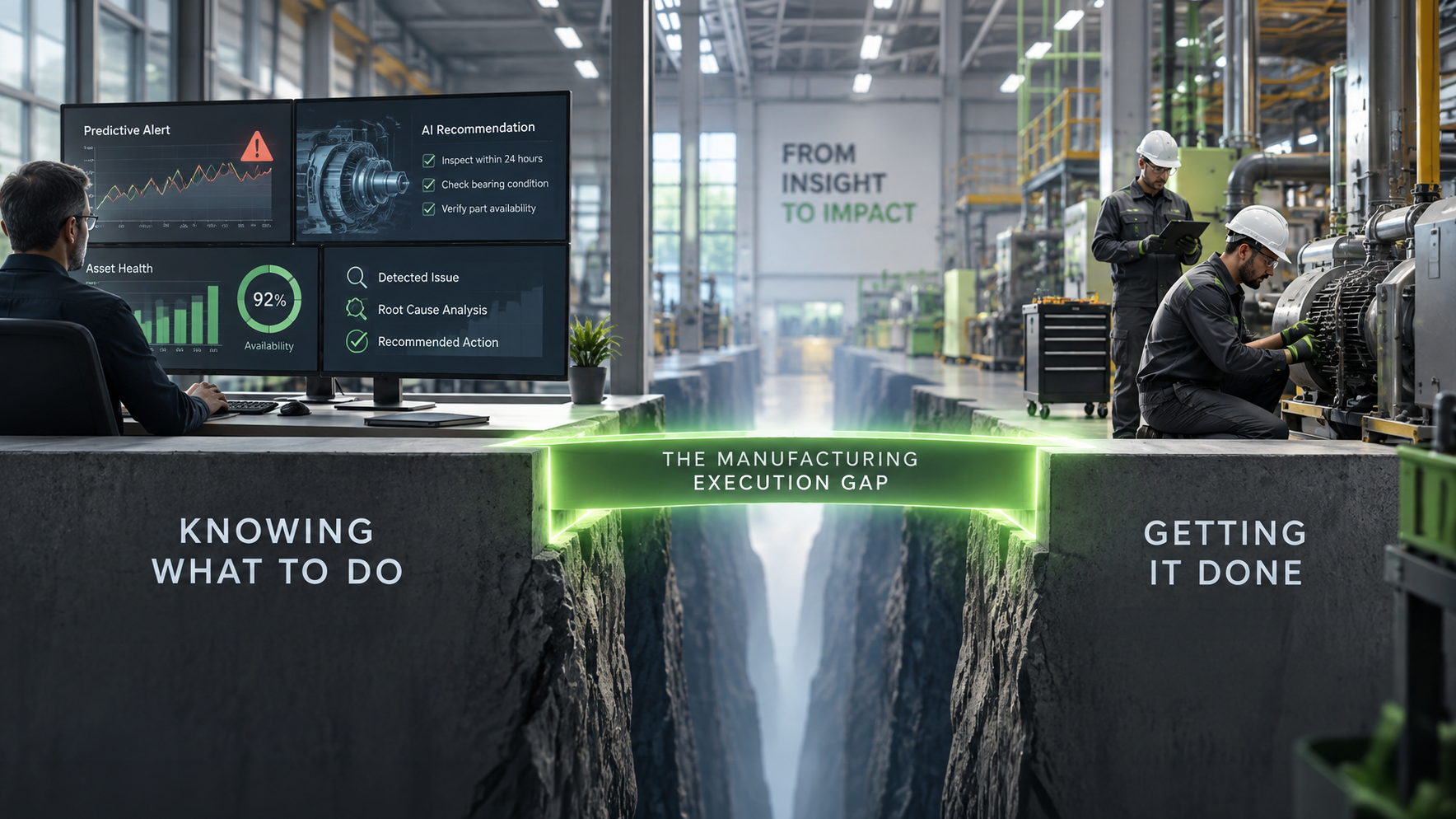
Your factory is already generating a massive amount of data every single second. From temperature and pressure readings to cycle times and vibration patterns, your machines are constantly talking. The problem is, most of this information is either trapped in isolated systems or simply becomes digital noise. It’s data without direction. So, how do you tap into this hidden resource to actually improve your operations? The answer is Industrial IoT (IIoT) Analytics. This is the framework for collecting raw signals from your equipment, processing them into structured insights, and analyzing them to drive intelligent action. It’s about finding the valuable signals in the noise to improve efficiency and uncover new opportunities.
Key Takeaways
- Turn Data into Action: The real value of IIoT analytics is not just collecting data, but turning it into clear insights. This empowers your teams to stop reacting to problems and start proactively improving efficiency, quality, and overall performance.
- Achieve Measurable Business Outcomes: IIoT analytics delivers tangible results by enabling predictive maintenance to cut unplanned downtime and providing real-time monitoring to improve operational efficiency. This gives your teams the data to make smarter decisions that directly impact profitability.
- Start Smart and Scale: You don’t need a disruptive “rip-and-replace” project to begin your digital journey. Start by targeting a specific challenge to gain real-time visibility, then expand your capabilities over time with a modular approach that works with your existing infrastructure.
What is Industrial IoT (IIoT) Analytics?
Industrial IoT (IIoT) analytics is the process of collecting and analyzing data from internet-connected devices in industrial environments like manufacturing plants, energy grids, and supply chains. It focuses on connecting machines and equipment to the internet to generate a constant stream of data. The real value, however, comes from analyzing that data to gain insights that were previously out of reach. By turning raw data into actionable information, IIoT analytics helps teams move from guessing what’s happening on the factory floor to knowing with certainty.
The primary goal is to use these insights to make better, faster decisions that directly impact the bottom line. For manufacturers, this means finding practical ways to improve operational efficiency, reduce costly downtime, and enhance product quality. According to market research, the Industrial IoT market continues to grow as more companies use this technology to save money and uncover new business opportunities. It’s about creating a more responsive, resilient, and productive operation by listening to what your machines are telling you.
Its Role in Industry 4.0 and Smart Manufacturing
You can’t talk about IIoT without mentioning Industry 4.0. This term refers to the ongoing transformation toward smarter, more interconnected factories, and IIoT is a foundational pillar of this movement. By connecting physical assets to digital systems, IIoT provides the data needed to optimize production processes and improve overall productivity. This is a core component of building a true Digital Factory.
A key concept within this transformation is streaming analytics. This involves analyzing data in real-time, from devices at the ‘edge’ of your network to central computer systems in the ‘cloud.’ This capability allows for immediate insights and actions, which significantly improves operational responsiveness. Instead of waiting for an end-of-shift report to find out about a problem, your team can be alerted the moment an issue occurs.
Core Components: Sensors, Edge Computing, and AI
An IIoT analytics ecosystem is built from several core technologies working in concert. It starts with sensors and chips embedded in your machinery to collect data like temperature, vibration, and output. Connectivity solutions then transmit this data, while cloud services provide a place to store and manage it. Finally, artificial intelligence (AI) and machine learning algorithms analyze the data to identify patterns and predict outcomes. Strong cybersecurity measures are also essential to protect this entire system.
A great example is using a Smart Gateway for edge computing. Instead of sending all raw data to the cloud, the gateway can process it locally. This allows it to quickly identify a potential equipment issue and trigger an alert, helping your team resolve problems before they lead to downtime and lost productivity.
How Does IIoT Analytics Work?
At its core, IIoT analytics follows a straightforward, three-step process. It begins by gathering raw information from your factory floor, transforms that information into meaningful insights, and finally, uses those insights to guide intelligent action. Think of it as a digital nervous system for your operations, sensing what’s happening, processing the signals, and enabling a fast, effective response. This flow from data to decision is what allows manufacturers to move from reacting to problems to proactively improving their entire production process. Each step builds on the last to create a complete picture of operational performance.
Collect Data from Machines, Sensors, and Devices
The first step is to connect your physical assets to your digital systems. This involves using sensors and gateways to capture data directly from your machinery, production lines, and other equipment. Industrial IoT focuses on connecting these industrial assets to the internet to gather a constant stream of information. This data can include anything from temperature and pressure readings to vibration patterns and cycle times. A Smart Gateway often acts as the crucial link, securely collecting raw data from all sorts of machines, whether they are old or new, and preparing it for the next stage. The goal is to create a reliable data pipeline from your factory floor.
Process Raw Signals into Structured Insights
Raw data from a machine is just a stream of numbers; it doesn’t provide value on its own. The second step is to process these raw signals and turn them into structured, understandable insights. This is where streaming analytics comes into play, analyzing data as it arrives from the equipment. This processing can happen at the “edge” (close to the machines) or in the cloud. For example, a series of vibration readings can be processed to identify a pattern that indicates a specific machine fault. This step adds context, filters out noise, and organizes the data so that it can be easily analyzed to find new business opportunities or efficiencies.
Analyze Insights to Drive Action
Once your data is structured, the final step is to analyze it to drive meaningful action. This is where the true value of IIoT analytics is realized. By analyzing real-time and historical data, you can quickly spot and fix equipment problems, often before they cause downtime. Analytics platforms can identify anomalies, predict failures, and trigger alerts for your team. For example, if the system detects a pattern that points to an impending motor failure, it can automatically create a work order for prescriptive maintenance. This allows your teams to shift from a reactive “firefighting” mode to a proactive, data-driven approach to managing operations.
Key Benefits of IIoT Analytics
Connecting your machines and gathering data is an important first step, but the real transformation begins when you apply analytics. This is how you turn streams of raw data into tangible business outcomes. By analyzing the information your factory generates every second, you can unlock significant improvements in efficiency, maintenance, decision-making, and your bottom line. Let’s look at the core benefits that make IIoT analytics a game-changer for manufacturers.
Improve Operational Efficiency with Real-Time Monitoring
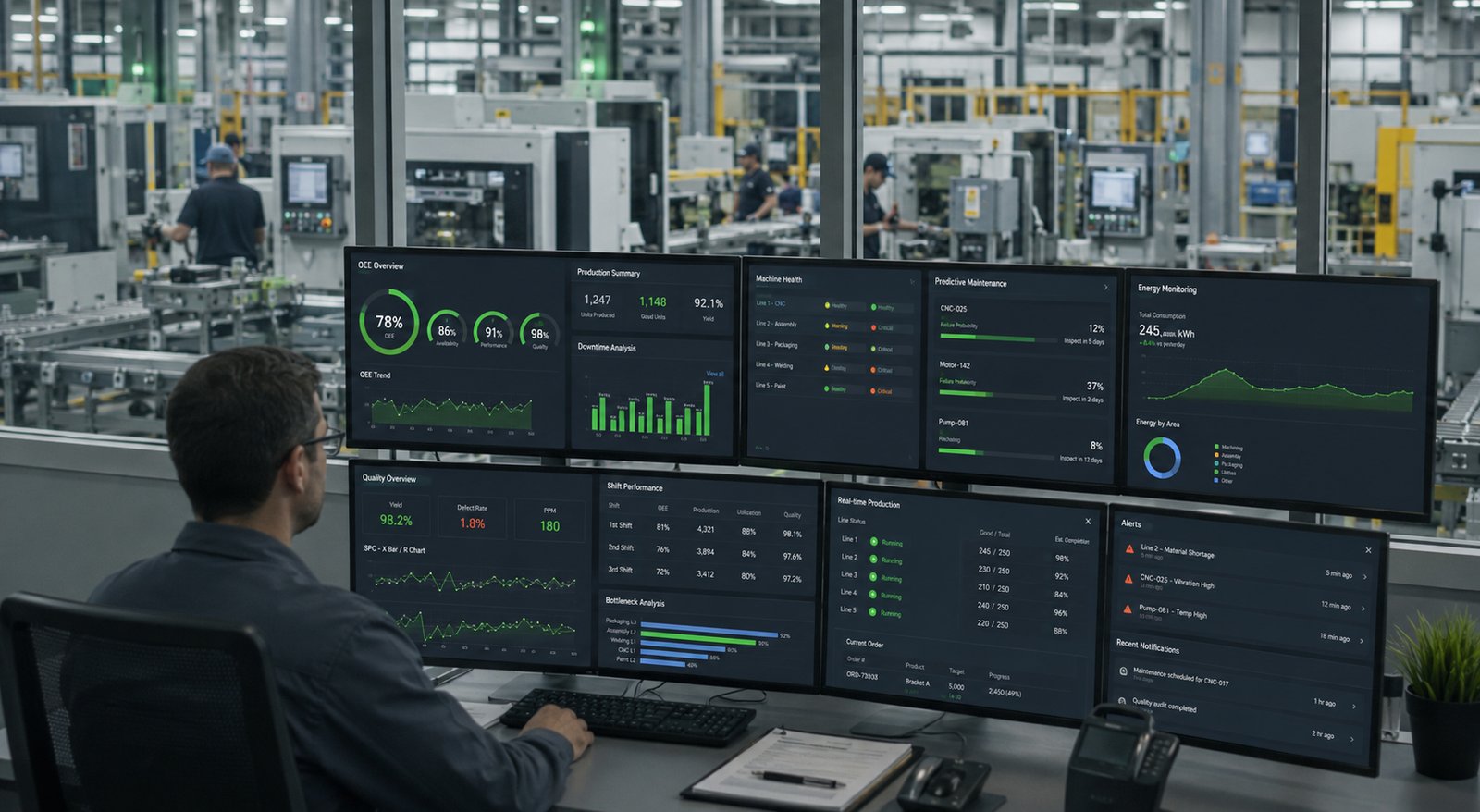
Real-time monitoring means you can see and analyze data as it’s generated by your equipment and processes. Instead of discovering a production bottleneck hours after it happens, streaming analytics helps you spot issues the moment they occur. This allows your team to shift from constantly reacting to problems to proactively managing the production flow. With a unified manufacturing control tower, everyone from the plant manager to the line operator shares the same live view of what’s happening. This shared visibility makes it easier to align on priorities, resolve issues faster, and keep production running smoothly, directly improving operational efficiency and throughput.
Enable Predictive and Prescriptive Maintenance
IIoT analytics allows you to move beyond scheduled preventive maintenance and embrace a more intelligent approach. By analyzing data like vibration, temperature, and performance, algorithms can predict when a piece of equipment is likely to fail. This allows you to schedule repairs before a breakdown occurs, drastically reducing unplanned downtime and extending the life of your assets. Taking it a step further, prescriptive maintenance doesn’t just warn you about a potential failure; it recommends the specific actions your team should take to prevent it. This empowers your maintenance staff with clear, data-driven guidance to fix problems before they impact production.
Make Smarter, Faster Decisions
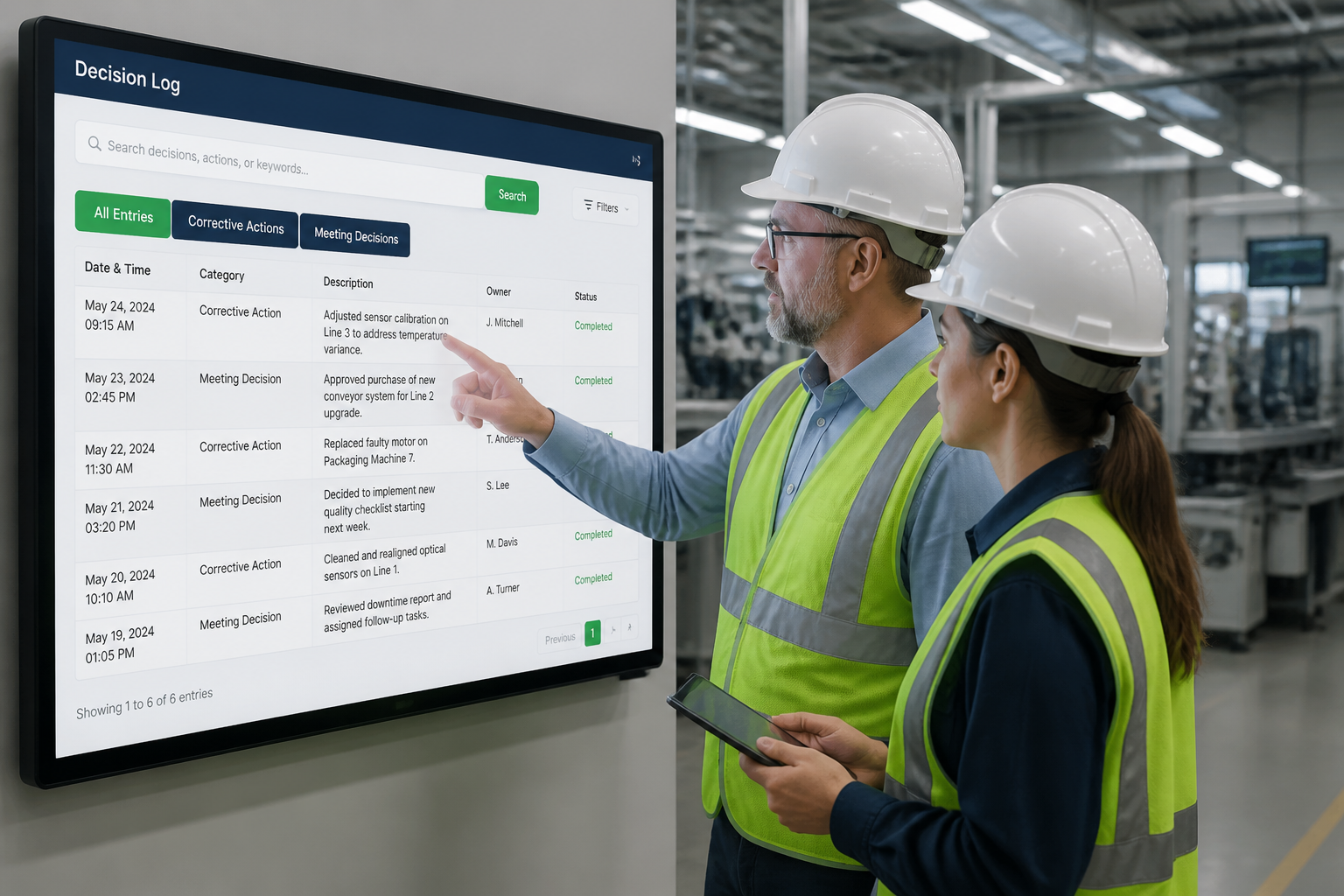
Many factories still rely on paper forms and spreadsheets, which means decisions are often based on outdated information and gut feelings. IIoT analytics replaces this guesswork with facts by delivering accurate, real-time insights directly to your frontline teams. When operators and supervisors can see live performance KPIs, quality alerts, and production status, they are empowered to make better decisions on the spot. This fosters a culture of proactive problem-solving. Instead of waiting for a daily meeting to address an issue, teams can use a lean operations optimizer to collaborate, track actions, and resolve problems as they happen, right on the plant floor.
Drive Measurable Cost Savings and Scalability
Ultimately, the goal of IIoT analytics is to improve your business results. Each of the benefits we’ve discussed translates directly into cost savings. Higher efficiency means more output from the same resources. Less unplanned downtime means more production time and lower emergency repair costs. Smarter decisions prevent small issues from escalating into expensive problems. A modern IIoT platform also provides a scalable path forward. You can begin by targeting your most urgent challenge and then expand your capabilities over time. This modular approach ensures a faster return on investment and a smoother, non-disruptive journey toward building a true Digital Factory.
IIoT Analytics in Action: Use Cases by Industry
The true value of IIoT analytics comes to life when you see how it solves real-world problems on the factory floor. While the core idea of using data to make better decisions is universal, the specific applications can look quite different depending on the industry. From ensuring product safety in food processing to optimizing high-speed lines for consumer goods, IIoT analytics provides tailored solutions that address unique challenges and goals. Let’s look at a few examples of how different sectors are putting this technology to work.
Smart Manufacturing
Industrial IoT is all about connecting machines and equipment on the factory floor to the internet. This network of connected assets forms the foundation of a smart factory. By collecting and analyzing data from every part of the production line, manufacturers gain a clear, real-time view of their entire operation. This allows them to move beyond simply reacting to problems. For instance, analytics can identify subtle changes in a machine’s performance that signal a future breakdown. This enables teams to schedule maintenance proactively, preventing costly unplanned downtime. It also helps pinpoint bottlenecks and inefficiencies that hurt productivity, giving leaders the insights they need to continuously improve their processes.
Food and Beverage
In the food and beverage industry, the main goals are efficiency, safety, and quality. IIoT analytics helps companies achieve all three. Sensors can continuously monitor critical control points, like temperature and humidity, to ensure products are always stored and processed under safe conditions, simplifying compliance with food safety regulations. This real-time monitoring also protects product quality and reduces spoilage. Furthermore, analytics can create a complete digital record that tracks ingredients from the farm to the store shelf. This level of traceability is invaluable for building consumer trust and allows for swift, targeted recalls if a quality issue ever arises, minimizing risk and financial impact.
Pharmaceuticals
Precision and compliance are non-negotiable in pharmaceutical manufacturing. Here, streaming analytics, which involves analyzing data the moment it’s created, is a game-changer. It helps companies spot and fix equipment issues instantly, protecting process integrity. For example, IIoT sensors can monitor hundreds of variables during production to ensure every batch of a medication meets exact specifications for quality and efficacy. This real-time process control is vital for patient safety. Analytics also automates the documentation for critical tasks like equipment sterilization and calibration, creating a reliable, unchangeable audit trail that simplifies regulatory compliance and makes inspections much smoother.
Consumer Packaged Goods
Many factories in the consumer packaged goods (CPG) sector still rely on paper and spreadsheets to manage their operations. This manual approach makes it difficult to use data effectively. IIoT analytics helps these companies digitize their processes and become more agile. By analyzing real-time sales data alongside production metrics, CPG manufacturers can better forecast demand and adjust production schedules to prevent stockouts or costly overstock. On high-speed packaging lines, sensors can instantly detect jams or material shortages, allowing operators to intervene before a small issue causes a major delay. This helps teams move away from disconnected spreadsheets and toward a more connected, efficient way of working.
Overcoming Common IIoT Adoption Challenges
Bringing IIoT analytics to your factory floor is a powerful move, but it’s not without its hurdles. The good news is that these challenges are well-known, and with the right strategy, you can clear them effectively. Instead of seeing them as roadblocks, think of them as key milestones on your path to digital transformation. By planning for these common issues, you can ensure a smoother rollout and get to the benefits of a smarter, more connected operation much faster. Let’s walk through the three biggest challenges and how you can tackle them head-on.
Safely Integrate IT and OT Systems
For years, your information technology (IT) and operational technology (OT) have likely lived in separate worlds. IT manages the flow of data in the office, while OT runs the machinery on the plant floor. IIoT requires these two worlds to connect, which can create new security risks if not handled carefully. As you connect machines to your network, you need a security plan that covers both domains.
The key is to create a unified strategy that doesn’t disrupt your operations. This means choosing solutions that can securely bridge the gap. A Smart Gateway, for example, can collect and process data at the edge, right near your production line, ensuring that only necessary and secure information is sent to the cloud or other enterprise systems.
Manage Data Quality and Legacy Infrastructure
You can’t build a data-driven factory on a foundation of messy data. Many plants still rely on paper logs and spreadsheets, which makes getting accurate, real-time insights nearly impossible. At the same time, you have a factory full of legacy equipment that isn’t going anywhere soon. A full “rip and replace” approach is rarely practical or affordable.
The solution is to meet your factory where it is. Start by digitizing your most critical workflows and connecting to your existing assets, both old and new. A modular platform allows you to build a Digital Factory over time, creating a single source of truth without having to overhaul your entire infrastructure at once. This approach ensures your analytics are based on high-quality data from day one.
Address the Skills Gap on the Plant Floor
The most advanced analytics in the world won’t help if your team can’t use them to make better decisions. A common fear is that you’ll need to hire a team of data scientists to run the plant floor, but that’s not the case. The goal is to empower your existing team, the people who know your operations inside and out, with tools they can actually use.
Look for intuitive, visual platforms that present insights in a clear and actionable way. Low-code tools like the Decisyon App Composer™ are also a game-changer, as they allow your own operational experts to build and customize applications without needing to write complex code. By putting user-friendly tools in the hands of your frontline workers, you turn data into a practical part of their daily routine.
The Role of AI and Machine Learning in IIoT Analytics
If IIoT analytics is the nervous system of the smart factory, then artificial intelligence (AI) and machine learning (ML) are the brain. These technologies are what transform a constant stream of data into intelligent, automated action. It’s not just about collecting information anymore; it’s about using that information to predict the future and make better choices in the present. By integrating AI and ML, manufacturers can move beyond simply monitoring their operations to actively optimizing them. This intelligence allows for a more sophisticated approach to everything from maintenance schedules to production workflows, empowering teams to solve problems before they even happen.
Advance from Descriptive to Prescriptive Analytics
For years, analytics in manufacturing was mostly descriptive, telling you what happened after the fact. It was like reading a history report. AI and ML change this by enabling a shift toward predictive and prescriptive insights. Instead of just reporting that a machine failed, predictive analytics can forecast that failure is likely to occur. Taking it a step further, prescriptive analytics recommends the specific action to prevent it, like scheduling maintenance during the next shift. This evolution is critical. It allows teams to move from a reactive state of firefighting to a proactive one where they can control outcomes, reduce downtime, and improve overall efficiency.
Empower Teams with Smart Assistants
AI and machine learning also work to empower your people, not replace them. Think of them as smart assistants for your frontline teams. These AI-powered tools can analyze complex data streams in real time, identify patterns a human might miss, and serve up clear, actionable recommendations. For example, an assistant could alert an operator to a subtle change in machine temperature that indicates a potential quality issue. This gives your teams the insights they need to make faster, more confident decisions right on the plant floor. By embedding this intelligence directly into daily workflows, you equip your entire workforce to contribute to operational excellence.
Leverage Edge Computing and 5G
To make real-time decisions, you need real-time data processing. Sending every piece of data from every sensor to a distant cloud for analysis creates delays that factories can’t afford. This is where edge computing comes in. By using a Smart Gateway or similar edge device, you can process data right at the source, on the factory floor. This allows for instantaneous analysis and response. When combined with the speed and reliability of 5G networks, edge computing ensures that your AI-driven insights are delivered at the moment they’re needed most, enabling true real-time control over your operations.
Essential IIoT Analytics KPIs to Track
Once you start collecting data from your IIoT network, you need a way to make sense of it all. That’s where Key Performance Indicators (KPIs) come in. Think of them as the scorecards for your factory floor, translating complex streams of data into clear, actionable metrics that everyone can understand. Without them, you’re essentially collecting data for data’s sake, which doesn’t help anyone. Tracking the right KPIs is what allows you to accurately quantify efficiency, pinpoint the root cause of recurring problems, and ultimately justify your investment in new technology.
IIoT analytics platforms are game-changers because they allow you to monitor these metrics in real time. This moves your teams out of a constant state of reactive problem-solving and into a more powerful, proactive mode of operation. Instead of waiting for an end-of-shift report to find out a line was running slow, your teams can see performance as it happens and make adjustments on the fly. A centralized manufacturing control tower brings these vital signs together, giving everyone from the operator to the plant manager a shared, single source of truth. This shared view is critical; it breaks down silos and ensures that everyone is working toward the same goals, using the same information. The objective isn’t to drown in numbers, but to focus on a few key metrics that truly reflect the health of your equipment, processes, and people.
Overall Equipment Effectiveness (OEE)
Overall Equipment Effectiveness (OEE) is the gold standard for measuring manufacturing productivity. It’s a key performance indicator that shows how well your manufacturing operation is running by combining three different factors: availability, performance, and quality. Availability measures downtime (was the machine running when it was supposed to be?), performance measures speed (was it running as fast as it could?), and quality measures defects (did it produce good parts?). An OEE score of 100% means you are manufacturing only good parts, as fast as possible, with no stop time. While a perfect score is theoretical, tracking OEE gives you a comprehensive benchmark to improve against. With IIoT, you can automatically capture the data needed to calculate OEE in real time, identifying your biggest losses and prioritizing improvements.
Maintenance and Downtime Metrics
Unplanned downtime is one of the biggest drains on profitability for any manufacturer. IIoT analytics helps you shift from a reactive “break-fix” maintenance model to a proactive, predictive one. Tracking maintenance and downtime metrics is crucial for understanding the reliability and health of your equipment. By analyzing this data, you can spot patterns that predict when a machine needs attention before it fails. Key metrics to watch include Mean Time Between Failures (MTBF), which tells you how reliable a machine is, and Mean Time To Repair (MTTR), which shows how quickly your team can resolve an issue. Lowering your MTTR and increasing your MTBF directly reduces downtime and improves your bottom line. This data-driven approach is the foundation of a successful prescriptive maintenance strategy.
Data Quality and User Adoption
Your analytics are only as good as the data you feed them. Poor data quality leads to inaccurate insights and misguided decisions. It’s critical to ensure the data coming from your sensors and systems is clean, consistent, and reliable. This might involve standardizing data formats or putting processes in place to validate information as it’s collected. Just as important is the human side of the equation: user adoption. The most powerful analytics tools are worthless if your frontline teams don’t use them. To get real value, you need to provide tools that are intuitive and integrated into daily workflows. When teams can easily access insights and collaborate on solutions within a single platform, they are more likely to embrace the technology and make improvement part of their daily work.
How to Build an IIoT Analytics Strategy That Works
Creating an effective IIoT analytics strategy doesn’t have to be a massive, complicated project. It’s about building a practical roadmap that solves your factory’s specific challenges, one step at a time. The key is to move away from disconnected spreadsheets and whiteboards toward a unified system that gives your team the insights they need to act. A successful strategy focuses on gaining clarity first, then using that clarity to make smarter decisions. It’s an evolution, not a revolution, that meets your plant where it is today and grows with you as your needs change. By focusing on a few core principles, you can build a plan that delivers real results without disrupting your entire operation.
Start with Visibility, Then Add Intelligence
The first step in any IIoT journey is simply to see what’s happening on your factory floor in real time. Before you can get into complex predictions, you need a clear, accurate picture of your current operations. The main goal of IIoT analytics is to analyze data as it streams in from machines and sensors, helping you find ways to work more efficiently and save money. This foundational visibility allows you to spot bottlenecks, track performance against KPIs, and understand production flow without waiting for manual reports.
Once you have a solid foundation of real-time data, you can begin to add layers of intelligence. This is where your raw data turns into actionable insights. You can start to analyze trends, understand the root causes of downtime, and empower your teams with the information they need to solve problems faster. A manufacturing control tower provides this single source of truth, creating the base upon which you can build more advanced analytics and AI-driven actions.
Choose a Modular, Non-Disruptive Path
Many factories hesitate to adopt new technology because they fear a massive “rip-and-replace” project that will cause major disruptions. With a significant number of plants still relying on paper or spreadsheets to manage manufacturing, the leap to a fully digital system can feel daunting. The good news is you don’t have to change everything at once. A modular approach allows you to start with the solution that will make the biggest impact right now.
Instead of a complete overhaul, you can implement technology that works with your existing infrastructure. For example, you might start by digitizing daily management meetings and issue tracking to improve team collaboration. Or you could focus on connecting a single critical production line to gather performance data. This method lets you prove the value of the technology quickly, build momentum, and expand your digital factory capabilities as you go, ensuring a smooth and non-disruptive transition.
Scale Your IIoT Analytics Over Time
Your IIoT strategy should be built for the long haul. The solution you choose today needs to be able to grow with your business tomorrow. Starting with a single line or a specific problem allows you to learn and adapt before scaling up. As you expand, your platform should easily extend to other machines, production lines, and even other plants without forcing you to start from scratch. This scalability is crucial for achieving long-term operational excellence.
As you connect more of your IT and OT systems, your strategy must also account for evolving needs like data security and management. A scalable platform allows you to add more advanced features over time, such as prescriptive maintenance to predict equipment failures before they happen. By planning for this growth from the beginning, you ensure your initial investment continues to deliver value and supports your continuous improvement goals for years to come.
Related Articles
- A(nalog) to D(igital), Part 2: From Concept to Creation – The Making of a Digital Factory
- Manufacturing Execution in the Age of IoT
- IIoT Applications at the Intersection of Digital Twins
- The Guide to AI Operations Optimization Tools for Factories
- Decisyon: IoT with software technology to develop Industry 4.0
Frequently Asked Questions
Do I need to hire data scientists to use IIoT analytics on my factory floor? Not at all. The goal of a modern IIoT platform is to empower the experts you already have, your frontline teams. These systems are designed with intuitive, visual interfaces that translate complex data into clear, actionable information. Think of it as giving your operators and managers a new set of tools to make better decisions, not asking them to become programmers or data analysts.
My factory has a lot of old equipment. Can I still use IIoT analytics? Yes, and this is one of the most common situations we see. A “rip and replace” strategy is rarely practical. The right approach involves using smart gateways and sensors to connect to your existing assets, regardless of their age or brand. This allows you to bring your legacy machinery into your digital ecosystem, gathering valuable data without needing a massive and costly equipment overhaul.
How do I get started without launching a huge, disruptive project? The best way to begin is by starting small and focusing on a specific, high-impact problem. Instead of trying to digitize the entire factory at once, you could target your most significant source of downtime or focus on improving the performance of a single critical production line. This modular approach allows you to prove the value of the technology quickly, learn what works for your team, and build momentum for future expansion.
What’s the difference between just monitoring my machines and using IIoT analytics? Monitoring is about observation; it tells you what is happening right now. For example, it can show you that a machine has stopped. Analytics goes much further by providing context and intelligence. It helps you understand why the machine stopped, identifies patterns that could predict future stops, and can even recommend the best course of action to prevent it from happening again. It’s the difference between seeing a problem and understanding how to solve it for good.
How do I know if my data is good enough to get real value from analytics? This is a great question, as data quality is essential. If your plant still relies on paper logs and spreadsheets, the first step is often to digitize those core processes to create a reliable data stream. A good IIoT platform helps by structuring the information it collects from your machines and systems. By starting with a focused project, you can ensure you are building a strong foundation of clean, consistent data from the very beginning.