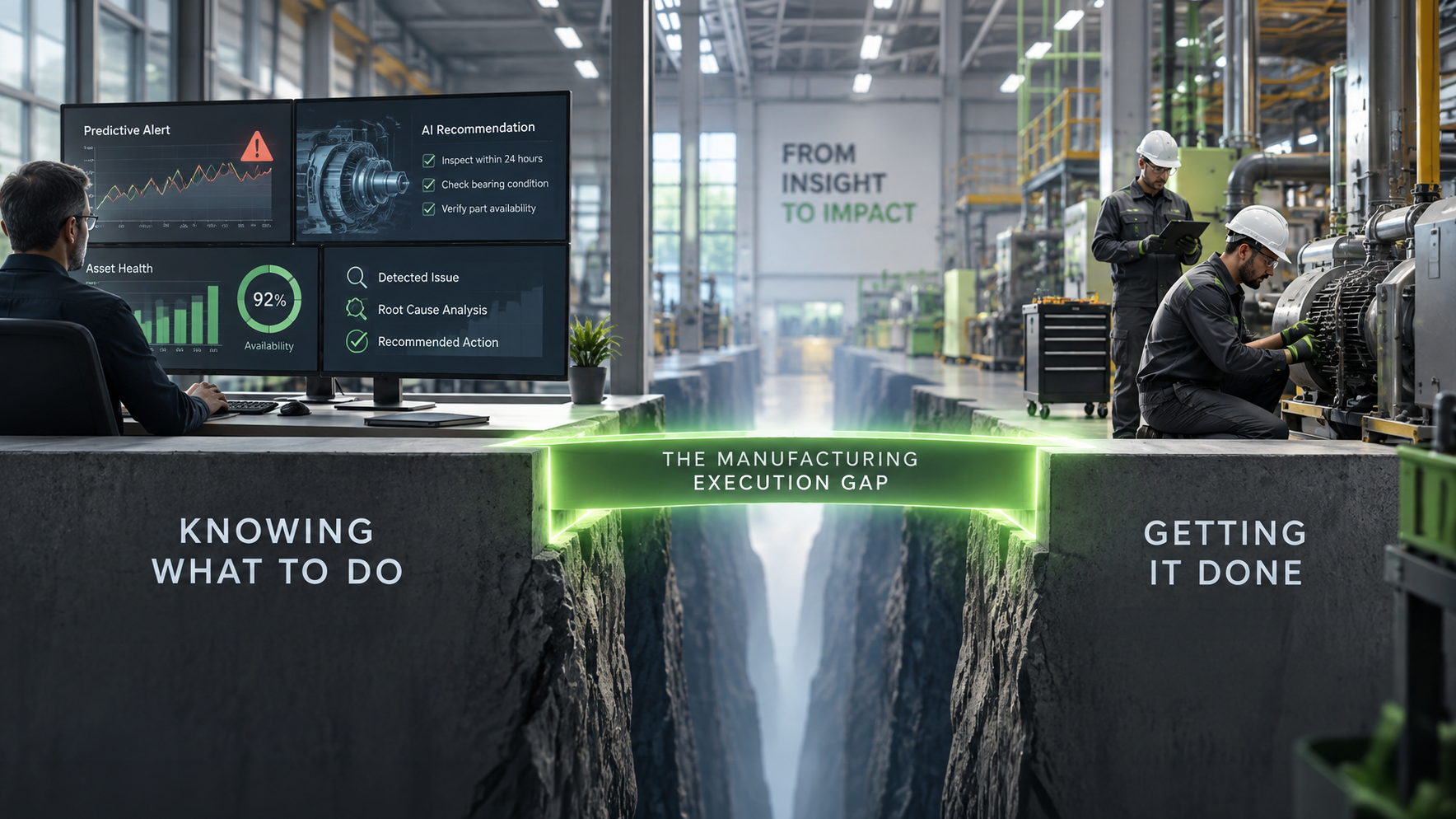
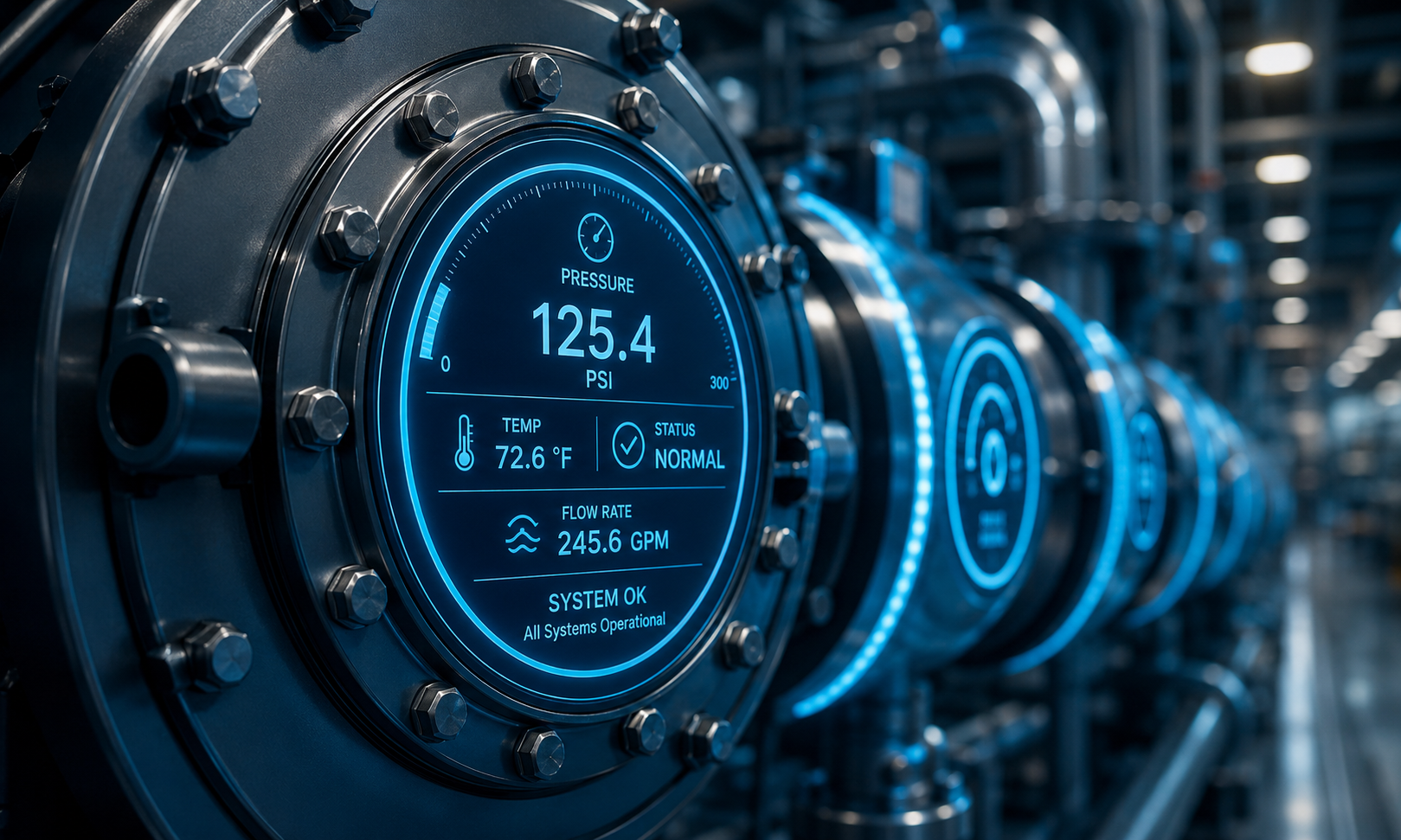
Asset performance management (APM) is the practice of using live equipment data to keep critical assets running — predicting failures before they stop the line, ranking which asset to work on first, and turning that call into scheduled work instead of a 3 a.m. callout. It is not a dashboard. A working APM program changes what maintenance does on Monday morning: fewer surprise breakdowns, planned repairs on your schedule, and a measurable move in uptime and repair cost. See what that shift is worth on your line.
The break-fix cycle feels unavoidable because the cost is spread out — the repair bill is visible, the lost production, missed shipments and overtime are not. APM is how plants get ahead of it: real signal from the equipment, a prediction with a confidence level, and a specific action with an owner and a due date.
Key Takeaways
- Shift from Reactive to Proactive Maintenance: Asset Performance Management is a strategy that uses data to predict equipment failures before they happen. This lets you move beyond constant firefighting and schedule maintenance on your own terms, preventing costly, unplanned downtime.
- Turn Data into Clear, Actionable Guidance: An effective APM system unifies information from all your equipment and existing systems. It then uses analytics to forecast problems and recommend specific solutions, giving your team clear instructions to prevent failures.
- Track Your Success with Key Metrics: APM delivers real, quantifiable results like improved reliability and lower maintenance costs. You can measure your progress by monitoring key performance indicators (KPIs) such as Overall Equipment Effectiveness (OEE) and Mean Time Between Failures (MTBF).
What Is Asset Performance Management (APM)?
How do you make sure your factory’s most critical machines run reliably and efficiently every single day? That’s the core question Asset Performance Management (APM) sets out to answer. APM is a strategic approach that uses data and smart software to get the most out of your physical assets. It’s about moving beyond the old model of simply fixing equipment when it breaks. Instead, you can use tools like predictive analytics and real-time monitoring to anticipate problems before they ever cause downtime.
This isn’t just about installing new software; it’s a complete strategy that combines technology with best practices to improve how your assets perform throughout their operational life. By collecting and analyzing data from your equipment, an effective APM solution helps you understand asset health, predict failures, and make smarter maintenance decisions. This proactive mindset is what separates modern manufacturing leaders from the rest, allowing them to maintain control over their operations and consistently meet production targets. It’s a foundational piece of building a truly resilient and efficient factory floor.
APM vs. Traditional Management: What’s the Difference?
Traditional asset management is often reactive. A machine breaks, a ticket is created, and a maintenance team is dispatched to fix it, causing delays and lost production. APM flips this model on its head. It’s a proactive strategy focused on optimizing performance while an asset is in active use. While a related concept, Asset Lifecycle Management (ALM), covers an asset’s entire journey from purchase to disposal, APM zooms in on the operational phase to maximize its value and reliability. It’s more than just technology; it’s a philosophy that helps your people, processes, and systems work together to achieve operational excellence.
Which Industries Benefit Most from APM?
While any business with critical physical assets can benefit from APM, it’s a true game-changer for asset-intensive industries. Sectors like manufacturing, food and beverage, and pharmaceuticals rely heavily on complex machinery where unplanned downtime can halt production and cause major financial losses. For these companies, APM is essential for reducing operating costs and extending the lifespan of their equipment. The growing adoption of APM, driven by technologies like AI and IoT, shows a clear trend: businesses are moving toward smarter, more predictive ways to manage their most valuable assets and stay competitive across all industries.
What Makes an APM System Effective?
An effective Asset Performance Management system is more than just a software package; it’s a strategic approach that transforms how you manage your physical assets. It marks the shift from reactive maintenance, where you fix things after they break, to a proactive model built on data and intelligence. The best APM systems don’t just gather data, they convert it into clear, actionable insights for your teams on the factory floor. This allows them to make smarter decisions during every shift, moving from daily chaos to daily control. A truly effective system provides a complete view by connecting information from different machines, production lines, and even entire facilities.
This holistic perspective is what helps you see the bigger picture. A powerful APM solution acts as the central nervous system for your operations, integrating with your existing environment, including both legacy equipment and modern MES platforms. It pulls all relevant information into a single, unified view, which is crucial for spotting patterns and identifying the root cause of recurring problems. More importantly, it empowers your frontline workers. Instead of just sending an alert to a manager’s office, it delivers contextual information and recommended actions directly to the people who can resolve the issue on the spot. This creates a powerful feedback loop for continuous improvement and makes your entire team part of optimizing asset performance.
Data Integration and Connectivity
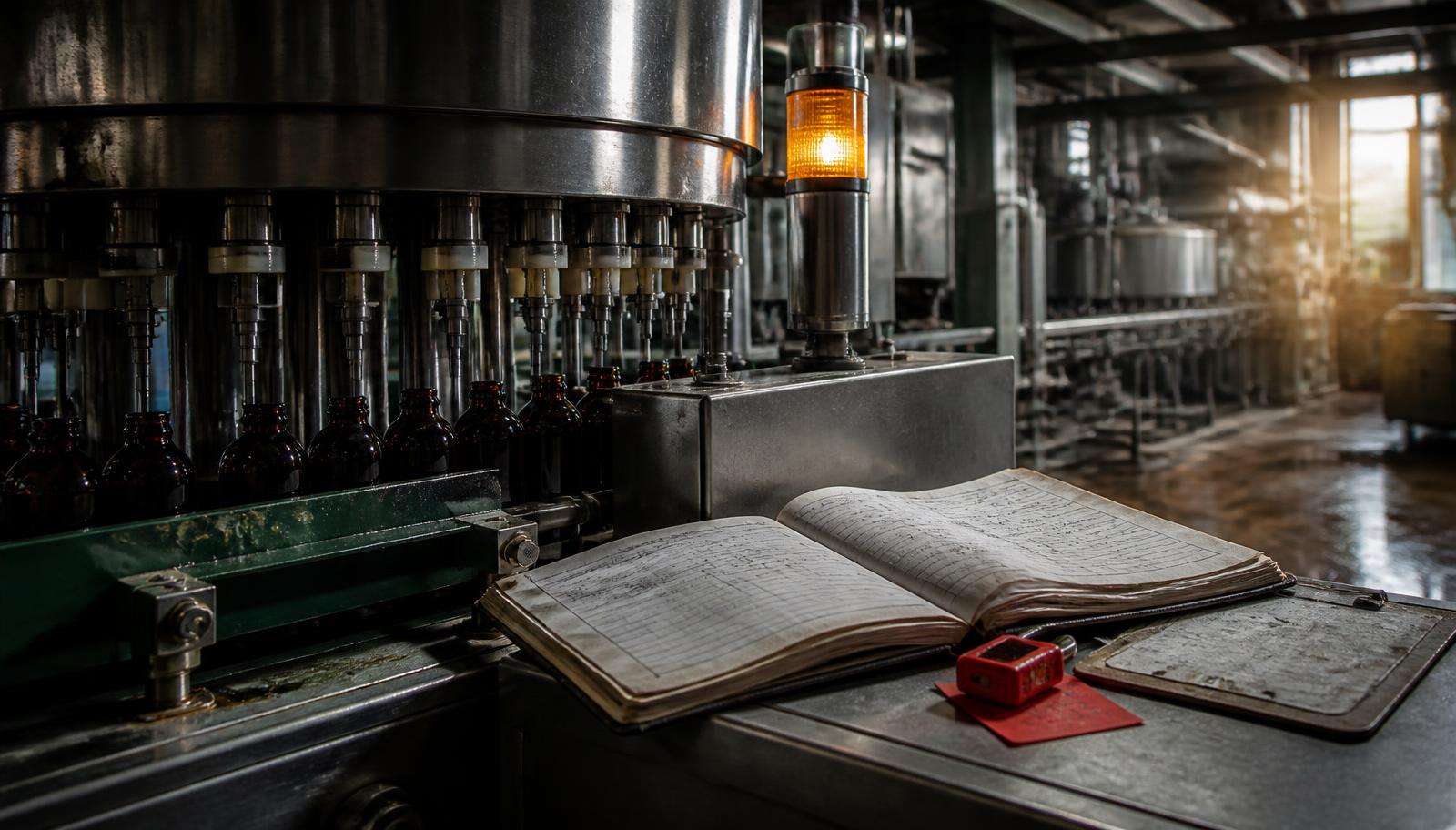
For an APM system to work, it needs good data, and lots of it. The problem is that this data often lives in separate, disconnected systems: sensor readings from one machine, maintenance logs in a spreadsheet, and operator notes on a whiteboard. An effective APM solution breaks down these data silos. It uses tools like a Smart Gateway to connect directly to your assets, pulling real-time information from PLCs, sensors, and other industrial devices. By integrating this operational data with information from your ERP and CMMS, the system creates a single, reliable source of truth for each asset.
Predictive and Prescriptive Analytics
Knowing an asset failed is one thing; knowing it’s about to fail is another. This is where predictive and prescriptive analytics come in. Predictive analytics uses AI and machine learning to analyze historical and real-time data, identifying patterns that signal a potential failure before it happens. But the most advanced systems go a step further with prescriptive analytics. They don’t just tell you a problem is coming; they recommend specific actions to prevent it. This is the core of prescriptive maintenance, which allows you to schedule repairs at the most convenient and cost-effective time, avoiding unplanned downtime entirely.
Real-Time Monitoring and Alerts
To prevent downtime, your team needs information the moment an issue arises, not hours or days later. Effective APM systems provide real-time monitoring of asset health and performance against key metrics like OEE. The system constantly watches your equipment for anomalies or deviations from normal operating parameters. When a potential problem is detected, it sends an immediate, contextual alert to the right person or team. This allows operators and maintenance staff to intervene quickly, addressing small issues before they escalate into major failures that could shut down a production line.
Digital Twins
A digital twin is a virtual model of a physical asset, process, or system. Think of it as a dynamic, digital replica of your most critical equipment that lives and breathes in the software. This virtual copy is fed with real-time data from the actual asset, allowing the APM system to simulate performance, test different operating scenarios, and predict future behavior without any risk to physical production. By comparing the real asset’s performance against its ideal digital twin, the system can spot even the smallest deviations that indicate developing problems, helping you transition from reactive fixes to truly condition-based maintenance within your Digital Factory.
The Benefits of Asset Performance Management
Adopting an Asset Performance Management (APM) strategy does more than just keep your equipment running; it transforms your entire operation. By shifting from a reactive “fix it when it breaks” model to a proactive, data-informed approach, you can unlock significant improvements in efficiency, cost savings, and safety. APM provides the insights you need to get the most out of your critical assets, turning them into a reliable foundation for growth. Let’s explore the key benefits you can expect.
Improve Asset Reliability and Reduce Downtime
The primary goal of any APM system is to make your assets more reliable. When equipment works consistently without unexpected failures, your production lines run smoothly, and you can meet your targets without interruption. APM achieves this by using real-time data to monitor asset health, allowing you to predict potential issues before they cause a breakdown. This proactive approach helps you schedule maintenance at the most convenient time, minimizing disruptions. Instead of reacting to emergencies, you gain control over your operations, leading to a significant reduction in unplanned downtime and a more predictable, productive plant floor.
Lower Your Maintenance Costs
Unplanned breakdowns are not just disruptive; they are expensive, often costing up to ten times more than planned maintenance. An effective Asset Performance Management solution helps you get ahead of these costs. By identifying which assets need attention and when, you can avoid both catastrophic failures and unnecessary preventive maintenance. This means your team spends time and resources only on the work that matters most. APM helps you make smarter decisions about repairs and replacements, optimizing your inventory of spare parts and ensuring your maintenance budget is used as efficiently as possible. Over time, this strategic approach leads to substantial savings and a healthier bottom line.
Make Smarter, Data-Driven Decisions
In manufacturing, good decisions are based on good data. APM systems excel at turning the massive amounts of data generated by your equipment into clear, actionable information. Using tools like pattern recognition, predictive analytics, and AI, APM can uncover hidden inefficiencies and identify opportunities for improvement that would be impossible to spot otherwise. This allows your teams to move from guesswork to data-driven strategies. With a manufacturing control tower, you can visualize performance across your entire operation, empowering everyone from the plant floor to the front office to work smarter and faster.
Strengthen Compliance and Manage Risk
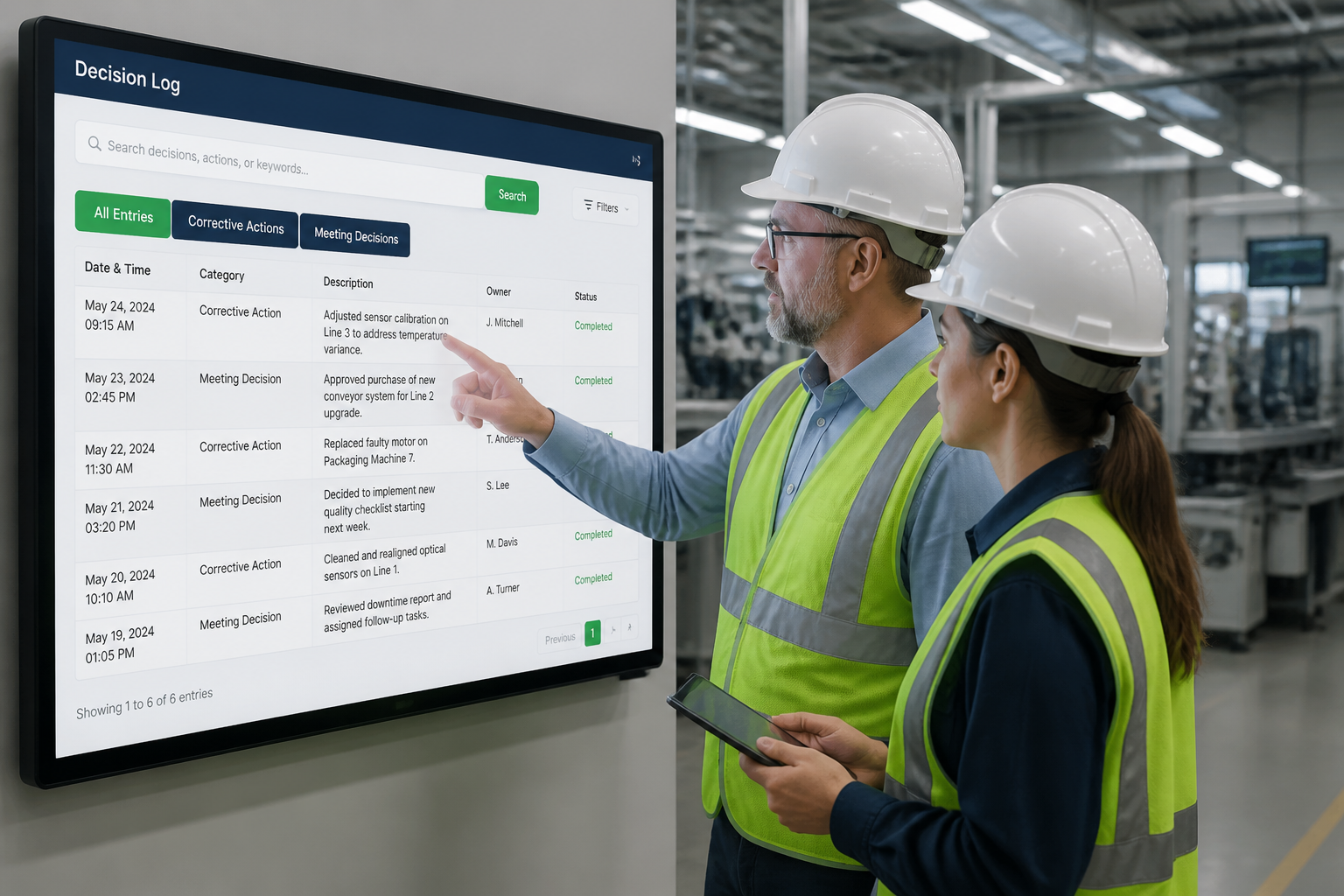
Maintaining a safe and compliant operation is non-negotiable, especially in highly regulated industries like pharmaceuticals or food and beverage. APM plays a crucial role in managing operational risk by ensuring your equipment is always in good working order. Well-maintained assets are inherently safer and less likely to cause environmental, health, or safety incidents. An APM system also creates a detailed digital record of all maintenance activities, which simplifies audits and demonstrates due diligence. By proactively identifying potential risks associated with equipment failure, you can protect your employees, meet regulatory requirements, and safeguard your company’s reputation.
How APM Works: A Step-by-Step Guide
Let’s be honest, running a factory floor can feel like a constant firefight. You’re moving from one unexpected breakdown to the next, and the “break-fix” cycle is exhausting and expensive. Asset Performance Management offers a way out. It’s not just another piece of software to install; it’s a whole new way of working that helps you get ahead of problems. Think of it as a clear, four-step process that turns the noise from your machines into a clear plan of action. It starts by gathering all the data from your equipment, maintenance logs, and other systems into one place. Then, it uses smart analytics to find the hidden clues that point to future trouble. But it doesn’t just wave a red flag; it tells you exactly what to do to prevent the failure. The final step is what makes it so powerful: the system learns from every action, getting smarter over time. This creates a cycle of continuous improvement that helps your team move from reactive chaos to proactive control. It’s a practical roadmap for making your operations more reliable and efficient, one step at a time.
Step 1: Connect and Collect Asset Data
The foundation of any successful APM strategy is data. To get a complete picture of asset health, you need to gather information from every available source, breaking down the traditional silos between different systems and departments. An effective APM system connects to and collects data from sensors on your equipment (the Industrial Internet of Things, or IIoT), your existing maintenance logs, enterprise resource planning (ERP) systems, and even operator notes. The goal is to centralize all this information, creating a single source of truth for each asset. A Smart Gateway can be essential here, helping you securely connect to all sorts of machines, both old and new, without disrupting your current setup.
Step 2: Analyze Data to Find Patterns and Anomalies
Once you have all this data flowing into one place, the next step is to make sense of it. This is where the “smart” part of smart manufacturing comes in. APM platforms use advanced analytics, including artificial intelligence (AI) and machine learning, to sift through vast datasets in real time. These powerful tools can spot subtle patterns, trends, and deviations from normal operating behavior that would be impossible for a person to detect. For example, the system might flag a slight, gradual increase in a machine’s vibration or a minor temperature fluctuation that indicates a developing problem. This analysis turns raw data into the first real signs of actionable insight, giving you a heads-up long before an issue becomes critical.
Step 3: Predict Issues and Prescribe Actions
Identifying a potential problem is one thing; knowing what to do about it is another. This step is where APM truly shines, moving beyond simple prediction to active problem-solving. Based on the patterns and anomalies found in the analysis phase, the system can forecast when a component is likely to fail. A robust APM solution then offers prescriptive maintenance capabilities, recommending the specific actions needed to prevent that failure. It might suggest scheduling a particular repair, automatically ordering a spare part, or advising an operator to adjust a machine’s settings. This gives your team clear, data-backed guidance to fix problems before they can cause downtime.
Step 4: Create a Cycle of Continuous Improvement
APM is not a one-time project; it’s a continuous cycle of improvement. Every action your team takes based on the system’s recommendations generates new data. Was the prescribed maintenance effective? Did it solve the problem? This feedback is fed back into the APM system, which learns from the outcome. This process constantly refines the platform’s analytical models, making its future predictions and prescriptions even more accurate. It creates a virtuous cycle that helps your entire team organize around priorities, resolve issues faster, and build a culture where data-driven decision-making becomes the standard way of operating every single shift.
Common APM Challenges (and How to Solve Them)
Implementing an Asset Performance Management strategy is a powerful move, but it’s not always a straight line from A to B. Many plants run into similar issues when they start their APM journey, from wrangling data to getting the team on board. The good news is that these challenges are well-understood, and with the right approach, you can solve them before they slow you down. By anticipating these roadblocks, you can create a smoother path to improved reliability and efficiency. Let’s walk through the most common challenges and, more importantly, how to solve them.
Overcoming Data Silos
Effective APM relies on a complete picture of your asset health, which means pulling information from many different places: maintenance logs, sensor readings, production schedules, and operator notes. The problem is that this data often lives in separate, disconnected systems, creating what we call data silos. When your information is fragmented, you can’t spot the patterns that predict failure. The solution is to invest in a platform that can unify these disparate data sources. A modern APM solution acts as a central hub, connecting to your existing systems and equipment to create a single source of truth for asset performance and turning isolated data points into actionable intelligence.
Addressing Skill Gaps and Team Buy-In
APM is more than just software; it’s a strategy that involves your people, processes, and technology working together. A common challenge is getting your frontline teams to adopt new tools and workflows. If operators and technicians see APM as just another task, you won’t get the results you’re looking for. To solve this, you need to focus on team buy-in from day one. Involve your team in the selection and implementation process. Choose intuitive tools that make their jobs easier, not more complicated. A platform that facilitates frontline collaboration helps teams align on priorities and resolve issues faster, making the value of APM clear to everyone on the floor.
Selecting the Right APM Platform
With so many options available, choosing the right APM software can feel overwhelming. Some platforms are too rigid, while others are too complex for your current needs. The key is to find a solution that is both powerful and flexible. Look for a platform that offers a full range of analytics, from descriptive to prescriptive, so you can not only see what happened but also get recommendations on what to do next. It’s also important to choose a system that can grow with you. A modular digital factory platform allows you to start with the capabilities you need now and add more as your plant matures, ensuring the technology fits your environment rather than forcing you to change everything at once.
Getting Started with APM: Your Implementation Plan
Adopting an Asset Performance Management strategy might feel like a huge undertaking, but it doesn’t have to be. By breaking it down into a clear, step-by-step plan, you can make a smooth transition from reactive firefighting to proactive control. Think of it as building a new capability for your plant, one piece at a time. This approach helps you get early wins, build momentum, and ensure your team is on board for the journey. A thoughtful implementation plan is your roadmap to greater reliability, lower costs, and smarter operations on the factory floor.
Start by Identifying Critical Assets
Before you do anything else, you need to know where to focus your attention. You can’t monitor every single piece of equipment at once, so start by identifying the assets that are most critical to your operations. Which machines would cause the biggest disruption if they went down? Is it a specific filler on your bottling line, a primary mixing tank, or a key packaging machine? These are your high-priority targets for APM. Once you have your list, you can begin to model their behavior. A digital twin, which is a virtual replica of your physical asset, is a powerful tool for this. It allows you to simulate different operating conditions and predict performance without putting your actual equipment at risk.
Choose the Right APM Software for Your Plant
With your critical assets identified, the next step is selecting the right technology to support your goals. Look for an integrated APM solution that can bring together data from different sources, like your existing MES, PLCs, and sensors. The key is to find a platform that works with your current environment, not one that forces you to rip and replace everything. Your software should also provide advanced analytics, including predictive and even prescriptive AI, to turn raw data into actionable insights. This is what allows you to move beyond simply knowing what happened and start predicting what will happen next, so your team can prevent failures before they occur.
Define Your KPIs and Monitoring Rules
You can’t improve what you don’t measure. To track the success of your APM program, you need to define a clear set of key performance indicators (KPIs). Common metrics include Overall Equipment Effectiveness (OEE), Mean Time Between Failure (MTBF), and the ratio of planned versus unplanned maintenance activities. These KPIs give you a baseline to measure against and help you quantify the impact of your efforts. Your APM software should allow you to build monitoring rules and automated alerts around these metrics. For example, you could set a rule to notify the maintenance team if a machine’s vibration levels exceed a certain threshold, giving them a chance to investigate before a breakdown happens.
Foster a Culture of Continuous Improvement
Finally, remember that APM is as much about people as it is about technology. The most successful implementations happen when you foster a culture of continuous improvement where everyone feels empowered by data. APM has evolved from a simple break-fix model to a proactive strategy that uses AI and real-time data to prevent problems. This requires a shift in mindset. Your goal is to create a collaborative environment where operators, maintenance teams, and managers can use shared insights to solve problems faster and align on priorities. Tools that facilitate this kind of team-based workflow are essential for turning data into coordinated action and making proactive maintenance a part of your daily operating rhythm.
How to Measure APM Success
Implementing an APM strategy is a great first step, but how do you know if it’s actually working? Tracking the right key performance indicators (KPIs) is essential. These metrics give you concrete data to show how your asset performance is improving, helping you justify the investment and identify areas for further optimization. Instead of guessing, you can point to clear numbers that demonstrate reduced downtime and increased efficiency. By focusing on a few key metrics, you can create a clear picture of your progress and communicate the value of your APM initiatives to your entire organization.
Overall Equipment Effectiveness (OEE)
A core metric for any manufacturer, Overall Equipment Effectiveness (OEE) tells you how effectively your equipment is being used. It’s not just about whether a machine is running; it’s about how well it’s running. OEE combines three key factors into a single score:
- Availability: This compares your actual production time to the time your equipment was scheduled to run. It accounts for any unplanned stops or downtime.
- Performance: This measures how fast your machines are running compared to their designed maximum speed. Slow cycles or minor stops can lower this score.
- Quality: This looks at the number of good parts you produce versus the total number of parts, including any defects or items needing rework.
Mean Time Between Failures (MTBF)
Mean Time Between Failures (MTBF) is a straightforward yet powerful indicator of asset reliability. It calculates the average amount of time a piece of equipment operates successfully before it breaks down. A higher MTBF is what you’re aiming for, as it signifies that your assets are more dependable and your maintenance strategies are effective. Tracking this metric helps you understand the real-world impact of your APM program. As you shift toward predictive maintenance and resolve issues before they cause a failure, you should see your MTBF steadily increase across your critical assets.
Planned vs. Unplanned Maintenance Ratio
This ratio is a fantastic way to see if you’re moving from a reactive “firefighting” mode to a proactive, strategic approach. It simply compares the hours spent on scheduled, planned maintenance against the hours spent on unexpected, emergency repairs. A healthy asset management strategy will result in a higher ratio of planned work. This indicates you are successfully catching potential problems early and scheduling fixes on your own terms. This shift not only reduces the stress of surprise breakdowns but also leads to lower maintenance costs and smoother, more predictable operations on the plant floor.
APM: A Key Step Toward the Digital Factory
Think of Asset Performance Management (APM) as a strategic pillar for your digital factory. It’s a comprehensive approach that uses advanced software and data to get the most value and performance from your physical assets throughout their entire lifecycle. For any plant moving toward a more connected, intelligent future, mastering APM is not just helpful; it’s essential. It provides the stable, reliable foundation you need to build more advanced digital capabilities.
APM marks a significant shift away from the old “run-to-failure” maintenance model. Instead of just fixing equipment when it breaks, modern APM uses technologies like the Internet of Things (IoT), data analytics, and Artificial Intelligence (AI) to predict and prevent problems before they cause downtime. This evolution is critical for digital factories that depend on real-time data and predictive insights to operate smoothly. By using advanced tools like predictive maintenance and remote monitoring, you can optimize the reliability and availability of your most critical assets.
The core goal of APM is to turn massive streams of machine data into clear, actionable information. A strong APM system uses data management and predictive analysis to spot patterns, identify anomalies, and alert your team to potential issues. This data-driven approach allows your teams to move from reactive firefighting to proactive, strategic maintenance. Ultimately, this reduces unexpected breakdowns, makes your assets more reliable, and helps them last longer, all of which are fundamental goals on the path to building a true digital factory.
Related Articles
- What is Asset Performance Management Software? A Guide
- 5 Best Asset Performance Management Software Vendors
Frequently Asked Questions
My plant already has an MES. How does APM fit in? That’s a great question, and it’s a common one. Think of an APM system not as a replacement for your Manufacturing Execution System (MES), but as a powerful partner to it. Your MES is fantastic at managing the “what” and “when” of production, like work orders and schedules. APM focuses on the “how” and “why” of your equipment’s health. An effective APM platform integrates with your MES, pulling in operational data to add a deep layer of intelligence about asset reliability. It acts as an overlay, giving you predictive insights that most traditional MES platforms simply don’t have.
Do I need a team of data scientists to use an APM system? Absolutely not. While advanced APM systems use powerful AI and machine learning, they are designed for manufacturing teams, not data scientists. The complex analysis happens behind the scenes. The system’s job is to translate that analysis into simple, clear recommendations for your frontline workers. Instead of showing you a complex algorithm, it will provide a straightforward alert like, “Vibration on Mixer 3 has increased; inspect the motor bearing within the next week.” The goal is to empower your existing team with better information, not to create a new department to manage the software.
Can APM work with my older, non-digital equipment? Yes, and this is one of the most important aspects of a flexible APM strategy. It’s a myth that you need a factory full of brand-new, smart machines. A good APM solution is designed to meet you where you are. It can connect to your legacy equipment by using modern, affordable sensors and a smart gateway device. This hardware collects data from your older assets and translates it into a format the APM software can use, bringing your most critical legacy machines into your modern digital ecosystem without requiring a massive capital investment.
This sounds like a huge project. Can I start small? Not only can you start small, but you absolutely should. A “big bang” implementation is rarely the best approach. The most successful APM journeys begin with a pilot project focused on a handful of your most critical or problematic assets. This allows you to demonstrate value quickly, get your team comfortable with the new tools, and generate early wins that build momentum. Look for a modular platform that allows you to begin with the specific capabilities you need now, like monitoring a single production line, and then expand as your needs and confidence grow.
How long does it typically take to see a return on investment with APM? While the full, transformative benefits of APM build over time, many plants see a tangible return very quickly. Preventing just one major unplanned downtime event on a critical production line can often pay for the initial cost of the system. You’ll likely see early results from improved visibility and faster, more coordinated responses to small issues. Within the first few months, you should be able to measure clear improvements in key metrics like your planned versus unplanned maintenance ratio and a reduction in emergency repair costs.