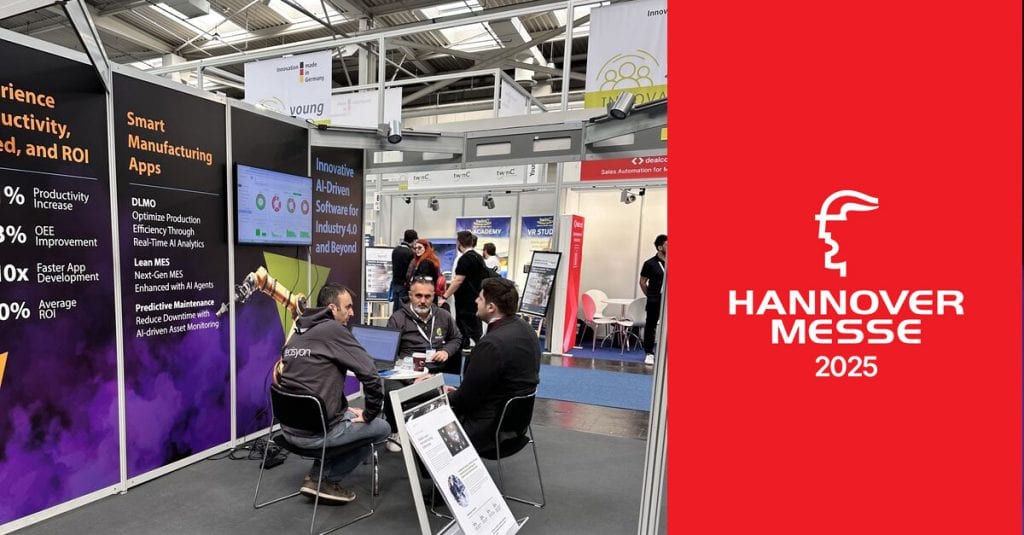
It’s one thing to believe in your company’s mission, but it’s another to see it validated on a global stage. For us, that’s exactly what happened at Hannover Messe 2025. In a hall filled with thousands of exhibitors, the message from attendees was unmistakable: they are tired of complex, rip-and-replace projects and are actively seeking solutions that fit into their current operations. This is the core of our philosophy. Our live demos, which showed how to connect people and processes without overhauling entire systems, resonated deeply. This recap explores the trends that confirmed our approach and what it means for manufacturers ready for real digital transformation.
In a hall packed with automation hype and AI acronyms, Decisyon became a hub for real conversations, promising partnerships, and sharp insights into what the market truly wants from AI right now.
Our Reflections on Hannover Messe 2025: Trends, Takeaways, and What’s Next
Hannover Messe is always a massive event, but this year felt particularly significant. With over 4,000 companies and an expected 130,000 visitors, the energy was palpable. The official theme was “shaping the future with technology,” and for once, it felt less like a marketing slogan and more like a mission statement everyone was taking to heart. We saw a clear shift away from high-level concepts toward tangible, real-world applications. The focus was on how smart manufacturing and AI can solve problems today. It was refreshing to see the industry collectively move past the hype and get down to the business of making digital transformation a practical reality for factories of all sizes.
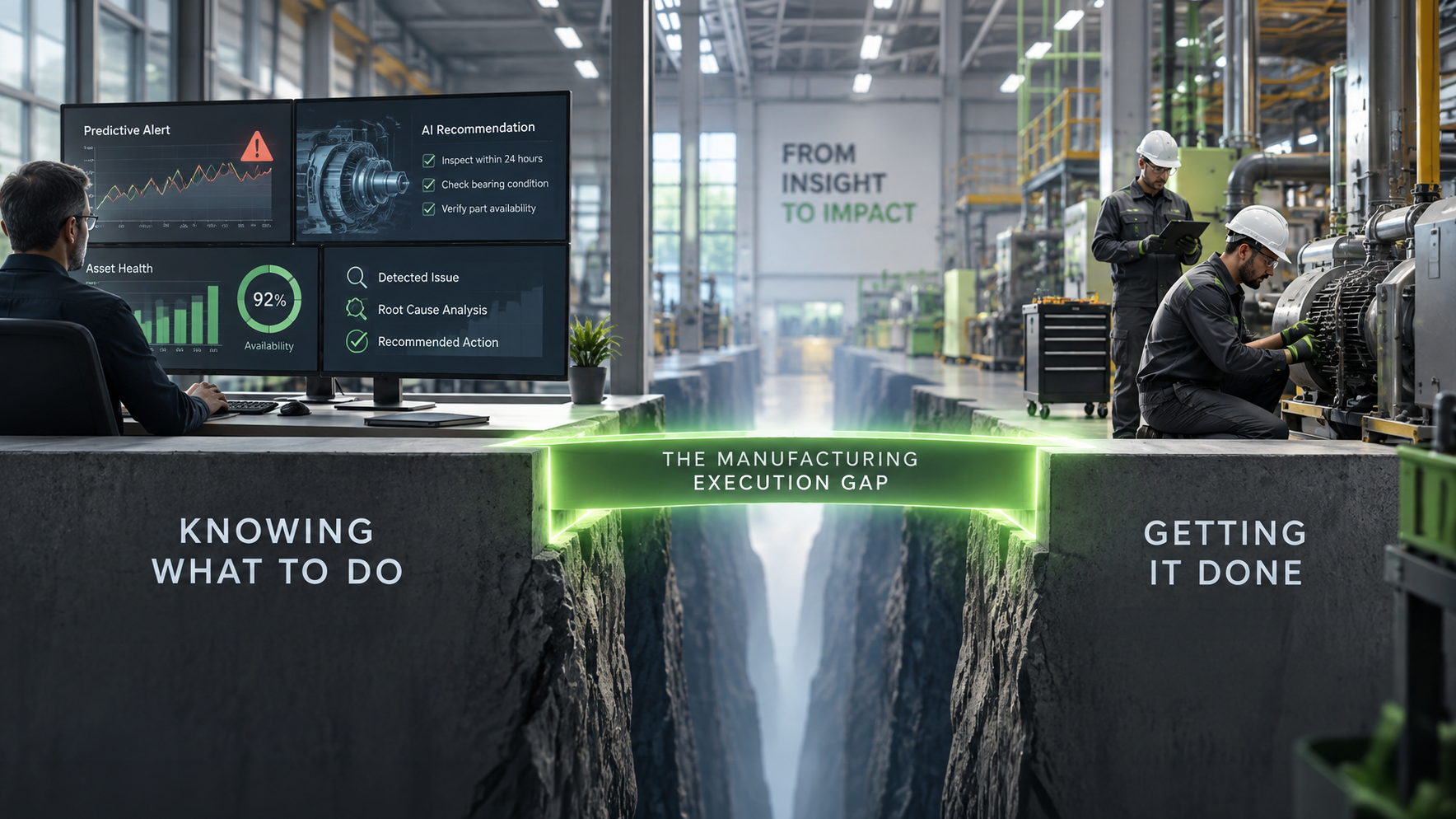
This emphasis on practicality was echoed in the conversations happening all over the event floor. With around 1,600 speakers, the fair was a hotbed for dialogue, not just monologues about product features. The presence of Canada as the official partner country brought a fresh wave of innovation and perspectives, further fueling these collaborative discussions. For us at Decisyon, these interactions were incredibly validating. They confirmed what we see every day: manufacturers are tired of being sold complex, rip-and-replace projects. They need solutions that fit into their existing environments and deliver immediate value. The demand for tools that organize people, streamline processes, and provide clear visibility—without requiring a complete operational overhaul—has never been stronger.
Hannover Messe 2025: A Global Snapshot
For anyone serious about industrial technology, Hannover Messe is the event of the year. It’s widely seen as the most important international platform for all technologies related to industrial transformation, and this year’s event, held from March 31 to April 4, was no exception. The scale is almost hard to comprehend: a sprawling venue packed with over 4,000 companies, from global powerhouses to innovative startups. With an estimated 130,000 visitors walking the floors and more than 14,000 products on display, the energy was palpable. It’s the one place where you can get a true, comprehensive look at where the industry is headed, all in one location.
Event Overview and Scale
The numbers alone paint a picture of immense global reach. With more than 4,000 companies exhibiting and around 130,000 attendees from every corner of the world, Hannover Messe is less a trade show and more a temporary city built for industrial progress. It’s a critical hub for connection and discovery, where a single conversation on the show floor can spark a major partnership or solve a persistent operational challenge. The event serves as an essential meeting point for the decision-makers, engineers, and innovators who are actively shaping the future of manufacturing and technology, making it an unparalleled opportunity for learning and networking.
A Legacy of Industrial Innovation
Hannover Messe isn’t a new player on the scene; it’s one of the world’s largest and most respected trade fairs for a reason. It has a long and storied history of focusing on the new ideas and products that define the next wave of industrial production. For decades, this has been the stage where groundbreaking technologies are unveiled and major industry trends are set. This legacy creates an atmosphere of credibility and excitement, drawing in the best and brightest minds who are all focused on pushing the boundaries of what’s possible in manufacturing. It’s where the future of the factory is debated and defined.
Key Themes and Industries On Display
This year’s event drilled down on the core pillars of modern industry. Key themes included Smart Manufacturing, the practical application of Artificial Intelligence in factories, and the creation of interconnected digital ecosystems. These topics are far more than buzzwords; they represent the real-world solutions that manufacturers are actively seeking to improve efficiency, reduce downtime, and make smarter, data-driven decisions. Other major focuses included sustainable energy solutions for industry and the latest advancements in engineered parts and compressed air technology. The “Future Hub” also offered a fascinating glimpse into next-generation ideas, providing a preview of tomorrow’s factory floor.
Partner Country Spotlight: Canada
Each year, Hannover Messe shines a spotlight on a “Partner Country,” and for 2025, that honor went to Canada. This partnership puts a special focus on the chosen nation’s industrial capabilities and technological innovations. Team Canada made a significant impression, with 246 companies showcasing their expertise and solutions on a global stage. The strong Canadian presence, which included 268 representatives, underscored the country’s growing role as a key contributor to the global manufacturing landscape and a hub for technological advancement. It was a fantastic opportunity to see the unique solutions and collaborative spirit the Canadian industrial sector brings to the table.
What Clicked: Visibility, Validation & Connection
Our booth drew everyone from Fortune 500s to hungry startups—not because we were loud, but because they were looking for us. That kind of presence turned into real leads and conversations that mattered.
And what landed? Being real.
Our live demos told the story—no decks, no fluff. Just real solutions in action.
Even AWS called out our booth for skipping the typical “just another chatbot” pitch.
While others leaned on AI jargon, we delivered with clarity and proof. That made all the difference.
Where We Missed—And What We’re Improving
Even with strong momentum, we saw where we fell short—and we’re already making moves.
Some messaging missed the mark, demos didn’t always land as planned, and booth traffic sometimes outpaced our staffing. These gaps gave us valuable feedback, and we’re addressing them with smarter positioning, tighter product delivery, and stronger event execution.
Market Signals We’re Watching Closely
Hannover wasn’t just a show—it was a lens into where things are headed.
- AI Agents Aren’t Just a Trend—They’re the Future Our AI Agent demos turned heads. Others, like Altair RapidMiner (now part of Siemens), proved the industry’s all in.
Key takeaway: Demand is high—we need to ship production-ready solutions fast.
- Predictive Maintenance Is Overcrowded Everyone from Google to TwinThread had a take. Without a game-changer, we blend in.
Conclusion: Our edge is elsewhere—AI orchestration, real-time factory intel, agent-based workflows.
- Low-Code Is Shifting Toward Generative AI Platforms like Heisenware show where things are going—code simplification is out, intelligent generation is in.
Opportunity: Our App Composer is ahead of the curve—time to polish the UX.
The Acceleration of AI and Smart Manufacturing
It was impossible to walk the floor at Hannover Messe without seeing AI everywhere. The event highlighted how advanced technologies like generative AI are setting new standards for industrial operations. While some exhibitors were still in the conceptual phase, this trend confirmed what we’ve been building for years: the future isn’t just about having AI, it’s about putting it to work in practical, tangible ways. The market is hungry for solutions that move beyond the chatbot and deliver real operational value. This is exactly where our platform is designed to excel, by embedding AI-powered assistants directly into frontline workflows to help teams solve problems faster and make smarter decisions on the factory floor.
The Rise of Connected Digital Ecosystems
Another major theme was the shift from siloed tools to interconnected digital ecosystems. The message from the floor was clear: manufacturers need their technologies, teams, and data to work together seamlessly. This is the core idea behind our Digital Factory suite. Instead of forcing a disruptive “rip-and-replace” of existing systems, our platform acts as a unifying layer that connects disparate data sources and workflows. Tools like our LOOP product are designed specifically to organize people and processes within this ecosystem, ensuring that insights from one area of the plant can inform actions in another, creating a truly collaborative and data-driven environment.
A Renewed Focus on Energy and Sustainability
Sustainability wasn’t just a buzzword; it was a core business driver. With a dedicated focus on “Energy for Industry,” the event underscored the growing pressure on manufacturers to operate more efficiently and sustainably. This aligns perfectly with the outcomes our customers achieve. Optimizing production isn’t just about increasing throughput—it’s about reducing waste, minimizing downtime, and lowering energy consumption. Effective asset performance management, for example, ensures equipment runs at peak efficiency, which directly translates to a smaller environmental footprint and lower operational costs, demonstrating that the most productive plants are also the most sustainable.
What’s Next: From Demos to Deployment
The real story of Hannover Messe wasn’t just about what we showcased—it was about who showed up. The engineers, the integrators, the decision-makers. They came with real problems, sharp questions, and high expectations. And they made one thing clear: they’re not looking for ideas, they’re looking for impact , solving business challenges smarter and real outcome.
We’re listening. And now, we’re acting.
Every conversation from the floor is shaping how we move forward. We’re refining our products to be faster, smarter, and easier to deploy. Our AI Agents and DAC-X platform are evolving rapidly—built to meet the realities integrators and end users face every day.
Visitors want clarity, not complexity—and we’re rewriting the way we present our value to match that need.
And we’re doubling down on partnership. Whether it’s AWS, AVEVA, or Schneider, we’re following up, syncing strategies, and preparing to meet that same energy again at Gitex Global 2025 and beyond.
Across key industries—from automotive to energy to packaging—we’re aligning closer to the people and problems where our tech fits naturally and accelerates the rate of innovation. Because the path forward isn’t about shouting louder—it’s about serving smarter.
We saw what matters. And we’re building for it.
Practical Tips for Future Attendees & Exhibitors
Success at a massive international event like Hannover Messe isn’t just about having a great product. It’s about preparation. From understanding local customs to managing cross-border finances, the details can make or break your experience. Based on our own time on the ground and insights from seasoned exhibitors, we’ve put together a few practical tips to help you get the most out of your trip. Whether you’re planning to walk the halls or host a booth, a little planning goes a long way in turning a good show into a great one.
Mastering German Business Etiquette
First impressions count, especially when you’re crossing cultural lines. German business culture is known for its efficiency, directness, and professionalism. While it might feel different from what you’re used to, adapting to local norms shows respect and can help you build stronger, more productive relationships from the very first handshake. Getting these small details right sets a positive tone for every conversation and meeting that follows, showing potential partners that you are serious, prepared, and respectful of their business environment.
Making a Professional Impression
In Germany, punctuality is non-negotiable; being on time is a fundamental sign of respect. When meetings begin, it’s common to skip the extended small talk and get straight to the point. This isn’t meant to be unfriendly—it’s a reflection of an efficient and focused business culture. Prepare your key discussion points in advance and be ready to present your case clearly and concisely. The more personal, casual conversations often happen after the main business agenda has been addressed, so lead with your professional purpose and let the relationship build from there.
Communicating Effectively
In a hall filled with complex technology and AI buzzwords, clarity is your superpower. We found that our most impactful conversations happened when we skipped the jargon and ran live demos of our smart manufacturing platform. People want to see proof, not just hear promises. Instead of relying on abstract concepts, focus on showing how your solution solves a real-world problem. Articulate the value in simple, direct terms. Whether you’re an attendee asking questions or an exhibitor presenting, clear communication that demonstrates tangible results will always cut through the noise and capture the attention of serious partners and customers.
Navigating Logistics and Financials
The work you do before you even pack your bags is just as critical as your performance on the show floor. Handling the logistics of an international trade fair and understanding the financial landscape can save you from major headaches and unexpected costs. A smooth experience relies on careful planning, from booking your flights months in advance to understanding how local taxes work. Getting these details sorted early allows you to focus your energy on what matters most during the event: making connections and driving business forward.
Planning Your Booth and Travel
Hannover Messe is one of the world’s largest industrial trade fairs, and its popularity puts a strain on local resources. The next event is scheduled for March 31 to April 4, 2025, and you should start planning now. Book flights and accommodations several months in advance to avoid sold-out hotels and skyrocketing prices. For exhibitors, booth planning should begin even earlier. Think through your design, staffing needs, and technical requirements. Check the official Hannover Messe website for key deadlines and logistical guidelines to ensure everything is in place for a seamless setup and a successful week.
Understanding Local Costs and Taxes
A key financial detail for international exhibitors is Germany’s Value-Added Tax, or VAT (known locally as Mehrwertsteuer or MwSt). The standard rate is 19%. However, there’s good news for many international companies. If your business is based outside the European Union and the billing address for services or goods from German vendors is also outside the EU, you are typically exempt from being charged this tax. This can lead to significant savings, but it’s crucial to ensure your invoices are set up correctly. Always confirm your eligibility with a tax professional to ensure you don’t leave money on the table.
Final Word: The Window Is Wide Open
Hannover Messe was a green light. Buyers are sharper. Expectations are real. But if we keep moving smart and fast, we’re not just in the race—we’re out in front.
For 2025, the message is clear:
Real over flash. Focus over noise. Action over talk.
Let’s build what tomorrow’s factories actually need—before someone else does.
Contact us to build your factory of tomorrow.
Frequently Asked Questions
Why are so many manufacturers suddenly hesitant about large, “rip-and-replace” technology projects? It’s less a sudden shift and more of a practical realization. For years, the promise of digital transformation came with a huge price tag: massive disruption, long implementation timelines, and the high risk of failure. Manufacturers simply can’t afford to halt production to overhaul systems that, for the most part, are already working. The focus now is on smarter, more targeted improvements. They are looking for solutions that can act as an intelligent layer on top of their existing infrastructure, connecting disparate systems and empowering teams without forcing them to start from scratch.
You mentioned “AI Agents” were a major trend. What does that actually mean in a factory setting? Think of an AI Agent as a proactive, digital team member for your frontline staff. It’s not just a chatbot that answers questions; it’s a system that monitors operations, identifies potential problems, and guides workers toward a solution. For example, an AI Agent could detect that a machine’s temperature is rising abnormally, predict a potential failure, and then create a task for a maintenance technician with specific instructions, all before the line goes down. It’s about putting actionable intelligence directly into the hands of the people doing the work.
How can a platform like Decisyon’s fit into a factory that already has its own established systems and software? This is the exact challenge we are built to solve. Our platform is designed to be an overlay, not a replacement. It connects to the equipment and software you already use, including older machines, PLCs, and even existing MES or ERP systems. It pulls data from these disconnected sources into one unified view. From there, our tools like LOOP help organize your people and processes around that data, creating a single source of truth for communication, issue resolution, and continuous improvement. It’s an evolution for your factory, not a complete teardown.
I wasn’t able to attend Hannover Messe. What’s the best way to stay informed on these trends? You don’t need a plane ticket to Germany to keep your finger on the pulse. A great first step is to identify a few key industry publications and technology leaders to follow. More importantly, start conversations with potential technology partners. Ask for live demos that show how a solution solves a problem relevant to your operations. The best way to understand these trends is to see them in action. You can also start a small pilot project in one area of your plant to test a new technology on a manageable scale and learn firsthand.
This all sounds promising, but it also feels overwhelming. What is a realistic first step for a factory looking to modernize? The key is to start small and solve a real, tangible problem. Don’t try to boil the ocean. Instead, identify one specific, persistent pain point in your facility. Perhaps it’s the communication breakdown during shift handovers or the unplanned downtime on a critical production line. Focus on solving that single issue first. Implementing a tool that organizes team communication and issue tracking, for example, can deliver a clear and immediate return. This creates a quick win that builds momentum and makes the case for broader change.
Key Takeaways
- Choose Integration Over Disruption: The industry is shifting away from massive “rip-and-replace” projects. The most effective digital solutions are those that fit into your current operations, connecting people and processes to deliver immediate value.
- Pursue Practical AI, Not Just Hype: While everyone talks about AI, the real opportunity lies in specific applications like AI agents that assist frontline teams. Focus your investments on tools that solve tangible, daily operational challenges, not just on crowded, generic concepts.
- Proof Beats Promises: In a market full of complex pitches, tangible demonstrations of value are what capture attention. Buyers want to see solutions in action, not just hear about them. Clear proof of how a tool solves a real problem is the most powerful way to cut through the noise.